

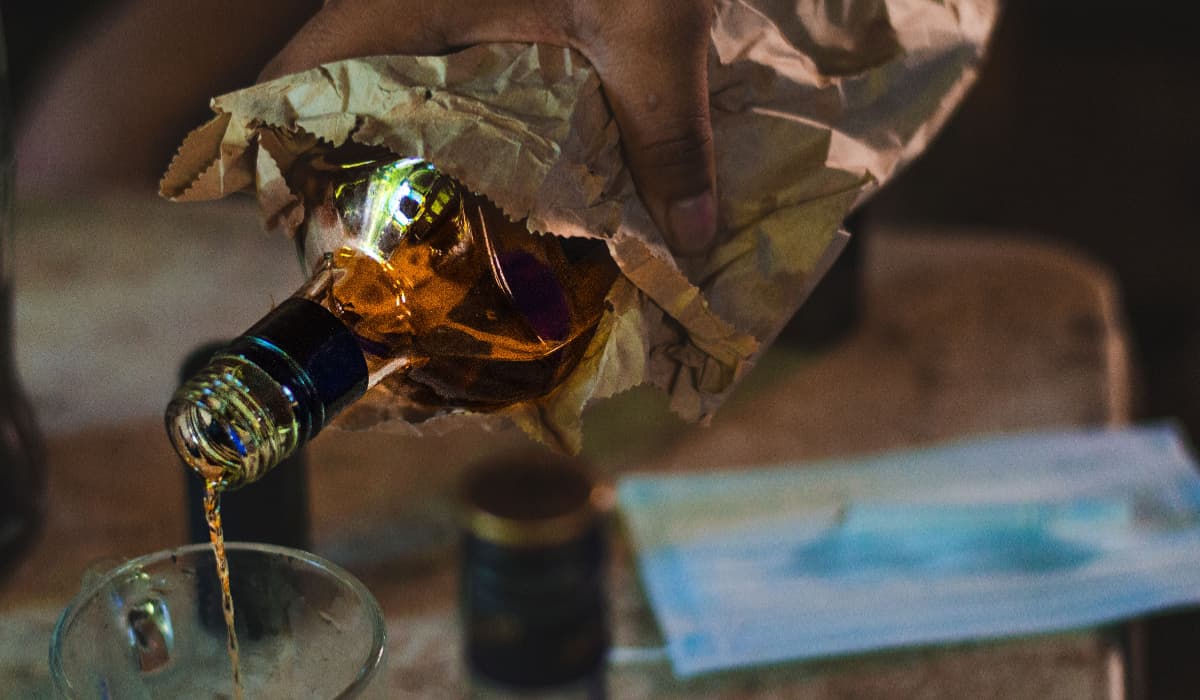
When you pick up a bottle of whisky, rum, vodka, or any other alcoholic beverage, one of the first things you’ll notice is the two-digit number on the bottle. In India, this is usually expressed as ABV, or Alcohol by Volume. But if you’ve observed an American spirits bottle or read about whisky, bourbon, or rum, you might come across another term: proof.
ABV and proof both tell you something about the alcohol content of a drink, but they are not the same measurement. While ABV is a percentage, proof is another way of expressing the strength of a spirit and is particularly common in the United States.
Let’s take a look at the key differences between ABV and proof!
ABV stands for Alcohol by Volume. It tells you what percentage of the liquid in a drink is pure ethanol by volume. For example, if a bottle of vodka is labelled as 40% ABV, it means that about 40% of the liquid’s volume is alcohol, while the remaining is water and other compounds.
The same measurement is used across different categories of alcoholic beverages. A beer might contain around 4 to 6% ABV, wine is commonly around 11 to 15% ABV, while spirits such as vodka, gin, rum and whisky are often around 40% ABV, although strengths vary considerably.
ABV is generally the easiest measurement for consumers to understand because the percentage denotes the proportion of alcohol in the beverage.
Also Read: 5 Indian Bartenders Changing The Way We Drink
Proof is another form of measurement used to indicate the alcohol strength of a spirit. However, it is mostly used in the United States and calculated by simply multiplying the ABV by two.
So:
40% ABV = 80 proof
45% ABV = 90 proof
50% ABV = 100 proof
This means that an American spirit labelled 100 proof contains 50% alcohol by volume.
The term “proof” itself has a much older history. Before modern lab methods made alcohol measurement straightforward, producers and traders used different methods to determine whether spirits had a sufficiently high alcohol content.
The historical measurement system was linked to whether spirits could meet a particular “proof” standard.
The biggest difference is that ABV is a direct percentage measurement, while proof is a scale derived from alcohol strength. So, if you know the ABV, you can easily calculate the US proof by doubling it. If you know the proof, divide it by two to get the ABV.
For example, a bottle marked 86 proof contains 43% ABV.
Many of you might be wondering whether higher proof equals more alcohol. The answer is yes, only if you’re comparing the same volume of liquid.
A higher proof means a higher ABV under the US system. For instance, an 80-proof spirit is 40% ABV, while a 100-proof spirit is 50% ABV.
That means a standard measure of the 100-proof spirit contains more pure alcohol than the same-sized measure of the 80-proof spirit.
Also Read: Is Alcohol Cheaper In Daman Than Goa? Here’s What You Must Know
Before knowing the difference between proof and ABV, I used to get confused between the two terms. However, understanding the difference between ABV and proof can help you compare spirits when traveling, shopping, and importing alcohol.
The next time you browse a liquor store or read a cocktail menu, don’t let the numbers fool you. ABV tells you the exact percentage of alcohol by volume, while proof expresses the same strength on a different, doubled scale. Once you know either of the values, you can figure out the value that hasn’t been explicitly mentioned.
.jpg&w=3840&q=100)
.jpg&w=3840&q=100)
.jpg&w=3840&q=100)