
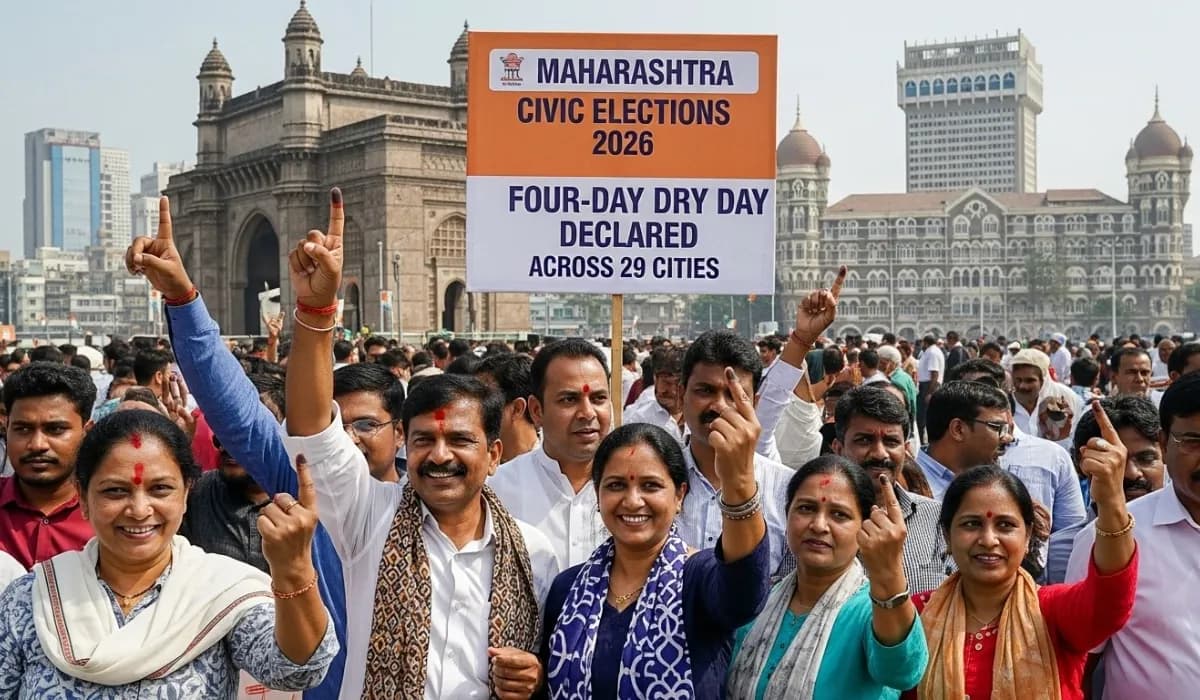
As Maharashtra gears up for civic body elections in recent history, the state administration has enforced a mandatory four-day "Dry Day" across 29 municipal corporations. The ban on alcohol sales, which will begin on the evening of January 13, is a strategic move to ensure the "purity of elections" and maintain public order during the high-stakes voting process.
The dry day period is scheduled to coincide with the final phase of campaigning, the day of polling, and the counting of votes. According to directives issued by the State Election Commission (SEC) and local district collectors:
The restrictions apply to all liquor shops, wine stores, permit rooms, bars, and restaurants within the jurisdiction of the 29 municipal corporations.
The election cycle covers nearly all major urban hubs in Maharashtra, effectively placing the state's most populous regions under the liquor ban. The affected areas include:
The Maharashtra government and the SEC have cited several reasons for the prolonged dry period:
.jpg&w=1920&q=75)
District collectors, including Pune Collector Dr. Vipin Itankar and Mumbai authorities, have warned of stringent legal action against violators. The State Excise Department and local police have formed special flying squads to monitor illegal transportation and "bootlegging" during these four days. Establishments found serving liquor risk immediate cancellation of their licenses and prosecution under the Maharashtra Prohibition Act.
These elections are being held under the shadow of a January 31 deadline set by the Supreme Court, ending years of delays caused by delimitation and reservation disputes. With 29 major cities at stake – including the Brihanmumbai Municipal Corporation (BMC), the richest civic body in India – the outcome will serve as a definitive litmus test for the ruling Mahayuti alliance and the opposition Maha Vikas Aghadi (MVA).
https://www.instagram.com/p/DTaGhNMisOo/?utm_source=ig_web_copy_link&igsh=MzRlODBiNWFlZA==
The four-day dry day in Maharashtra is more than just a regulatory hurdle for residents; it is a critical component of the state’s "Model Code of Conduct." As voters in 29 cities prepare to head to the booths on January 15, the government has prioritized a "free, fair, and sober" electoral process. While the ban poses a temporary inconvenience to the hospitality sector, officials maintain that the sacrifice is necessary to uphold the democratic integrity of the local governance system.