
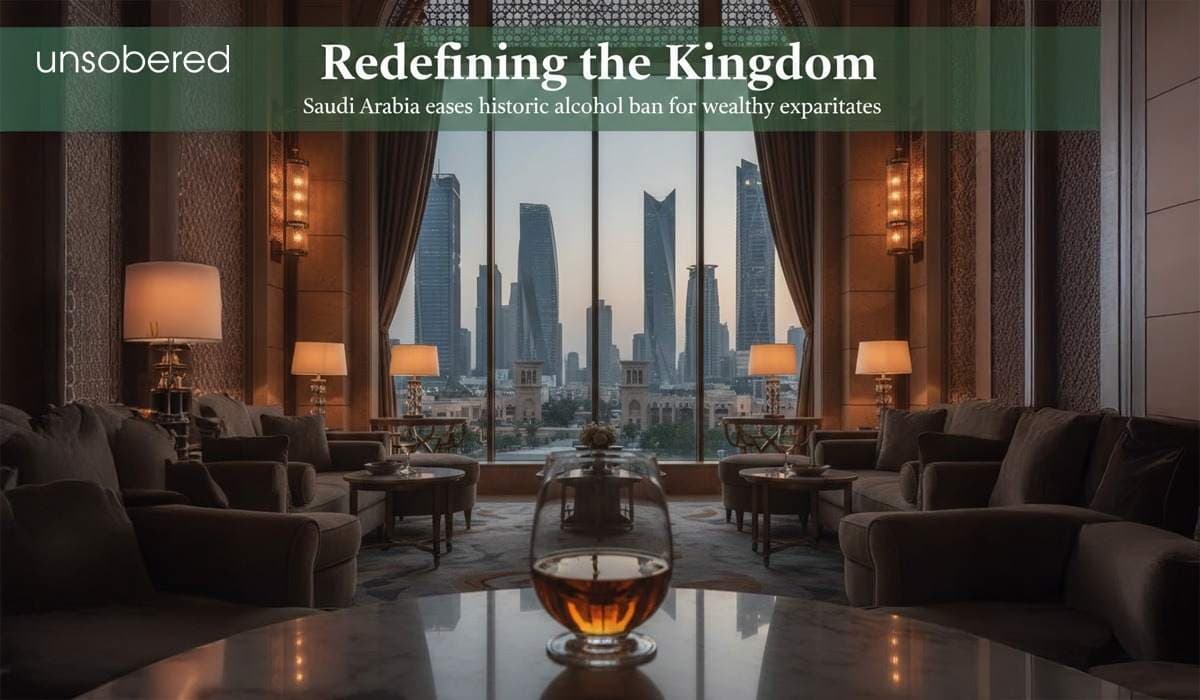
In a move that would have been unthinkable just a decade ago, Saudi Arabia has officially implemented a significant shift in its decades-old prohibition policy. Following the initial opening of a liquor store for non-Muslim diplomats in 2024, the Kingdom has now expanded legal alcohol access to a select group of wealthy foreign residents. This landmark reform represents one of the most culturally sensitive steps taken under Crown Prince Mohammed bin Salman’s "Vision 2030" initiative to modernize the Saudi economy and society.
The easing of the ban is not a "free-for-all." It is a highly regulated, tiered system designed to cater to high-net-worth individuals and senior professionals while maintaining strict social control. According to recent updates, eligibility is strictly limited to non-Muslim expatriates who meet specific financial and legal criteria:
Buyers must present their residency IDs at the point of sale. Because Saudi IDs list religious affiliation, the system automatically bars Muslims from making purchases, ensuring the reform stays within the bounds of the country’s interpretation of Islamic law.
The sale of alcohol is currently confined to a single, discreet location within Riyadh’s Diplomatic Quarter (DQ). This neighborhood is an ultra-secure enclave known for its international atmosphere, lush greenery, and "westernized" lifestyle.
The shopping experience itself is defined by strict privacy protocols:
The decision to relax alcohol laws is not merely social; it is deeply economic. As Saudi Arabia races to compete with regional hubs like Dubai and Doha, the lack of legal alcohol has long been cited as a deterrent for high-level Western talent and luxury tourists.
The Saudi government is walking a tightrope. To avoid a backlash from the more conservative segments of the population, the reform has been framed as a measure to "combat the illicit trade of alcohol." Before this change, a thriving black market saw smuggled bottles sold for ten times their value, often involving dangerous home-brewed "sidra" (moonshine). By legalizing and regulating the trade for foreigners, the state gains control over the supply and cuts off underground networks.
The easing of the alcohol ban for wealthy foreigners is a watershed moment in Saudi history. It signals that the Kingdom is willing to prioritize economic pragmatism and global integration over long-standing social taboos.
However, for the average Saudi citizen and the casual tourist, the ban remains firmly in place. The "Riyadh Experiment" is a cautious, calculated step – one that proves Saudi Arabia is changing, but strictly on its own terms and at its own pace. Whether this will eventually lead to alcohol in hotels or restaurants remains to be seen, but for now, the seal on the bottle has officially been broken.
Read Also: