
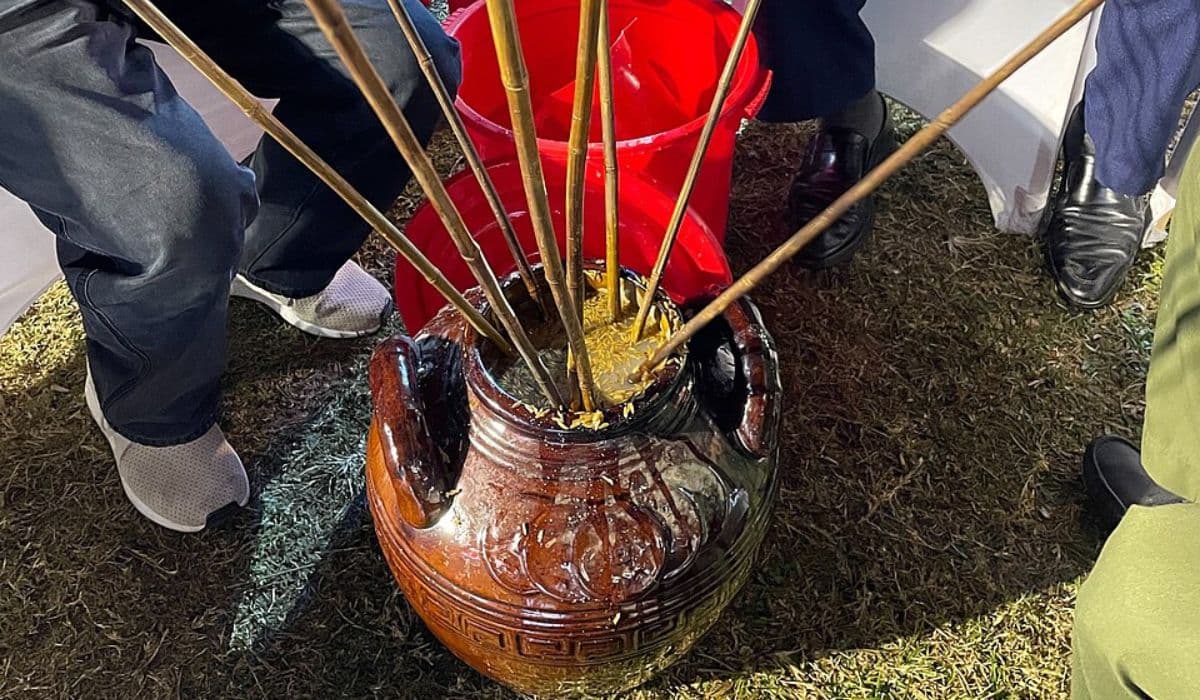
Imagine sitting in a circle around a large earthenware jar as you share a single batch of fermented rice wine through long, flexible bamboo straws. Think of the sense of belonging you would feel, the comfort, the community, all of it! This is exactly what Rượu Cần is all about. Literally meaning "tube wine" or "stem wine", it is a communal alcoholic beverage deeply tied to the identity and social customs of Vietnam’s Central Highlands, or Tây Nguyên. The ethnic minority groups such as the Ba Na, Ê Đê, Gia Rai, and K'Ho drink this during special occasions like festivals, weddings, and the like. It is made using rice and a plethora of forest herbs that combine to create a spirit so unique that the experience had to be shared. Intrigued? Here’s everything you will need to know about this traditional Vietnamese spirit.
.jpg&w=1920&q=75)
Unlike modern spirits that are typically served in individual glasses, Rượu Cần is consumed collectively from one shared vessel. Not only does it symbolize unity, hospitality, and equality among drinkers, but it also harbors a communitarian bond.
In ancient Vietnam, Rượu Cần was exclusively reserved for sacred rituals, weddings, housewarmings, and village festivals, which were called Lễ hội. They were also hugely popular for honoring revered guests. As per Vietnamese tradition, if a certain person is invited to share a Rượu Cần, it means that the guest is highly revered.
Part of the reason why this spirit has such reverence is owing to the vessel it is brewed in. The giant earthen pot, known as Ché or Ghé, in which Rượu Cần is brewed is passed down through generations. What further solidifies this reverence is a belief that an earthen vessel houses certain gods and holy spirits.
The art of brewing Rượu Cần requires skill and reverence. First, a base grain is selected. Typically, Rượu Cần is made from glutinous Vietnamese rice, known as gạo nếp. However, it is also often made from cassava, or local mountain grains like millet or corn.
A crucial element of this process is natural yeast, or Mộc Men. It is made from local forest bark, wild roots, leaves, and spices unique to each ethnic tribe, giving every batch a distinct herbal profile.
The grains are then cooked, cooled, and mixed with crushed wild yeast balls. After this, the balls are packed into the clay jar alongside rice husks or trấu to prevent the mixture from clogging the straws. It is then sealed and left to ferment naturally over the course of several weeks.
Also Read: What Is Prosecco And How Is It Different From Champagne?
The flavor profile of Rượu Cần is quite unique. It is slightly sweet, tangy, and earthy with herbal and botanical undertones. What is more, it has a deeply fragrant scent with notes of fermented grain, wild herbs, and clay.
Even though it is mildly sweet, the ABV percentage is quite significant. Depending on the grain and fermentation length, the ABV can range anywhere between 10 percent and 30 percent.
.jpg&w=1920&q=75)
The following are some of the places where you can get Rượu Cần in Vietnam:
Known as the heartland of Ê Đê culture, this is the place to get the most authentic Rượu Cần. Here, a number of local villages offer authentic cultural performances and jar-wine drinking that is quite exhilarating to be a part of.
You can visit K'Ho ethnic villages at the foot of Langbiang Mountain. Enjoy evening fireside gatherings that feature gong performances and Rượu Cần.
You can find alternative regional variants of Rượu Cần here. They are generally made by the northern hill tribes.
Also Read: Why Is Daman Alcohol So Cheap? Does It Mean The Liquor Is Bad?
Rượu Cần, in many of the cultures of Vietnam, plays a more important role than a random beverage. In the very ritual of the drink is community, togetherness, and celebration. Rượu Cần is one of the most important living symbols of Vietnamese ethnic heritage, connection, and shared culture. If you, too, want to experience the full breadth and beauty of the ritual of Rượu Cần, you will have to go off the run-of-the-mill destinations and explore beyond your comfort zone. Remember, it is an integral part of a vibrant culture, and as such, you should remain respectful in the event that you do get to participate.