
If you have ever looked at a bottle of Scotch and wondered why it says whisky instead of whiskey, you are certainly not the first person to notice it. That missing 'e' has been a point of curiosity for years, especially because Irish and American spirits are generally spelt with the extra letter. It might look like a small difference, but there is a bit of history behind it.
The simple answer is that Scotland follows the spelling whisky, while Ireland generally uses whiskey. Both are correct. The difference is largely tied to regional language and tradition, rather than a completely different meaning or type of spirit.
Before getting into the spelling, it helps to look at the word itself. The term whisky comes from the Gaelic expression uisge beatha, which translates to 'water of life'. It was also written as usquebaugh in older forms. Over time, the expression was shortened and developed into the word whisky that we recognise today.
The Scotch Whisky Association confirms this Gaelic origin in its frequently asked questions section. Canada's official Language Portal also traces the word to uisge beatha, explaining how it evolved through earlier forms before becoming whisky.
Also Read: Is Blenders Pride A Scotch Whisky? Ingredients And Origin Explained
There is an interesting detail here: the word did not begin with two completely separate spellings that belonged to two different countries. The spelling varied over time, and the modern distinction developed gradually. In other words, the extra 'e' was not part of some universal rule that everyone followed from the beginning.
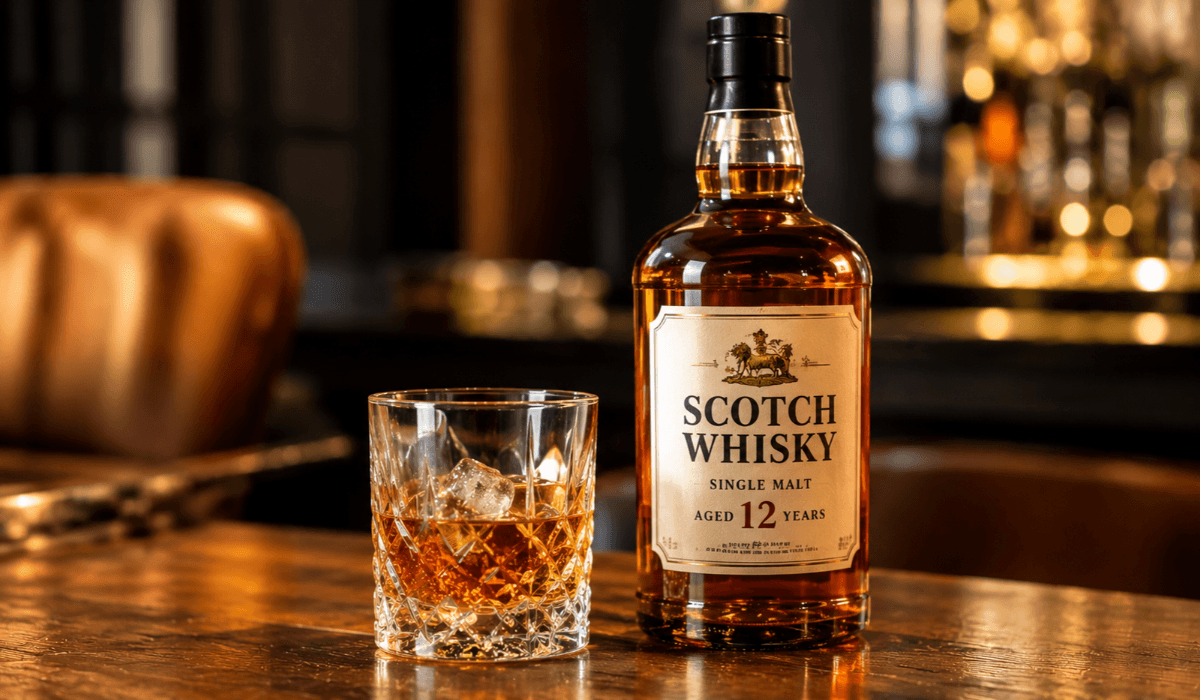
Scotland uses the spelling whisky, and it has become an established part of the country's whisky identity. When you see Scotch Whisky written on a bottle, the spelling is intentional. It is also the spelling used in the country's legal definition and geographical protection.
The Scotch Whisky Association explains that Scotch and Irish spirits are often distinguished through their spellings, with American whiskey also generally using the 'e'. However, the association points out that production and maturation are governed by law, not by the spelling of the word.
Also Read: Why Does Whisky Change Color? Ageing, Casks And Caramel Explained
That distinction matters because the word on the label is not what makes a spirit Scotch. For a bottle to be legally sold as Scotch Whisky, it must meet specific production and maturation requirements in Scotland. The UK Government's Scotch Whisky technical file states that it must be distilled in Scotland and matured there in oak casks for at least three years.
So, leaving out the 'e' is part of the Scottish convention, but the name Scotch Whisky carries a much more important legal meaning than the spelling alone.
Ireland generally spells the word whiskey, and the United States has largely followed the same convention. One commonly discussed explanation connects this difference to the rivalry between Scottish and Irish distillers during the 19th century.
At the time, Irish distillers were critical of the lighter blended spirits being produced in Scotland. As blended Scotch became more popular, Irish producers wanted to distinguish their own whiskey from it. The additional 'e' is often associated with that effort to create a separate identity for Irish whiskey.
Also Read: Why Is Jameson So Popular In India? What Makes The Irish Whiskey Different
However, it is worth being careful with this explanation. The spelling was not changed overnight, and historical records show that both forms were used before the modern conventions became established. It is better understood as a gradual development influenced by the whisky trade, regional identity and changing industry practices, rather than one single decision made by all Irish distillers.
American whiskey also adopted the spelling with an 'e', partly reflecting Irish influence on distilling in the country. It is not an absolute rule, though. A few American producers still use whisky without the extra letter.
This is where things can get a little confusing. Does the extra 'e' mean that whiskey tastes different from whisky? Not necessarily.
The spelling generally gives you a clue about the country or tradition associated with the spirit, but it does not tell you how it was made or what it will taste like. Scotch whisky can be smoky, fruity, sweet, rich or light depending on the grain, distillery, production method and maturation. Irish whiskey has its own range of styles, while American whiskey includes categories such as Bourbon and rye.
Also Read: Why Is Jack Daniel's Called Tennessee Whiskey And Not Bourbon?
There are also countries that follow the spelling without the 'e'. Japanese and Canadian producers, for example, generally use whisky. The Government of Canada confirms that whisky is the preferred Canadian spelling, while Irish whiskey usually retains the 'e'.
So, the next time you are browsing a whisky shelf, remember that the spelling is a useful regional clue, not a tasting note. A Scotch single malt and an Irish single malt may have plenty in common in terms of production, even though their labels spell the word differently.
The next time you pick up a bottle, take a moment to notice how the country of origin is reflected in its name. It is a small detail, but it tells you something about the history and identity of the spirit before you even open the bottle.
Scotch whisky is spelled without an 'e' because Scotland follows a long-established regional convention. Ireland and the United States generally use whiskey, reflecting their own traditions. Both spellings are correct, and the extra letter does not determine the spirit's quality, flavour or production method.