

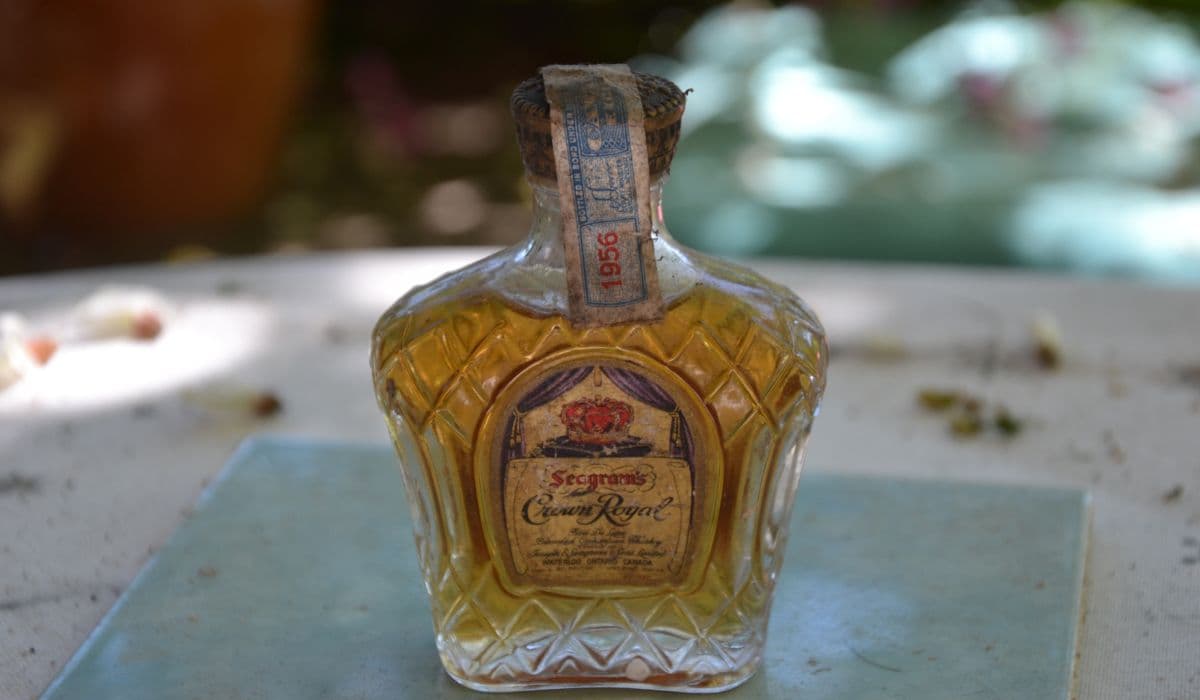
The United States and Canada may share a border with each other, but their distilling heritages could not be more different from one another. North America’s two spirit giants operate under fundamentally different philosophies and legal frameworks, as well as flavor profiles. The difference is evident right from the way the countries spell their spirit. While American styles use the "e" in Whiskey, Canadian law mandates Whisky to be spelled without the "e". This is just the start of the difference between the two spirits. If you’re curious to know more, unsobered has created this expert comparison breaking down mash bills, distillation procedures, barrel regulations, aging rules, and flavor differences between American and Canadian whiskies.
.jpg&w=1920&q=75)
For American whiskeys like Bourbon, Rye, and Tennessee Whiskey, the process of mashing and fermenting happens together. More importantly, in many recipes, this step takes place prior to the distillation process.
Furthermore, for bourbon, the mash bill should contain at least 51 percent of corn, and the mash bill for rye whiskey should have at least 51 percent rye.
Canadian distillers, on the other hand, typically mash, ferment, distill, and age each grain type such as corn, rye, wheat, and barley separately. These individual single-grain whiskies are blended after aging to create the final flavor profile. This gives it an entirely different dimension than American whiskey.
There is an interesting aspect about Rye whisky in Canada. In this country, the terms "Canadian Whisky," "Rye Whisky," and "Canadian Rye Whisky" are legally interchangeable. This is the case even for the blends that contain a high percentage of corn whisky. The reason for this is mainly that it is rye that has historically been responsible for providing its signature flavor character to the spirit.
For whiskies such as bourbon and straight ryes, the aging process should be done in brand-new, charred oak containers, typically American white oak. Reusing barrels is strictly forbidden for straight Bourbons. The impact of aging them in such a way is that the barrels deliver an intense oak extraction with notes of heavy vanilla, caramel, coconut, and char.
.jpg&w=1920&q=75)
Canadian whisky, on the other hand, must be aged for a minimum of three years. This aging process must take place in wooden barrels whose capacities are under 700 liters. However, distillers of Canadian whisky can use new charred oak, used bourbon barrels, rum casks, wine barrels, or re-charred barrels. Using such barrels produces a lighter, smoother, and more subtle oak profile in a whisky.
Also Read: Best Rainy Day Whiskey Cocktails To Try
American Purity Regulations: In the US, any added flavorings, caramel coloring, or neutral spirits to straight bourbon and straight rye are strictly prohibited.
Canadian Flavor Enhancements: As per Canadian law, up to 0.09 percent of flavoring can be added to spirits or fruit wines such as sherry, rum, or aged rye spirit. However, it can only be done in the final blend, and only if the spirit maintains the general character of Canadian whisky. This lets Canadian master blenders have creative freedom to dial in texture and aroma.
American Whiskey Character: After such an immense distillation and aging process, the flavor profile of American whiskey is bold and full-bodied and has a heavy oak influence. The notes include that of rich caramel, sweet corn, vanilla, and pronounced baking spice. It is best enjoyed neat, over a large ice sphere, or in bold, spirit-forward cocktails like the Old Fashioned or Manhattan.
Canadian Whisky Character: Canadian whisky, on the other hand, is silky smooth. It has a light body and is highly approachable with subtle dry rye spice, vanilla, and dried fruit undertones. Canadian whisky is ideal for light, refreshing serves like a Whisky and Ginger Ale, highballs, or citrus-forward whisky sours due to its smooth blendability.
Also Read: What Is The Difference Between Japanese Whisky And Scotch?
It is clear that the two whiskies are vastly different from one another. This does not necessarily entail that one is better than the other. American whiskey offers bold intensity and oak-driven power, while Canadian whisky excels in blending precision, smoothness, and creative flexibility. In many ways, their respective whiskies are similar to their national identity, and both whiskies are equally pleasurable for whisky enthusiasts to explore!
.jpg&w=3840&q=100)