
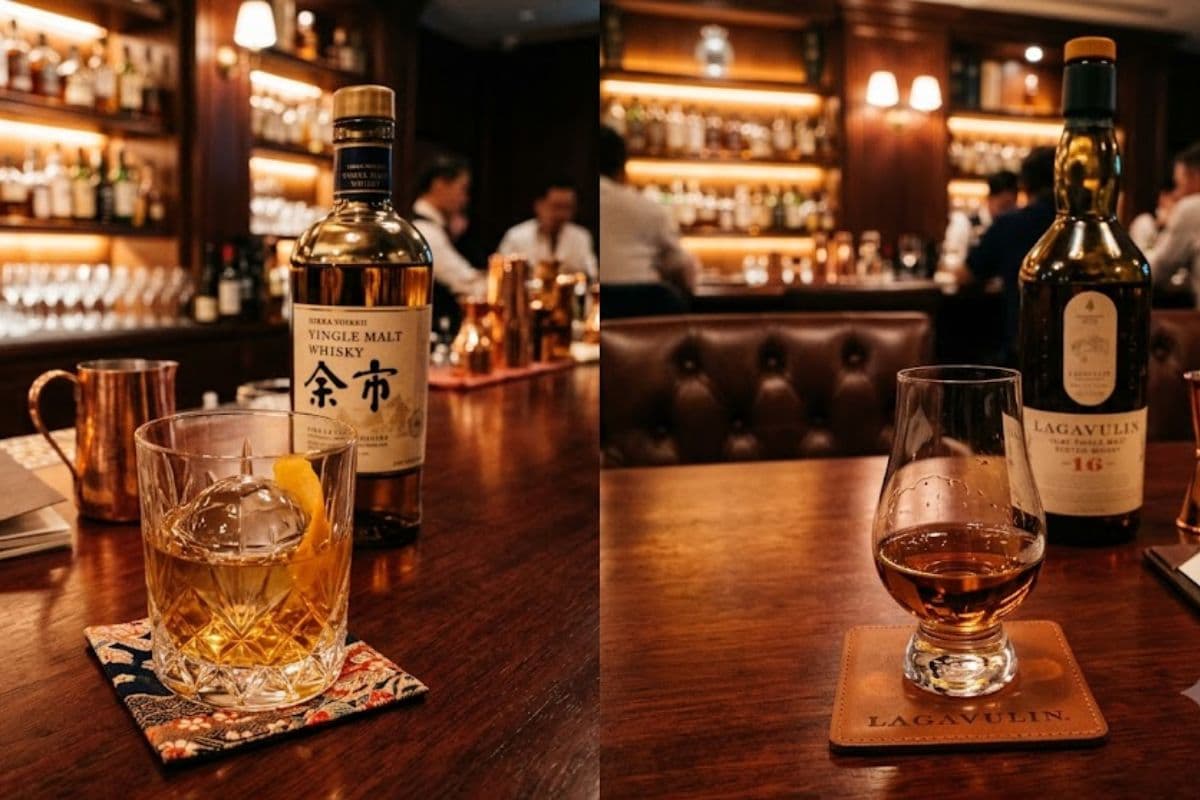
At first glance, a pour of classic Scotch and Japanese single malt looks almost identical in the glass. Both lean heavily on malted barley, both spell whisky without the letter “e”, and both of these beverages exist because of copper pot distillation techniques. In fact, Japanese whisky was born out of an obsession with Scotch. But even with so many similarities, you will see that a sip of Hibiki or Yamazaki will offer a very different character than Lagavulin or Macallan. Wondering why? Well, let's understand the difference!
The most fundamental structural difference between Japanese whisky and Scottish whisky comes from the casks.
The Scottish Model: Blending is a collaborative process in Scotland. This means that the distilleries here buy, sell, or trade casks very frequently. A Scottish firm’s master blender can achieve their target flavor profile by drawing casks from dozens of different distilleries across the Highlands, Islay, and Speyside.
The Japanese Model: Japanese whisky companies never trade their casks with their rival domestic producers. A major Japanese producer like Nikka or Suntory must create every single style of whisky that is needed for a complex blend within the company itself.
.jpg&w=1920&q=75)
While both Japanese and Scottish whisky follow the same process- malt barley, mash, ferment, and age in wooden casks- there are a few micro-variables in Japanese production that make the difference.
Water: Japanese distilleries give a lot of importance to pure local water that is sourced from mountain snowmelt and filtered through granite. It is combined with a wider range of specialized yeast strains during fermentation, resulting in exceptionally smooth whisky.
High-Altitude Distillation: Most of the iconic Japanese distilleries are located high in the mountains. As air pressure decreases at higher altitude, the liquid boils at a lower temperature. This helps preserve the delicate, light floral and fruity top notes that heat would otherwise trip away.
Also Read: Rare Japanese Whiskies Every Connoisseur Should Experience
The barrels in which the whisky matures are very important as they dictate almost 60 to 80% of the flavor. Both Japan and Scotland rely on imported ex-cherry casks (European oak) and ex-bourbon barrels (American oak). But Japan has a secret weapon, which is the Mizunara oak.
Mizunara is very difficult to work with as it is prone to leaks, and the trees have to be over 200 years old. While Scotch has the dried-fruit sweetness of sherry cakes or the vanilla richness of bourbon barrels, Mizunara gives Japanese whisky its distinct perfumed quality. This exotic woodsy flavor profile is characterised by
Scotch Whisky: Scotch whisky is defined by its strong regional personalities:
Islay: Medicinal, bold, heavily peated, smoky and briny.
Highlands: Complex, robust, heather-honey and light peat.
Speyside: Fruity, honeyed, rich, and frequently sherry-matured.
Lowlands: Light, citrusy, grassy, and gentle.
Japanese Whisky: The tasting notes of Japanese whisky include
Crispy green apple, pear, and white peach.
Soft vanilla, light incense spice, and coconut.
Blossom, jasmine, and delicate honey.

In Scotland, whisky is historically savored neat with a drop of spring water, or on a single rock of ice.
In Japan, whisky is connected to dining. Japanese blenders craft spirits which are designed specifically to complement subtle food flavors without overpowering the palate. This led to Mizuwari, which means whisky mixed with cold water and ice, as well as the Japanese Highball, which means whisky, highly carbonated soda water, and a twist of citrus over hand-carved ice.
Scotch Whisky: It is formally codified under the Scotch Whisky Regulations 2009 in the United Kingdom.
It must be:
Japanese Whisky: As per the Japan Spirits & Liqueurs Makers Association (JSMA), for a whisky to be labelled as True Japanese Whisky, it must be:
Also Read: 5 Japanese Drinks You Can't Recreate At Home
I would recommend you try Scotch if you crave heavy peat smoke or rich sherry-soaked complexity. And if you appreciate delicate floral aromas, rare oak spice, or silky textures alongside fine food, you must try Japanese Whisky.
The difference between Scotch and Japanese Whisky is not about its geographical location. It is more about the environmental conditions, philosophical approaches to blending, distillery culture, and maturation woods.
.jpg&w=3840&q=100)