
.jpg&w=3840&q=75)
Liquor prices in Assam are likely to increase from July 1 after the state government amended its excise regulations and introduced a new provision called Minimum Guaranteed Revenue (MGR). The new framework will apply to both wholesale and retail liquor license holders and is expected to add another layer of financial obligation on top of existing fees and taxes. This move could result in liquor prices increasing by 7 to 12 percent across the state. The amendments are part of Assam's broader effort to strengthen excise revenue collection while tightening operational rules for businesses involved in the liquor trade.
Under the amended excise rules, wholesale and retail liquor license holders will now be required to pay a Minimum Guaranteed Revenue amount during every financial year. This payment will be separate from the existing license fees and Value Added Tax (VAT) paid by businesses in Assam.
Officials from the Excise Department have stated that the MGR amount will be deposited on a quarterly basis. The revenue target for each license holder will be determined by the Excise Commissioner after receiving approval from the state government. While specific revenue targets have not yet been publicly disclosed, the additional financial burden is expected to be passed on to consumers through higher liquor prices.
Before the introduction of the Minimum Guaranteed Revenue (MGR) system, Assam's liquor trade primarily operated through a combination of excise duties, gallonage fees, license fees, and Value Added Tax (VAT). The state's excise department levies different duty rates depending on the type and category of alcohol being sold.
According to the Assam Excise Department's duty schedule for MCT license holders, beer with an alcohol content of up to 5 percent attracts an excise duty of ₹39 per case, while beer above 5 percent is taxed at ₹62.40 per case. Indian Made Foreign Liquor (IMFL) is taxed across multiple categories, with duties ranging from ₹280.98 per case for general brands to ₹1,657.50 per case for classic premium brands. Additional gallonage fees are also charged, ranging from Re 1 per bulk liter for beer to ₹2 per bulk liter for IMFL and wine.
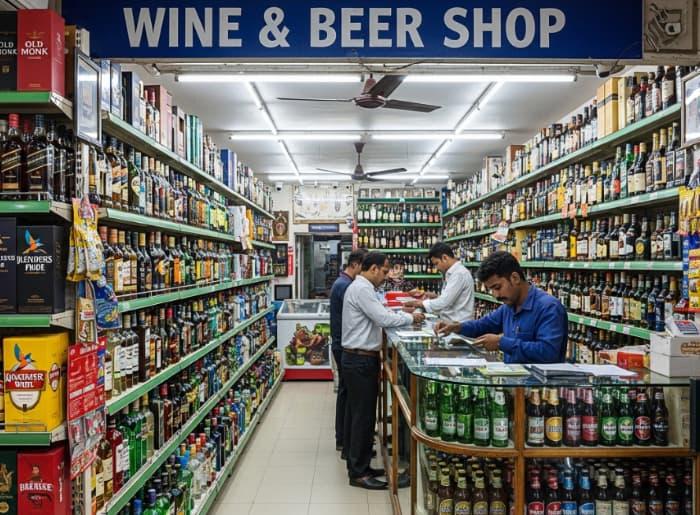
Also Read: Top 10 Whiskey Under 1000 in Assam You Can Buy in 2026
The introduction of MGR effectively increases the operating costs for liquor wholesalers and retailers. Businesses will now have to meet predetermined revenue commitments in addition to existing excise duties, taxes, and licensing costs. Consumers could see liquor prices rise between 7 and 12 percent once the revised regulations come into effect. The exact impact may vary depending on the product category, brand positioning, and pricing structure adopted by individual retailers.
Under the revised rules, on-license holders will only be allowed to sell sealed liquor bottles with a minimum capacity of 750 ml. Bottles below 750 ml can no longer be stocked or sold by these establishments. The amendment is expected to affect bars, restaurants, and hospitality businesses that currently offer smaller bottle formats to consumers. The government has not provided detailed reasoning behind the restriction, but the move represents a notable shift in how licensed establishments can manage their liquor inventory and sales.
For consumers, the most immediate impact is the rise in liquor prices as popular spirits, beer, and wine brands could become more expensive as businesses adjust to the new revenue requirements. For license holders, the amendments introduce additional compliance obligations and financial commitments. Businesses will need to account for quarterly MGR payments while also adapting to the new bottle-size restrictions where applicable.
Assam's latest excise amendments mark a significant change for the state's liquor industry. The introduction of Minimum Guaranteed Revenue aims to strengthen government revenue collection, while the new bottle-size rules add fresh operational requirements for on-premise establishments. As the regulations take effect on July 1, both businesses and consumers are expected to feel the impact, with liquor prices likely heading upward across the state.