
.jpg&w=3840&q=75)
Brandy is, of course, associated with richness of flavor, careful aging, and generations of distilling knowledge. French Cognac is usually what comes to mind when people think of premium brandy, but the category is much broader than that. There’s Spanish brandy, which is aged in oak, as well as all sorts of other brandies from places like India, to name just one.
The best brandy brands in the world aren’t necessarily the most expensive or the oldest. Some are renowned for their craftsmanship and complex, aged expressions; others for their consistency, accessibility, and sheer international popularity. For 2026, we’ve put together a list of ten well-known names that represent the breadth of the global brandy market, including Hennessy, Rémy Martin, Martell, Mansion House, and Torres.
Choosing the best brandy brands is about much more than the price per bottle or the number of years of aging. It’s about the production methods, the grapes used, the way it’s matured, the brand’s history, and the consistency of the product. International awards and industry accolades can help, though a single award-winning expression doesn’t necessarily mean the whole brand is the best.
Global appeal is another factor to consider, especially for brands with extensive distribution and large consumer bases. Sales volume and sales quality, however, are two very different things. This is not a ranking of the world’s best brands based on any single competition or sales report. It’s simply our editorial selection of ten brands we consider noteworthy.
.jpg&w=1920&q=75)
Very few names are quite so closely linked to Cognac as Hennessy. Founded in 1765 by Richard Hennessy, the French house has spent over 250 years building its reputation on the back of blending and international expansion. It is now part of the LVMH group and is present in over 160 countries, one of the most well known names in the premium spirits category.
Hennessy's portfolio spans a range of drinking styles and price points. Hennessy VS is a relatively youthful, lively spirit, Hennessy VSOP is more mature and balanced and Hennessy XO is firmly in the luxury bracket with a much more complex and layered character. Despite Rémy Martin taking the lead in Drinks International's 2026 survey of the top bars, Hennessy is still a very significant player in global Cognac sales.
.jpg&w=1920&q=75)
Set up in 1724, Rémy Martin is one of the most esteemed of the Cognac houses. Rather than using eaux-de-vie sourced from all over the Cognac region, they specialize in Fine Champagne Cognac using eaux-de-vie from both the Grande Champagne and Petite Champagne. At least half of the eaux-de-vie used must be from Grande Champagne. Their philosophy is one of vineyard origin, blending and oak maturation.
The range includes Rémy Martin VSOP and XO and Louis XIII as the brand's luxury offering. In 2026 Rémy Martin achieved a major milestone in that it became the best selling Cognac in Drinks International's survey of the world's most respected bars. It came out at just over 30% of the bars surveyed, beating Hennessy and thus representing a real shift in the premium bar market.
.jpg&w=1920&q=75)
Founded in 1715, Martell is one of the oldest of the major Cognac houses still in operation. It has developed a very distinct house style through its approach to distillation, blending and choice of oak casks. Martell Cognacs are typically associated with fruitiness and a very fine texture, which has helped them establish themselves in both the traditional and modern markets.
Martell VSOP is the entry point to the house style, Martell Cordon Bleu is one of their flagship premium expressions and Martell XO delivers a more mature, complex and rich experience. The brand remains very much in the premium bar space, taking third place in Drinks International's 2026 Best Selling Cognac survey.
.jpg&w=1920&q=75)
Courvoisier has built its whole identity on French heritage, craftsmanship and its link to Napoleon. It's based in Jarnac in the Cognac region and is well known around the world for its range of grape spirits. The brand's reputation is built on the blending of eaux-de-vie selected for their aromatics and the effect of maturation in French oak.
The Courvoisier range has VS, VSOP and XO. The younger Cognacs are good in a mix, the older ones are better in the sipping category. Courvoisier was fourth in Drinks International's 2026 Cognac rankings for bars (behind Hennessy, Rémy Martin and Martell).
.jpg&w=1920&q=75)
India has one of the largest brandy markets in the world, and Mansion House is a significant name in it. It’s made by Tilaknagar Industries and is a major player in the Indian spirits market, especially in places where there is strong demand for brandy. It’s not a luxury French Cognac house by any means—its whole approach is about familiarity, accessibility, and wide availability.
Mansion House also features prominently in the Drinks International Millionaires’ Club 2026 report, ranking as the second largest brandy brand in the world by volume (9.7 million 9L cases in 2025, 24.4% YoY growth). This is a testament to the importance of India’s domestic spirits market to the global brandy market, with its leading brand in a very different price bracket from premium Cognac.
.jpg&w=1920&q=75)
Torres is one of Spain's most well known brandy producers (in the international market at least) and has its origins in the long tradition of Spanish winemaking. The brand is particularly associated with its oak aged expressions which have a profile of dried fruit, warm spice, vanilla and wood. It's an alternative to the French Cognac and therefore a rather interesting category for the drinker to consider.
The brand is well known for its Torres 10, Torres 15, and Torres 20 expressions, each offering a different take on the brand’s style. Torres has considerable international recognition. It was the best-selling brandy in the world’s leading bars for the seventh year running, according to the 2026 Drinks International Brands Report. That’s in the bar market as surveyed (not total retail), and it’s another clear indicator of the brand’s continued relevance with bartenders.
.jpg&w=1920&q=75)
Fundador is of course very much in the tradition of Jerez brandy making in southern Spain. Jerez is a region famous for its fortified wines and its particular systems of ageing, both of which have a huge influence on the character of Spanish brandy. Fundador is very much a product of the Brandy de Jerez tradition which is all about oak ageing and the use of the criaderas y solera system to achieve consistency and complexity.
The range includes Fundador Supremo, a premium series that explores different sherry cask influences. These are the kinds of expressions that appeal to drinkers who enjoy dried fruit, oak, spice, and the fuller characteristics of a well-matured spirit. Fundador is in a class of its own among international brandy brands, representing a distinctly Spanish tradition rather than an attempt to make a French Cognac.
.jpg&w=1920&q=75)
Founded in 1888 by Spyros Metaxa, Metaxa is one of Greece’s best-known spirit brands. The product is a blend of aged wine distillates, Muscat wines, and several Mediterranean botanicals, resulting in a spirit with a very distinctive aromatic profile: notes of flowers, dried fruit, and a touch of sweetness. It’s quite different from more conventional grape brandies.
Metaxa 5 Stars, 7 Stars, and 12 Stars are all part of the Metaxa lineup and are considered the standard expressions in terms of richness and complexity. Metaxa is really a Greek spirit rather than a traditional brandy, and it’s included here for its historical association with the brandy category and its relevance to consumers interested in brandy-style products.
.jpg&w=1920&q=75)
Hine is a Cognac house known for blending, vintage Cognacs, and a strong emphasis on the character of the eaux-de-vie. It’s not one of the biggest producers in the business, so it’s quite a specialized house. It has a strong heritage, which is a big part of the appeal for consumers seeking something more refined, more niche, and more focused on the spirit’s character.
H by Hine is a very accessible entry point into the house, with the Hine Rare VSOP and Antique XO offering a look at some of the more mature expressions. It’s a brand that’s very much in the fruit-led camp, with fairly restrained oak and a lighter style. H by Hine was also selected by BBC Good Food as one of their expert-tested brandies for 2026.
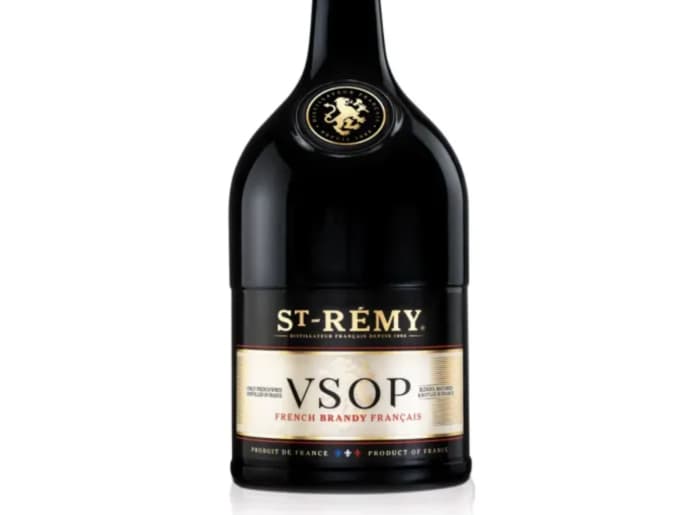
St-Rémy has been making French brandy since 1886 and is rooted in the Loire Valley. Unlike Cognac, which must come from a specific geographical area, St-Rémy brandy is made from French wine sourced from various regions. That’s what gives them their market position—they’re using the know-how of French brandy production, but in a more accessible way.
Its range includes St-Rémy VSOP and XO, as well as several expressions that take different approaches to the maturation process. The VSOP is a very accessible brandy, while the XO is considerably more substantial and complex. St-Rémy XO was named a “value pick” in the BBC Good Food 2026 expert tasting guide, so it’s a brand that’s very popular with those who want good-quality French brandy without having to move into the premium Cognac bracket.
Looking for delicious ways to enjoy brandy? Discover seven brandy cocktails worth trying, from timeless classics to refreshing mixes you can make at home.
One of the biggest myths about these spirits is that Cognac and brandy are the same thing. Every Cognac is a brandy, but not every brandy is a Cognac. The difference lies in the region of origin and the rules governing its production. Cognac must be produced in the Cognac region of France, using approved grape varieties, the specified distillation method, and the required period of maturation in oak casks.
Brandy is a much broader category than Cognac, encompassing spirits from a variety of countries and traditions. Spanish Brandy de Jerez is made using the unique solera system, and French brandies such as St-Rémy are not confined to the Cognac appellation. The result is a diverse range of products with very different flavors and textures, quite unlike the more homogeneous Cognac.
Confused about the difference between brandy and Cognac? Explore how they compare in taste, production, aging, and price to find out which is worth buying.
The question of which brandy is best really comes down to what you like to drink. If you're after the classic French Cognac houses, Hennessy, Rémy Martin, Martell, and Courvoisier are all in the top tier. Hine is another brand that's worth looking at if you're after something a bit different from the standard range. St-Rémy is a good entry point into the world of traditional French brandy.
For the drinker interested in different regional traditions, you can look to Torres and Fundador as a way to get into Spanish brandy (particularly those with an oak/sherry cask influence). Mansion House is the Indian brandy that is by far the best known and most widely consumed. Metaxa is a completely different proposition, a spirit made from wine distillate, Muscat wine, and botanicals, which the producer themselves would classify as a Greek spirit rather than a brandy.
To put together this list, I went through Drinks International’s 2026 reports, looking at which brandy and Cognac brands stood out in terms of sales, popularity, and presence in leading bars. I also explored BBC Good Food’s expert recommendations and individual brand websites to get a better understanding of what makes each brand worth knowing. Rather than relying on one ranking, I picked these ten brands based on a mix of industry recognition, market performance, and their reputation among brandy enthusiasts.
The world brandy market is far more diverse than the rather narrow range of French labels might suggest. The classic Cognac houses are still around, of course, and they remain in the international spotlight. There are also significant players from Spain, as well as numerous well-established Indian brands. The 2026 market is no different in that respect, with brands competing based on heritage, craft, value, and international presence.
Whether you’re new to Cognac or looking to go beyond the bottles you’re used to, these ten names offer a solid foundation for understanding the various traditions of brandy. In the end, it’s all down to personal preference, your budget, and the type of drinking experience you’re after.
.jpg&w=3840&q=100)
.jpg&w=3840&q=100)