

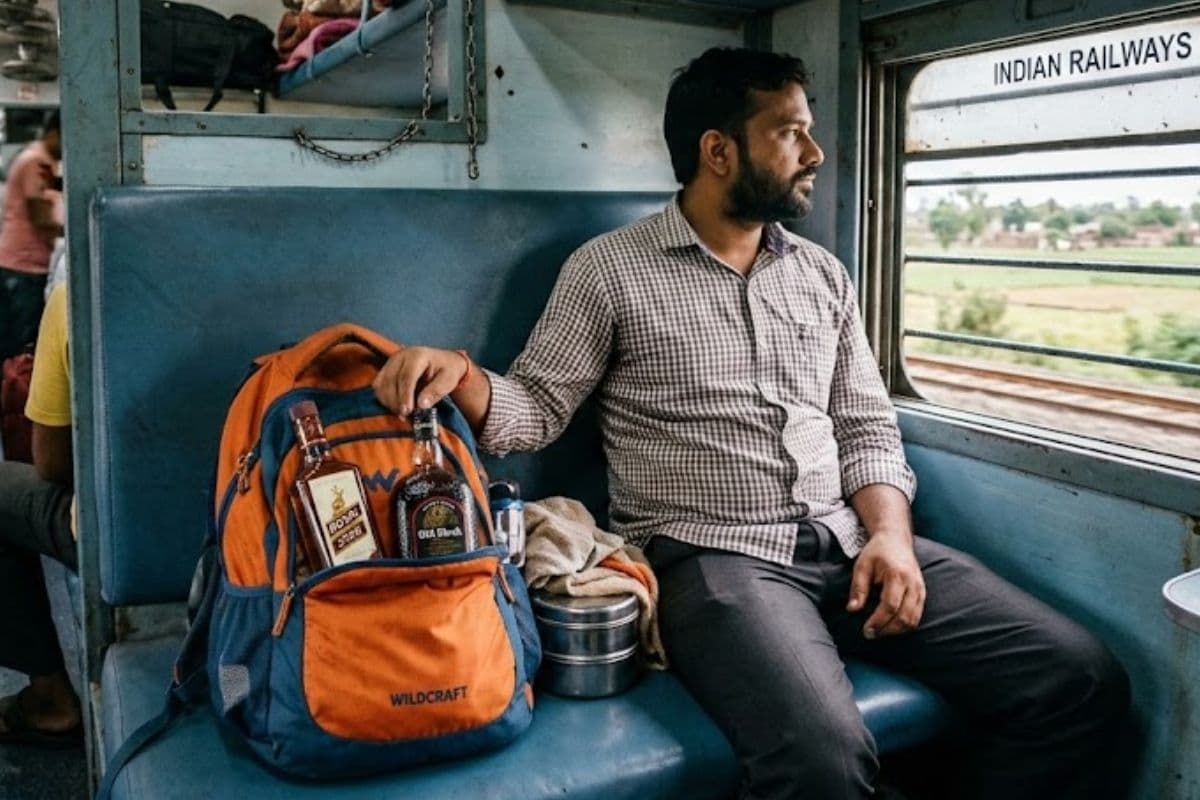
Many of us have traveled by train, and it's often one of the best experiences we have. During our journeys, we tend to bring back souvenirs for our loved ones, based on what the destination is known for. Some people bring back food, others choose clothes, and some opt for alcohol. However, a common question arises: can we carry alcohol on trains in India? The answer isn't straightforward, as it depends on both state laws and railway regulations. From rules to potential fines, here's everything you need to know!
The Indian Railways does not have a specific unified nationwide ban on carrying sealed alcohol bottles on trains as of 2026. However, the regulations of the same vary based on the state excise laws. Generally, passengers are allowed to transport up to 2 liters of sealed liquor per person for personal use.
This is applicable with strict adherence to the bottles being unopened and packed in checked luggage. The passenger must also have purchase receipts from licensed outlets.
Consuming alcohol onboard trains or at stations is strictly prohibited. This is in complete accordance with the Railways Act of 1989, Sections 145 and 165. Certain states, such as Gujarat, Bihar, and Nagaland, enforce complete bans on alcohol, and yes, this includes transit as well. Ticket Collectors (TTEs) or excise officials may inspect luggage, particularly on sensitive routes. They also have the authority to confiscate any items that exceed the allowed limits or have broken seals.
Fines for drinking range from INR 500 to INR 1,000 for intoxication or disorderly behavior. The fine might include potential ticket cancellation, immediate deboarding at the next station, or even imprisonment of up to six months
Repeat offenders face stricter action, including blacklisting via passenger ID, while routes through dry states like Gujarat or Bihar escalate penalties under local excise laws. This also includes confiscation plus fines.
TTEs (Ticket Collectors) or RPF (Railway Protection Force) make sure that this law is followed with zero-tolerance. This is to give importance to shared space decency that must be followed by all passengers.
India's dry states like Bihar, Gujarat, Nagaland, Mizoram, and Lakshadweep enforce total alcohol prohibition under state-specific laws like the Bihar Excise Act 2016 and Gujarat's Bombay Prohibition (Gujarat Amendment) Act 2009. It bans possession, sale, and consumption with severe penalties, including fines of INR 5000 to INR 25,000 and 5-10 years imprisonment.
.jpg&w=1920&q=75)
Exemptions are tightly regulated; this includes foreign tourists and certain tribal communities in Nagaland/Mizoram, who may obtain special permits for personal use via state excise offices. These permissions are always backed by a passport or ID proof.
It is advised that travelers must verify state portals or excise departments pre-journey to avoid fines. This is because the permission to carry alcohol differs from state to state based on the laws and rules followed there.
About 2 litres of alcohol is allowed on trains per person in 2026.
Yes, the TTE has the authority to check bags for alcohol.
The fine for carrying alcohol in trains ranges from INR 500 to INR 25000, depending on the severity.
Once caught, you might have to face confiscation, a fine, or even both.
No, alcohol is not allowed in trains to Nagaland.
Carrying alcohol from Goa to other states depends on the state you are traveling to.
.jpg&w=3840&q=100)
.jpg&w=3840&q=100)
.jpg&w=3840&q=100)