
If there’s one thing from Korea that has slowly taken the world by storm (apart from BTS), it has to be ‘soju’. This light, sweet, and subtle spirit has gained massive global popularity. However, even though people around the world enjoy soju in their own way, there are a few things about this Korean spirit that many don’t know yet. Which is why, in this blog, we’ll be sharing with you five soju facts you probably didn’t know. Let’s get started!
Soju is Korea’s national spirit and definitely one of the most popular alcoholic beverages in the world. The clear spirit is renowned for its smooth, sweet taste and for its iconic green packaging. The spirit is typically crafted from rice, wheat, or barley. Some varieties of soju are also made from tapioca starch.
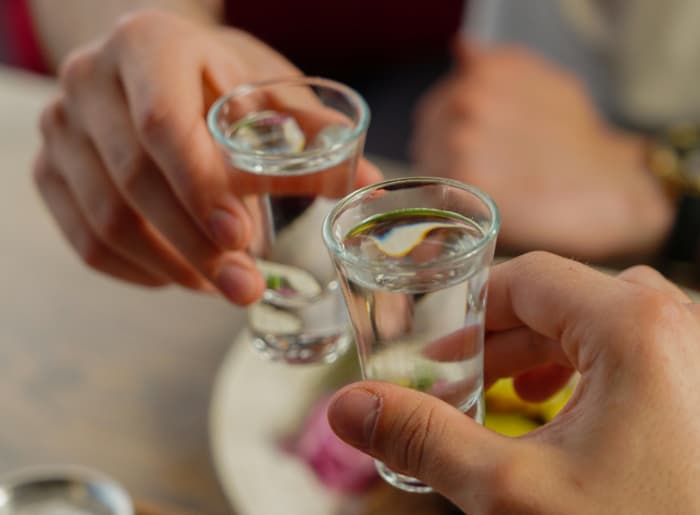
When drinking soju, the hierarchy in age is an important factor. The youngest person at the table is supposed to fill and refill everyone’s glasses. Traditionally, you’re supposed to hold the glass with both your hands when receiving a pour. In the end, when you ‘cheers’, it is always advisable to look away and avoid eye contact.
Your glass should always be full and never empty. And if you’re done drinking for the moment, leave a little soju in your glass to signal that you do not need a refill.
Almost every other bottle of soju you see in the supermarket today is green in color. But the bottles weren’t always green. They changed color only in 1994. Before that, soju bottles came in differently colored bottles – blue, white, brown, and more. It was in 1994 that a major soju producer introduced green colored bottles to signal that the drink is ‘smooth’, ‘clean’, and ‘approachable’. And the idea worked!
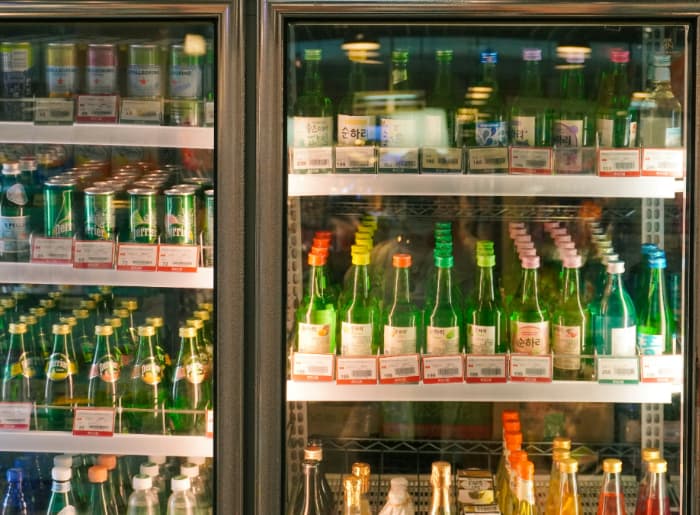
Green soju bottles rose in popularity and in 2009, major soju companies decided to all use the same green bottle design. This was to make recycling easier and efficient.
If you’ve tried soju, you must’ve noticed how small soju glasses are. These soju glasses are meant for sharing and establishing a connection with each other. In Korean culture, you never pour your own drink; someone else must pour it for you. These glasses are small on purpose – they empty faster and that means you interact and reach out for your friends’ glasses.
Small soju glasses also means that the alcohol content remains manageable when you’re having it on its own or pairing it with food.
While there are many soju lovers who are ‘purists’ and do not like to mix their soju with anything else, there are many others who like their soju with a variety of ingredients.
Soju, in the most unexpected ways, acts as a great base for cocktails. In fact, ‘somaek’, a drink combining the words ‘soju’ and ‘maekju’ (beer), is really popular in South Korea.
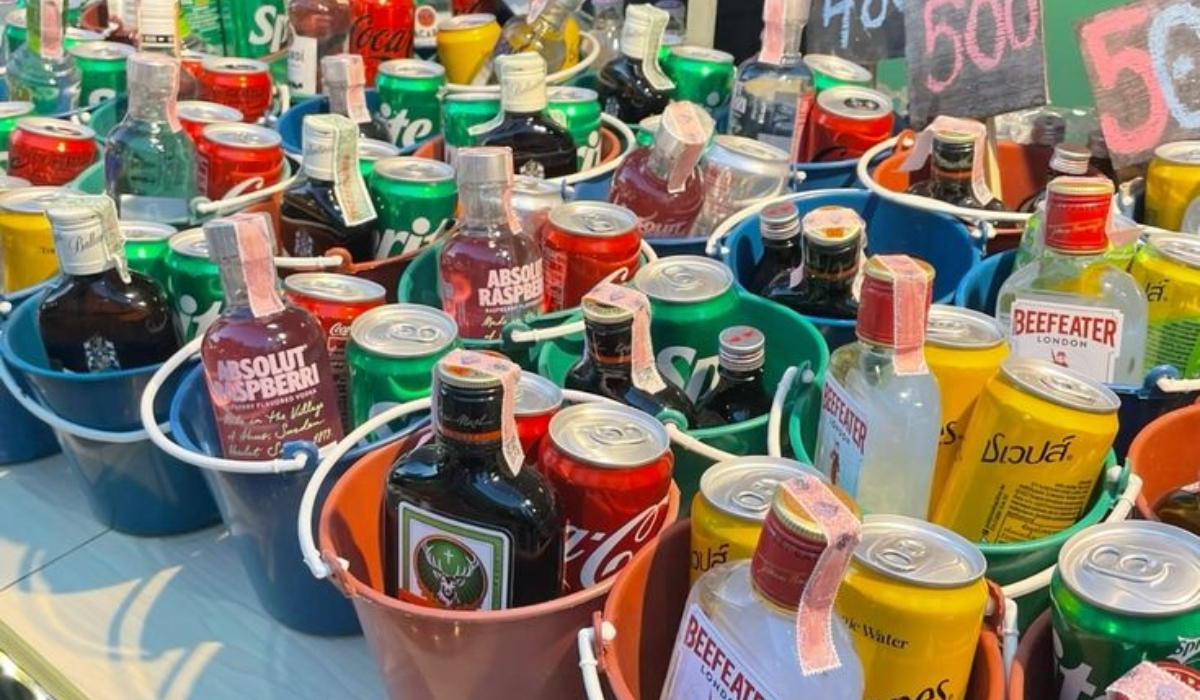
Soju also easily combines with natural fruit juices and aerated drinks, resulting in a number of delicious, palatable drinks. In fact, soju also pairs well with coffee! So go ahead, pair soju with a number of fruit juices, tonic water, sparkling water, coffee, and so much more!
Also Read: Sake Cocktails Are The Next Big Thing - Here’s How To Make Them At Home
JINRO is a popular South Korean soju brand that’s known for its distinct soju and the iconic ‘toad’ on its logo. However, the toad wasn’t always there. The original mascot was actually a monkey – a symbol of intelligence and luck in Asian cultures.
However, things changed in 1954 when the brand established a new brewery in South Korea against the backdrop of the Korean War. The brand needed a new mascot that would resonate better with people in Korea. This is why they chose the toad – a symbol of longevity, good fortune, and even fertility. This swap resonated well with Koreans and the toad logo remained etched on Jinro bottles.
Also Read: How To Taste Sake Like A Sommelier: The Ultimate Beginner’s Guide
In Korean, ‘soju’ means ‘burned liquor’, but do you know why? The word directly refers to the distillation process that soju undergoes. The ingredients are heated, vaporized, and then condensed – a revolutionary method that sets soju apart from other traditional spirits.
The term, having shared roots in Chinese ‘shaojiu’ and Japanese ‘shochu’, refers to heating the fermented mash to separate alcohol, thus ‘burning’ the spirit. This unique process sets soju apart by giving it a distinct clarity and potency.
Korean drinking etiquette places soju at the center of the Korean drinking culture. Soju is not just any drink, it is at the core of Korean culture that values shared bonds and the joy of celebrating together. In this blog, we’ve shared with you five interesting soju facts that you probably didn’t know. Which one of these facts surprised you the most?
Soju typically has 12%–25% ABV, stronger than beer but lighter than most spirits.
Soju pairs well with a number of Korean foods such as Korean Fried Chicken, Pajeon (green onion pancakes), Hwe (Korean sashimi), Bossam (boiled pork wraps), and more.
Green bottles were introduced in 1994 to represent a clean, smooth drink and aid recycling.