

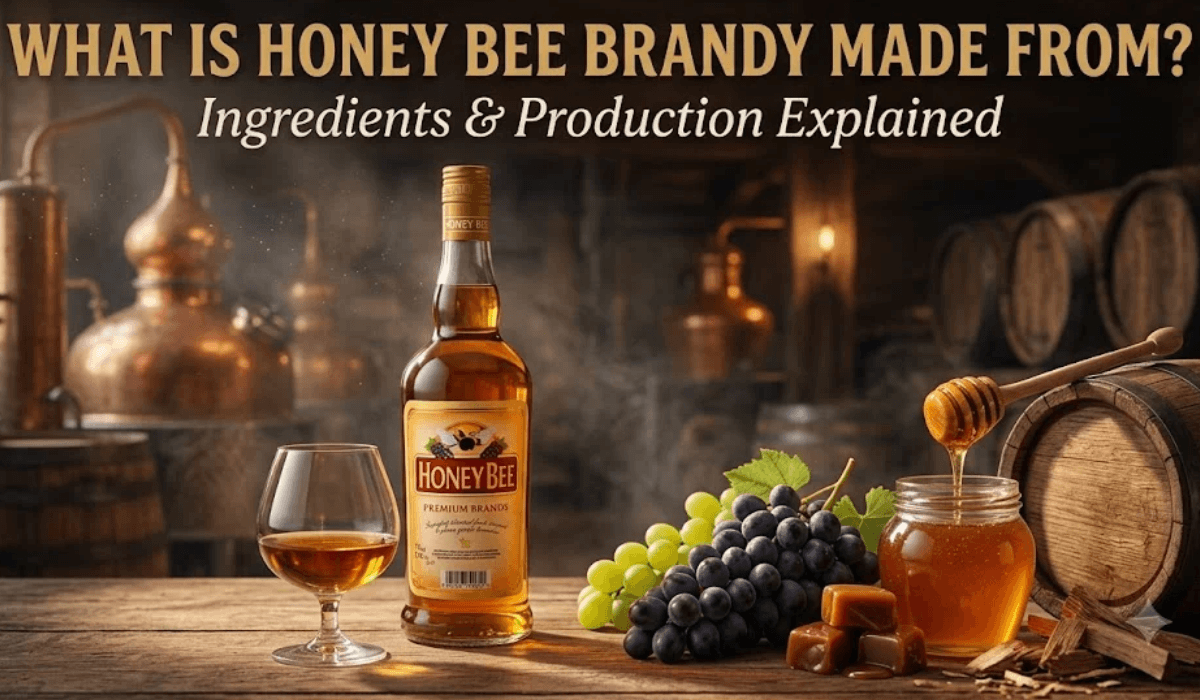
Honey Bee Brandy is a familiar name in India's brandy market, but its name can leave people wondering whether actual honey goes into the bottle. The answer is not quite what you might expect. Its producer, Inbrew Beverages, describes Honey Bee as a grape-based brandy, with a flavour profile that includes honey, fruit and sweet spices. In other words, honey appears in the tasting description, but the company does not list it as a main ingredient on its official brand page.
To understand what goes into Honey Bee, it helps to look at the grapes behind the spirit, how brandy is generally made and where the brand's characteristic sweetness comes from.
Despite the name, Honey Bee Brandy is described by its manufacturer as being crafted from carefully selected grapes. Inbrew's official website says the spirit is distilled using traditional methods and is known for its smooth, rich flavour, with notes of honey, fruit and subtle sweet spices.
Also Read: Best Brandy Brands In The World: Top 10 Ranked For 2026
That distinction matters because brandy is generally associated with fruit-based spirits, especially those made from wine or fermented grapes. The International Organisation of Vine and Wine (OIV) defines brandy as a spirit obtained through the distillation of wine or related wine distillates, with the spirit retaining some of the aroma and taste of its raw material.
Honey Bee's name and tasting profile may suggest a honey-forward drink, but the manufacturer's public description does not confirm that honey is added during production. It is better not to assume that the spirit contains honey simply because of its name.
The clearest ingredient information available publicly comes from Inbrew Beverages, which identifies grapes as the raw material used for Honey Bee Brandy. The company does not publish a complete, detailed ingredient breakdown or a full production specification on its brand page.
Here is what can be established from the available information:
Grapes: These are the key raw material identified by the manufacturer. In grape-based brandy production, grapes are fermented to produce wine or a similar base, which is then distilled into a stronger spirit.
Alcohol from distillation: Distillation concentrates the alcohol produced during fermentation and helps retain some of the raw material's aromatic compounds. The precise distillation specifications used for Honey Bee have not been publicly detailed by the brand.
Honey, fruit and spice notes: Inbrew describes these as part of the brandy's flavour profile. However, tasting notes do not automatically mean that those ingredients have been physically added to the drink.
The producer has not made a full ingredient list available on its public brand page, so claims about added sugar, actual honey, artificial flavourings, colouring or particular additives would need confirmation from the product label or manufacturer.
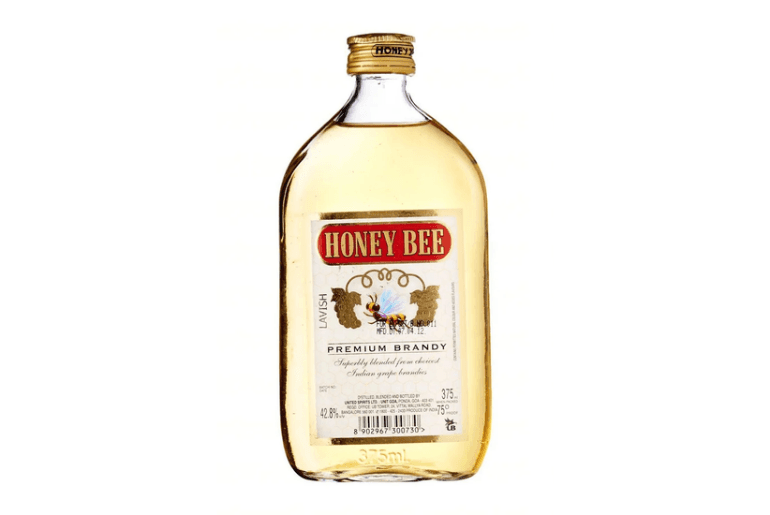
The manufacturer says Honey Bee is made from selected grapes and distilled using traditional methods. It has not published a step-by-step account of the brand's exact process, so the following explains the general method used to make grape-based brandy rather than claiming to reproduce Honey Bee's proprietary production process.
It starts with grapes, which are processed and fermented. During fermentation, yeast converts the sugars in the grape juice into alcohol, producing wine or a fermented grape base. This liquid can then be distilled, separating and concentrating alcohol and other volatile compounds that contribute to aroma and flavour.
Also Read: Brandy vs Cognac: What’s The Difference And Which Is Worth Buying?
The resulting spirit is then handled and blended according to the producer's requirements. Brandy production can involve maturation and blending to develop a consistent style, although Honey Bee's public brand information does not specify its exact ageing period, equipment, distillation method or blending formula.
The final stage is bottling, with the producer aiming to maintain a consistent flavour across batches. The exact technical details for Honey Bee remain proprietary unless the company chooses to publish them.
Inbrew describes Honey Bee as smooth and rich, with notes of honey, fruit and sweet spices. Those flavours help explain the brand's name, even though the public information does not confirm that honey itself is an ingredient.
The grape base gives the spirit its connection to fruit, while distillation concentrates alcohol and aroma compounds from the fermented raw material. The final flavour also depends on the producer's blending decisions and any other production steps used.
Honey Bee is positioned as a versatile brandy that can be enjoyed neat, over ice or in cocktails, according to its manufacturer. As with any spirit, the experience will depend on personal taste and how it is served.
Based on the manufacturer's publicly available information, Honey Bee Brandy is made from grapes, but the company does not confirm on its brand page whether actual honey is added. The honey reference appears in the description of its flavour, alongside fruit and sweet spices.
If you need to know whether the bottle contains honey or any particular additive, check the ingredients and product details printed on the label or contact Inbrew Beverages directly. That is more reliable than drawing conclusions from the brand name alone.
Also Read: Beehive Brandy Price In India: City-Wise Price List
What I find interesting about Honey Bee Brandy is how easily the name can make someone assume honey is one of its main ingredients. The manufacturer's description points to grapes as the base, with honey notes forming part of the flavour profile. It is a good reminder that a spirit's name and its actual ingredients are not always the same thing.
Honey Bee Brandy is described by its manufacturer, Inbrew Beverages, as a grape-based spirit made using traditional distillation methods. Its flavour profile includes honey, fruit and sweet spices, but the company does not publicly confirm whether actual honey is added. For a complete ingredient breakdown, check the bottle label or contact the manufacturer directly.