

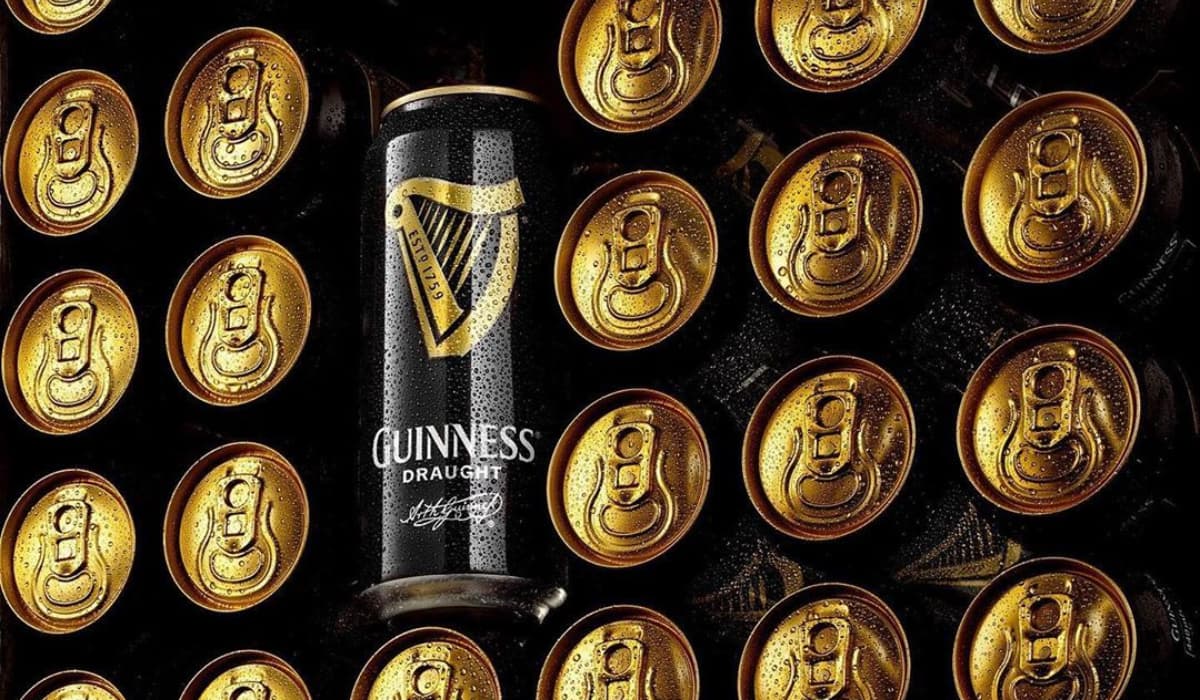
Have you ever finished off a can of Guinness and heard something rattling in there? If you have you may have wondered whether a piece of plastic had somehow got in your beer. The little ball you hear is actually supposed to be there and it's a very important part of what makes Guinness taste and feel the way it does.
The little plastic ball inside a Guinness Draught can is known as a 'widget'. Its job is to help produce the beer's characteristic creamy head and smooth mouthfeel, essentially replicating the experience of having a pint of Guinness freshly poured in a pub. How the hell does a tiny bit of plastic achieve that?

The widget is a small hollow plastic sphere with a very small hole in it. It's put into the Guinness Draught cans during the canning process and is there to help replicate the texture of beer that's poured from a tap. It's not like any other carbonated beer in that it has that thick, creamy head and very smooth mouthfeel.
The widget has a small amount of beer and nitrogen under pressure. It's designed to help release the gas into the surrounding beer when the can is opened, which is what gives you that characteristic flow of tiny bubbles. The ball stays in the can when you pour it and that's why you might hear it rattling around when the can is empty. It's an intentional part of the package, not a fault in the manufacture.
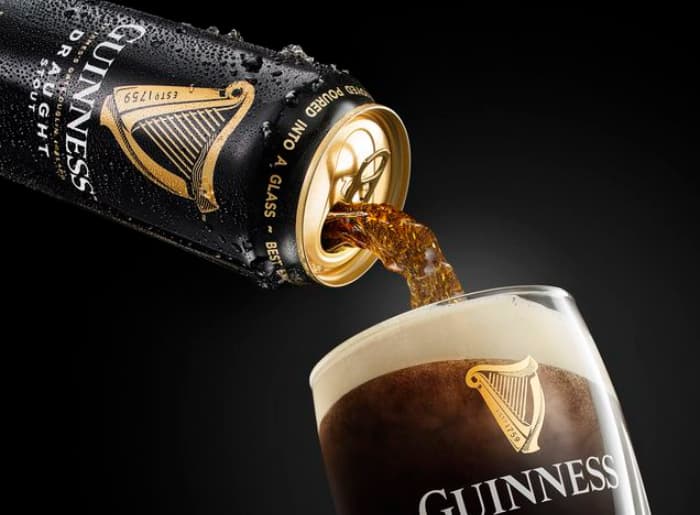
The widget works via a change in pressure. The beer and the widget are under pressure as long as the can is sealed. When you open the can the pressure inside the can drops dramatically. There's now a pressure difference between the inside of the widget and the surrounding liquid which forces a small amount of beer and gas through the tiny opening.
This release is what creates all the little bubbles throughout the stout. When you pour it into a glass those bubbles cascade and that's what gives the beer its characteristic look. As they rise and fall they form the thick, creamy head that Guinness is famous for. You wouldn't be able to get the same head and texture in a canned Guinness Draught without the widget.
The vast majority of beers are carbonated purely with CO2 which is what gives you that classic 'fizz' when you're drinking a lager or a comparable style of beer. Guinness Draught is different in that it's carbonated with a mixture of nitrogen and CO2. Nitrogen is less soluble in beer than CO2 and is responsible for the fine bubbles which give the stout its characteristic creamy mouthfeel.
These little bubbles give you a dense foam and a much smoother mouthfeel which is why Guinness doesn't seem quite as fizzy as a lot of other beers. In a pub you'd have the appropriate draft system to achieve that. The widget does the same thing in the can so you can have that lovely Guinness head at home without having to have a nitrogen draft system.
Did you know women were brewing beer over 7,000 years ago? Discover the fascinating history behind the world's earliest beer-making traditions.
Guinness introduced its widget technology in 1988 to deal with a problem that had been around for a long time. They could make their famous creamy stout in the pub, but it was very difficult to get the same result in a sealed can. The standard can technology of the day simply didn't produce the fine bubbles and thick head that you got with Guinness Draught.
The first widget was fixed in the can as opposed to the loose plastic ball that's now the norm. In 1997 Guinness came out with a floating spherical widget which could actually move about inside the can. It won the Queen's Award for Technological Achievement in 1991.
Looking for the best fall beers in 2026? Explore Indian craft beers, Oktoberfest lagers, and rich stouts worth trying this season.
Not all Guinness products have the same widget, as the standard plastic widget is found in the standard Guinness Draught cans, the ones that use the nitrogen widget technology to give you that creamy texture of draught stout.
Other Guinness products use different packaging and methods of serving. The Guinness Nitrosurge cans are designed to be used with a separate Nitrosurge unit which uses ultrasonic technology to achieve the 'nitro' pour. The widget in a standard Guinness Draught can is intended to stay in the can and there's no reason to remove it prior to drinking.
Difference between lager, IPA, wheat beer, and stout? Discover their key differences in taste, texture, and brewing styles to find your perfect beer.
This is all drawn from the Guinness FAQs (both the standard ones and the ones relating to The Story of Innovation, Guinness at Home and Nitrosurge), the University of Oxford's research (The Initiation of Guinness), and the various other sources that have been used to explain the history, the purpose and the way the widget works, what it does to the beer (i.e. the head), and the difference between standard Guinness Draught and Nitrosurge.
The little plastic ball inside a Guinness Draught can is the reason for one of the beers most distinctive characteristics. It works by releasing the beer and gas as the can is opened and is responsible for the fine bubbles, the cascading effect and the creamy head.
So the next time you hear something rattling around in an empty Guinness can you'll know it's not a packaging fault. It's a little piece of technology created to bring the pub experience of Guinness into the can.