

Whiskey is a drink that is made with a lot of precision, craftsmanship, and dedication through important processes like malting, mashing, fermenting, distilling, and maturing. The last step, i.e. maturing the whisky is a crucial non-negotiable aspect of whiskey-making – it can make or break the flavor of the whisky. What is this process, why is whiskey aged in oak barrels, and what is the science behind it? Let’s take a deep dive into the fascinating aspect of whiskey aging in oak barrels.
Maturation in oak barrels is the last step in the whiskey maturation process. Whiskeys are aged in oak barrels that lend their color and most of their flavor to the whiskey. There are many different types of barrels used in this process, but American White Oak and French Oak are some of the most commonly used barrels.
Whiskey barrels are typically charred from the inside, and for a pretty good reason. They are charred from the inside to bring natural wood sugars to the surface. They integrate with the whiskey when they come into contact, lending their sweetness and other flavors to the whisky.
Barrels can be charred to different levels, ranging from one to four typically. The higher the number, the more burnt the barrel is, and the more ‘smoky’ and ‘woody’ the whiskey will become. The charred wood also acts as a natural filter, removing unwanted impurities and off-flavors from the spirit – including sulphur.
As the spirit interacts with the wooden surface of the barrels, it absorbs the flavors, color, and aroma of the surface. Over time, whiskey also gets exposed to oxygen through minute pores into the wood. The exposure of oxygen into the spirit triggers a series of chemical reactions that mellow the spirit and lend newer, smoother flavors.
The material in which it is stored affects the flavor and other properties of the whiskey. However, environmental conditions also play a major role in the maturation process. Temperature fluctuations can contract and expand the wood – and each contraction and expansion can contribute to the whiskey’s flavor.
High temperatures can cause the wood to expand, ultimately pushing it deeper into the wood, which speeds up the aging process. High-variance climates (areas having a wide range of temperatures) can experience more frequent cycles of contraction and expansion.
Let’s take a closer look at the key chemical processes that influence the flavor of the whisky in oak barrels.
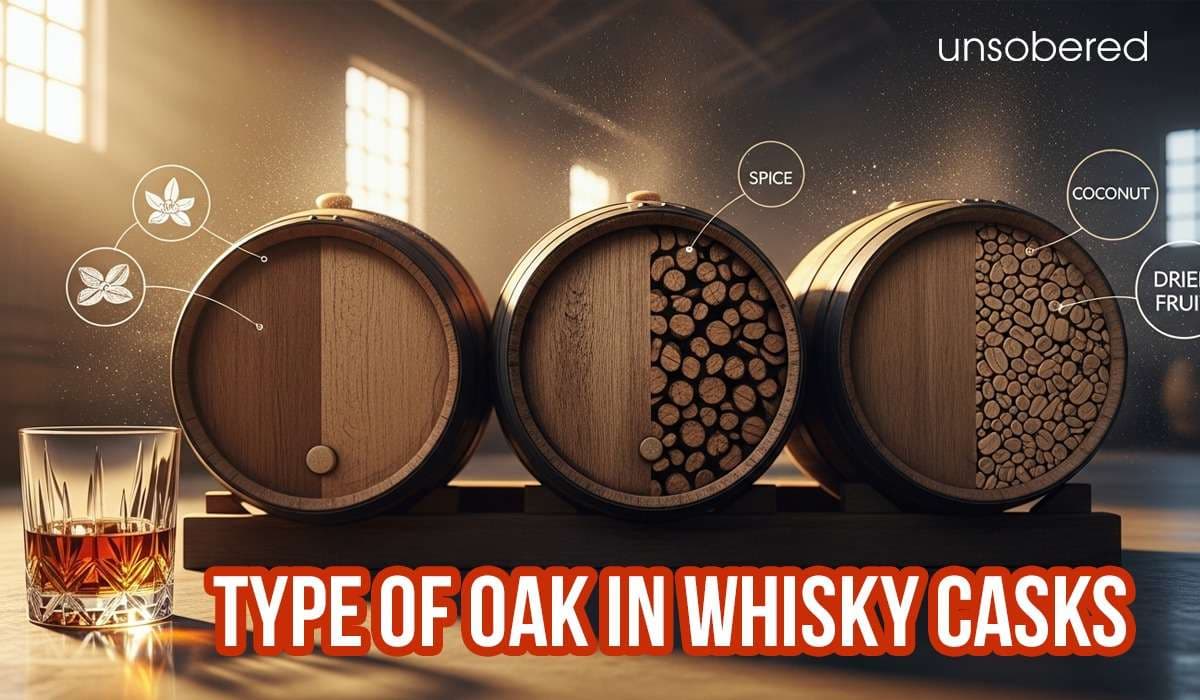
Whisky casks or barrels are essential in imparting color, flavor, and aroma to the whiskey. The type of wood used, age, size, level of charring, and reuse of the casks. Let’s take a look at some of the most important types of oak in different types of casks:
There is so much information about the whisky aging process, from the types of casks used to their sizes and storing conditions that one article simply cannot do justice to. In this article about ‘why whiskey is aged in oak barrels’, we’ve covered the science behind it, how the environment affects aging, the chemical processes involved, and types of wood used in making casks.
Similar Content:
.jpg&w=3840&q=100)
.jpg&w=3840&q=100)
.jpg&w=3840&q=100)