
.png&w=3840&q=75)
We’ve all had that moment. One drink feels light and easy, another seems to kick in way too quickly. It’s tempting to blame the alcohol itself, tequila hits harder, beer is safer, wine is slow. But the truth is, it’s less about the label on the bottle and more about how alcohol behaves in your body.
Science is pretty clear on this. What matters most is how quickly ethanol enters your bloodstream, and that depends on things like alcohol strength, carbonation, how fast you drink, and whether you’ve eaten.
Still, certain types of drinks are more likely to hit faster simply because of how they’re consumed or structured. Here’s a practical breakdown.
1. Shots (Vodka, Tequila, Whiskey)
Shots are probably the fastest way to feel alcohol. You’re taking a concentrated amount in seconds, which spikes your blood alcohol level quickly. Spirits are usually around 40% ABV, so you’re getting a strong dose in a small volume.
2. Champagne and Sparkling Wine
That buzz you feel quickly? It’s not your imagination. Carbonation speeds up alcohol absorption by pushing it faster into the small intestine.
This is why champagne can feel surprisingly strong, even if you didn’t drink much.
3. Whiskey Soda / Vodka Soda
Mixing spirits with fizzy drinks creates a double effect, strong alcohol plus carbonation. Studies show carbonated mixers can increase how quickly alcohol enters your bloodstream.
Also Read: Wine vs Beer Calories: Which Makes You Gain More Weight?
4. Strong Cocktails (Long Island, Negroni)
Cocktails that combine multiple spirits don’t always taste strong, which makes them easy to drink quickly. But they pack a high alcohol load, which can catch up fast.
5. Drinking On An Empty Stomach
Not a drink, but it changes everything. Alcohol hits much faster when there’s no food to slow absorption. Effects can begin within minutes and peak quickly.
1. Beer (Regular Strength)
Beer has a lower ABV, usually around 4–6%. You also drink it more slowly and in larger volumes, which spreads out alcohol intake and slows the overall effect.
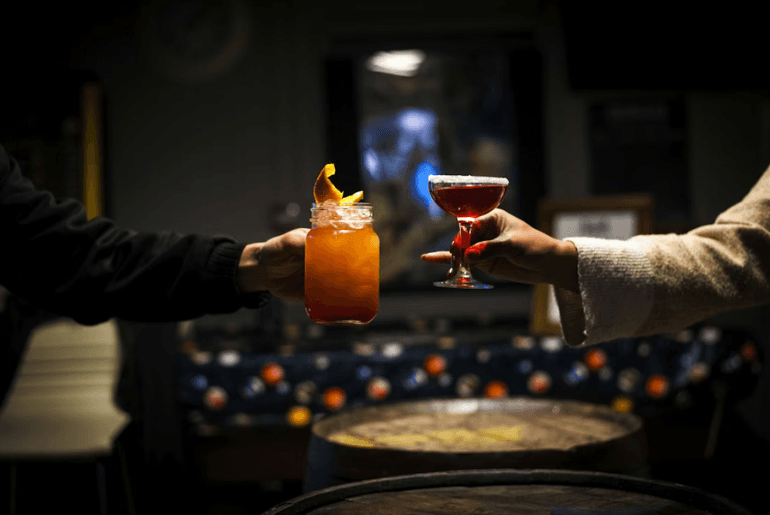
2. Wine (Sipped Slowly)
Wine sits in the middle. It’s stronger than beer but usually consumed slowly, especially with food. That pacing makes a big difference in how it feels.
3. Diluted Drinks (Highball Style)
When alcohol is mixed with still water or juice, the overall concentration drops. Lower concentration can slow absorption compared to neat spirits.
4. Radlers and Light Beers
These are designed to be lighter, often under 4% ABV. Because of the lower alcohol content, your body processes them more gradually.
5. Drinks With Food (Any Type)
Again, not about the drink itself. Eating, especially carbs or fats, slows how quickly alcohol moves into your bloodstream.
Also Read: Guinness Beer Nutrition Info: Calories, ABV & Key Details
Here’s the part most people miss. As per Healthline, alcohol absorption is influenced by several key factors, including the strength of the drink (ABV), whether it’s carbonated, how quickly you’re drinking, and if you’ve eaten beforehand. Your own body size and metabolism also play a role. Alcohol begins entering your bloodstream almost immediately and can start affecting you within about 10 minutes. So when someone says, “this drink hits harder,” what they’re usually noticing is how it was consumed, not the drink itself.
There isn’t really a strict “fast vs slow” list when it comes to alcohol. The same drink can feel completely different depending on how and when you have it. Shots, fizzy drinks, and strong cocktails tend to hit faster because they’re consumed quickly or absorbed more efficiently. On the other hand, beer, wine, and diluted drinks feel slower mostly because of pacing and lower alcohol concentration. At the end of the day, it’s less about choosing the “safe” drink and more about how you drink it.
.jpg&w=3840&q=100)