
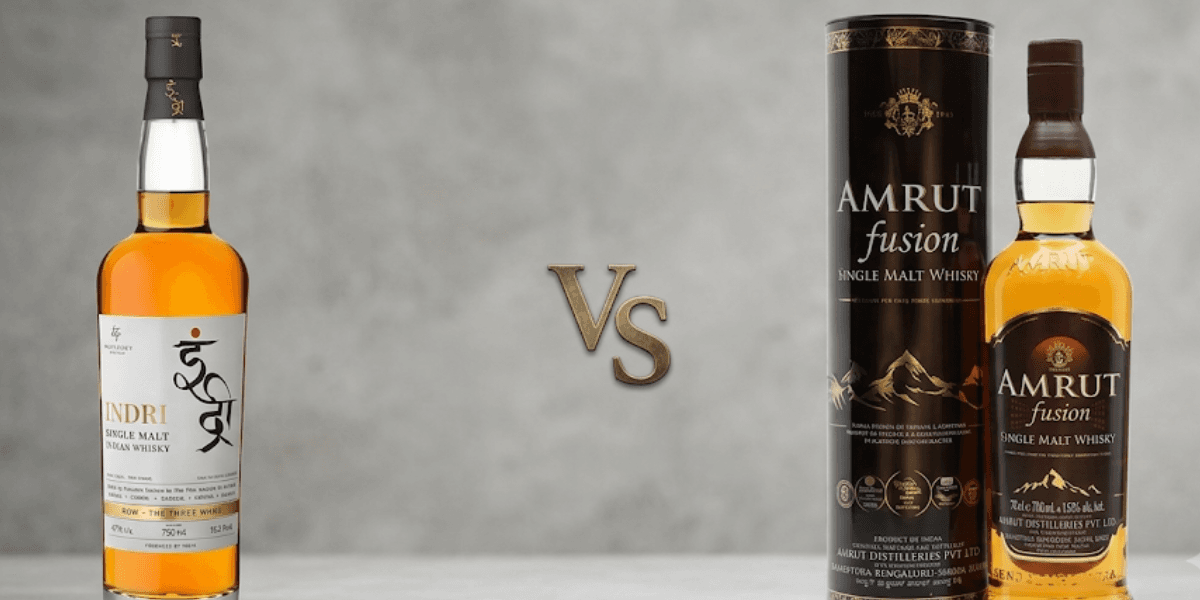
Indian single malt whisky is no longer something you have to explain to people. Amrut helped put Indian whisky on the international map, and brands such as Indri have taken that conversation much further in recent years. Both are Indian, both make serious single malts, and both have picked up major international awards.
Amrut is the more established name, with a long track record and a much wider whisky portfolio. Indri is the younger brand that has grown very quickly, especially with Trini, Drú, Agneya and its limited editions.
So if you have around INR 3,000 to INR 6,000 to spend on an Indian single malt, which bottle actually deserves space on your shelf?
Amrut's story goes back to 1948, when Amrut Distilleries was established in Bengaluru. Its single malt journey became internationally important when Amrut Fusion was launched in Glasgow in 2004. The whisky itself is made using a combination of Indian and Scottish barley, which is where the name Fusion comes from.
Also Read: Amrut Distilleries: Whisky Brands, History & Global Presence
The tropical climate of Bengaluru is also a major part of Amrut's character. Whisky matures faster in India's warmer conditions than it does in Scotland, and Amrut has built much of its identity around this difference.
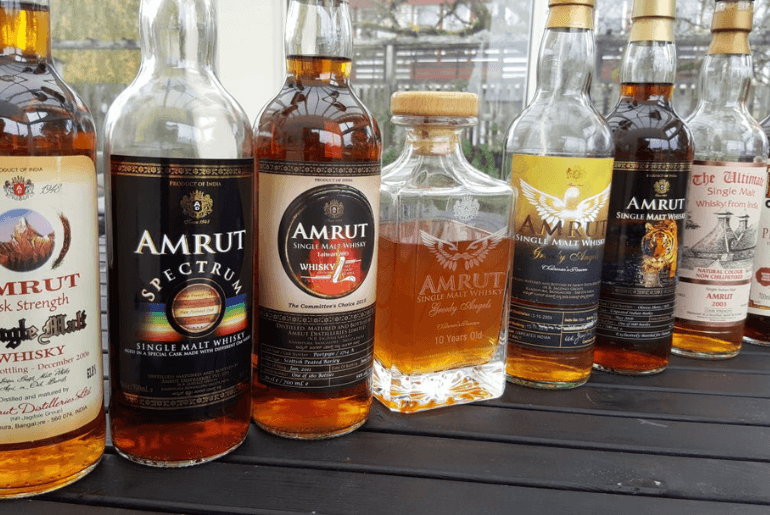
The official Amrut portfolio is now considerably bigger than just Fusion. Its current single malt range includes Fusion, Fusion X, Indian Single Malt, Bagheera, Triparva, Peated Single Malt, Peated Cask Strength, Rye Malt, Single Cask Single Grain and other special releases. And Fusion remains the bottle I'd start with if you are trying Amrut for the first time.
At 50% ABV, it is not a timid whisky. The official tasting profile leans towards malt, fruit, spice and oak, with a fairly substantial finish. The World Whiskies Awards has also repeatedly recognized Fusion, including a Silver in 2025.
Indri comes from Piccadily Distilleries in Haryana and has built its reputation surprisingly quickly.
Its flagship Indri-Trini is named after the three different types of casks used for maturation: ex-bourbon, ex-French wine and ex-sherry casks. That combination is central to the whisky's profile, giving it notes of caramelized pineapple, vanilla, raisins, citrus and nuttiness, according to the brand.
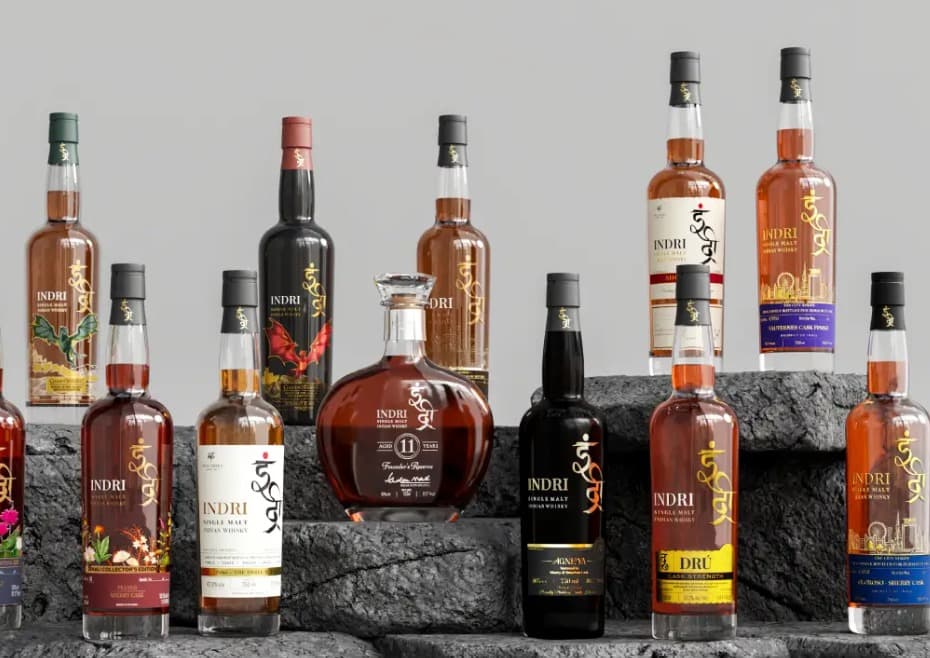
The current Indri portfolio is much bigger than Trini too. Its official website lists Trini, Drú, Agneya, Founder's Reserve, Diwali Collector's Edition, Travel Retail Exclusive, House of the Dragon editions, The City Series and Ilika, among others. The awards record is where Indri becomes particularly interesting. Indri Drú won Best Indian Single Malt at the World Whiskies Awards in 2024.
Also Read: Every Indri Single Malt Variant Explained: Which One Should You Buy?
Then in 2025, Indri Founder's Reserve Wine Cask 11 Years Old won Best Indian Single Malt at the same awards, while in 2026, Indri Agneya won Gold in the Indian Single Malt category. The Indri Diwali Collector's Edition 2025 was also named Best Indian Small Batch Single Malt at the 2026 World Whiskies Awards.
This is where I think the choice becomes personal. Amrut Fusion is bigger and more assertive. At 50% ABV, you get malt, fruit, spice, oak and a warming finish. It has that unmistakable Indian single malt character, particularly when you compare it with softer Scotch whiskies.
Indri-Trini is a little easier to approach. The three-cask maturation gives it a combination of dried fruit, vanilla, caramel, citrus and oak. The brand's own tasting notes mention caramelized pineapple, vanilla, raisins, black tea and subtle nuttiness.
If you are new to Indian single malts, Trini is probably the easier starting point. If you already enjoy whisky and want something with a little more punch, Fusion is the bottle I'd pick.
Also Read: Piccadily Distilleries: Indri Whisky, Brands & Market Presence
This is where prices get slightly messy because alcohol prices in India depend heavily on the state.
For a broad 2026 comparison, Amrut Fusion 750ml is around INR 5,500 in Mumbai and INR 4,300 in Delhi, while Indri-Trini is around ₹5,900 in Mumbai and INR 3,700 in Delhi.
As you can see, the pricing for both the brands a bit confusing. The pricing for Amrut and Indri are different in different states, hence to say which one is cheaper or more expensive is a bit complex.
Both brands have serious awards behind them. Amrut Fusion has won major international recognition over the years, including Best In Class at Whiskies of the World in 2018, a Grand Master recognition from The Spirits Business Awards in 2011 and multiple World Whiskies Awards medals.
Amrut's wider range has continued winning too. Its Peated Single Malt Cask Strength was named Best Indian Single Malt at the World Whiskies Awards 2025.
Indri's recent run has arguably been even more dramatic, with Trini, Drú, Founder's Reserve and Agneya picking up major awards across different years.
If you want value, I'd go with Amrut Fusion. If you want a softer, fruitier and more layered introduction to Indian single malt, I'd pick Indri-Trini.
If you like peat, Amrut's Peated Cask Strength is the more obvious choice. If you are collecting bottles or want to explore what Indian whisky is doing right now, Indri's special releases are particularly interesting.
Also Read: Amrut Distilleries Launches Kranthi Whisky; 53rd Whisky Expression
Personally, I'd start with Amrut Fusion if I had never tried an Indian single malt before. It gives you a very clear idea of what made Indian whisky interesting internationally in the first place. After that, I'd move to Indri-Trini and then start exploring Drú, Agneya and the special editions.
And honestly, this is one of those comparisons where having both bottles at home isn't a bad idea at all. They show two different stages of India's single malt story: Amrut helped establish the category globally, while Indri is showing just how ambitious the next generation has become.
.jpg&w=3840&q=100)