
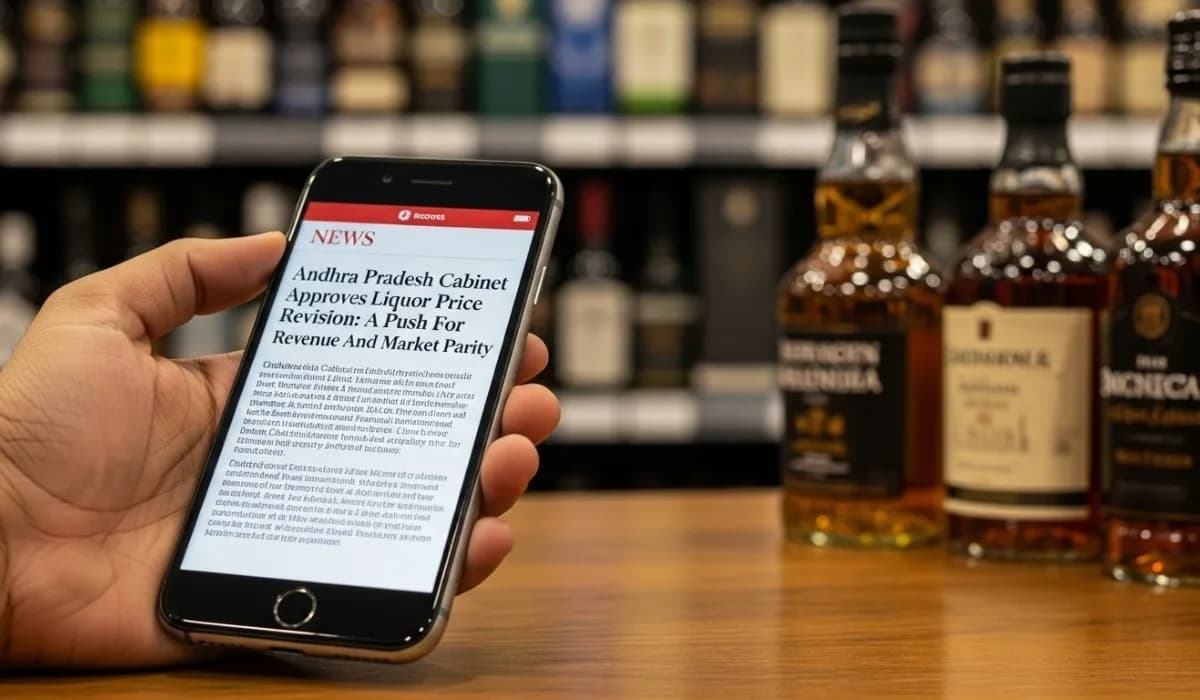
In a significant move to streamline the state’s excise revenue model and address pricing discrepancies in the hospitality sector, the Andhra Pradesh state cabinet, chaired by Chief Minister N. Chandrababu Naidu, has approved a marginal hike in liquor prices. The decision, finalized during a cabinet meeting on Thursday, January 8, 2026, reflects a strategic shift towards balancing fiscal requirements with market stability.
The cabinet has approved a uniform increase of INR 10 per bottle across various sizes of India-Made Foreign Liquor (IMFL), including Royal Stag and Imperial Blue, as well as foreign liquor (FL), such as Hendrick’s and Bombay Sapphire. However, the government has adopted a nuanced approach to ensure that the "common man" and specific beverage segments remain unaffected by the hike.
Key exclusions from the price hike include:
Furthermore, the cabinet decided to increase the retailer margin by approximately 1% of the Maximum Retail Price (MRP) for all categories, including IMFL, FL, beer, and wine. This move is expected to support retail outlet operators who have been advocating for better margins under the new excise policy.
A primary objective of this revision is to eliminate the price disparity between retail shops and bars. Previously, an "Additional Retail Excise Tax" imposed on bars created a significant price gap for the same product depending on where it was consumed.
State Information and Public Relations Minister K. Parthasarathy explained that the withdrawal of this additional tax is designed to bring price parity. While the government will lose approximately INR 340 crore annually by withdrawing this tax, it aims to reduce the financial burden on bar owners and foster a more transparent pricing environment for consumers.
Despite the relief provided to bar owners, the overall impact on the state exchequer is overwhelmingly positive. The INR 10 hike, spread across the high-volume IMFL and FL segments, is projected to generate an additional annual revenue of approximately INR 1,391 crore.
This fiscal boost comes at a crucial time as the Naidu-led administration seeks to fund various welfare schemes and infrastructure projects, including the accelerated development of the capital city, Amaravati.
In a bid to position Andhra Pradesh as a more attractive destination for tourism and investment, the cabinet also relaxed norms for microbreweries.
The latest decisions by the Andhra Pradesh cabinet represent a calculated effort to "rationalize" the liquor market. By implementing a marginal INR 10 hike while simultaneously removing burdensome taxes on bars, the government is attempting a delicate balancing act: increasing state revenue without triggering significant public backlash or stifling the hospitality industry.
As the new pricing takes effect, the focus will shift to how these funds are utilized for the state's broader development goals and whether the increased retailer margins will lead to better compliance and service at the ground level.