
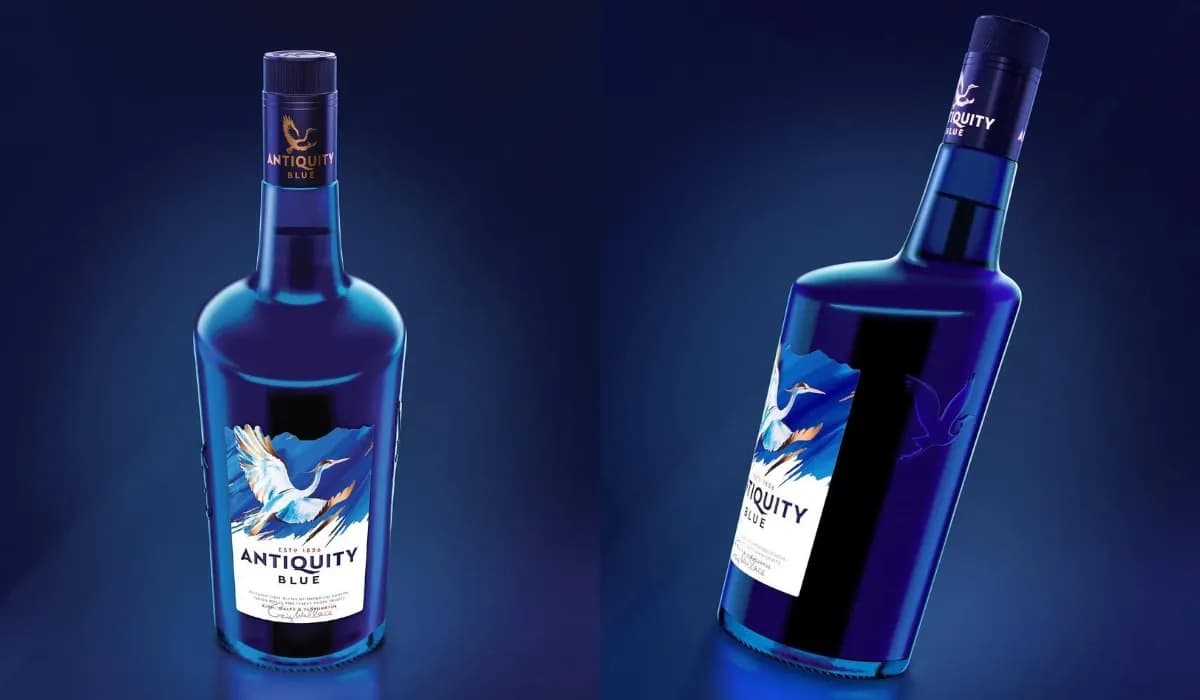
Antiquity Blue is a revered ultra‑premium Indian whisky, celebrated for its smooth blend of Indian malts, rare Scotch whiskies, and grain spirit. It is aged in white oak casks and delivers rich aroma profiles with caramel, oak, vanilla, and a trace of smoke.
This article offers a comprehensive breakdown of Antiquity Blue price across various bottle sizes and key Indian states – including Delhi, Mumbai, Hyderabad, Bangalore, Goa, and more – supported by accurate MRP data as of 2025.
Antiquity Blue was established in 1992 and is now under Diageo, one of India's leading alcoholic beverage companies. It embodies the timeless tradition of making whisky. The whisky is blended with scotch from the Cameronbridge Distillery. The whisky is distilled in copper pot-stills, a tradition with its roots in Scotch making. The whisky's rich and inviting color is inspired by the hue of antique gold. Pronounced malt and rich wood flavours are supplemented with a hint of peat and heather.
According to Boldsky, the MRP for Antiquity Blue in Delhi is as follows:
Bottle Size | MRP (INR ) |
1,000 ml | INR 1,190 |
750 ml | INR 900 |
375 ml | INR 450 |
180 ml | INR 225 |
90 ml | — |
Thus, the Antiquity Blue price 750ml in Delhi is INR 900, and for 180ml it’s INR 225.
City / State | Price (INR ) for 750ml |
Delhi | INR 900 |
Mumbai | INR 1,600 |
Hyderabad | INR 1,410 |
Bangalore | ~INR 1,500–INR 2,500 |
.webp&w=1920&q=75)
When you pair food with whisky, it’s like you are finding a match. When it works, sparks fly! When it doesn’t work, it can be very confusing and overwhelming. Luckily, a few simple suggestions can transform your whisky and food experience from a clash of flavors, to harmony between them.
Understanding the Antiquity Blue price across India reveals how state‑level regulations and taxes shape the cost to consumers. Whether you're in Delhi, Mumbai, Hyderabad, or Bangalore, price differences can reach INR 1,600 per bottle – making it crucial to reference local MRP lists when planning a purchase. For states not covered here or for other bottle sizes, I’d be happy to help dig further!
Whisky is not 100% alcohol. Most whiskies are bottled at about 40 to 50 per cent alcohol. The remaining 50 to 60 per cent of the whisky consists of water and other essential components.
Drinking 180 ml of whisky on a daily basis is definitely not good for your health. Daily consumption of whisky or any other kind of spirit is harmful for your health, affecting liver function, brain function, and other bodily processes.
There is no particular type of alcohol that is the hardest on your liver. However, any alcohol with high alcohol content can be hard on liver, especially those with an alcohol content of mostly 50 per cent and above. It is especially harmful if had on a regular basis.
.jpg&w=3840&q=100)
.jpg&w=3840&q=100)