

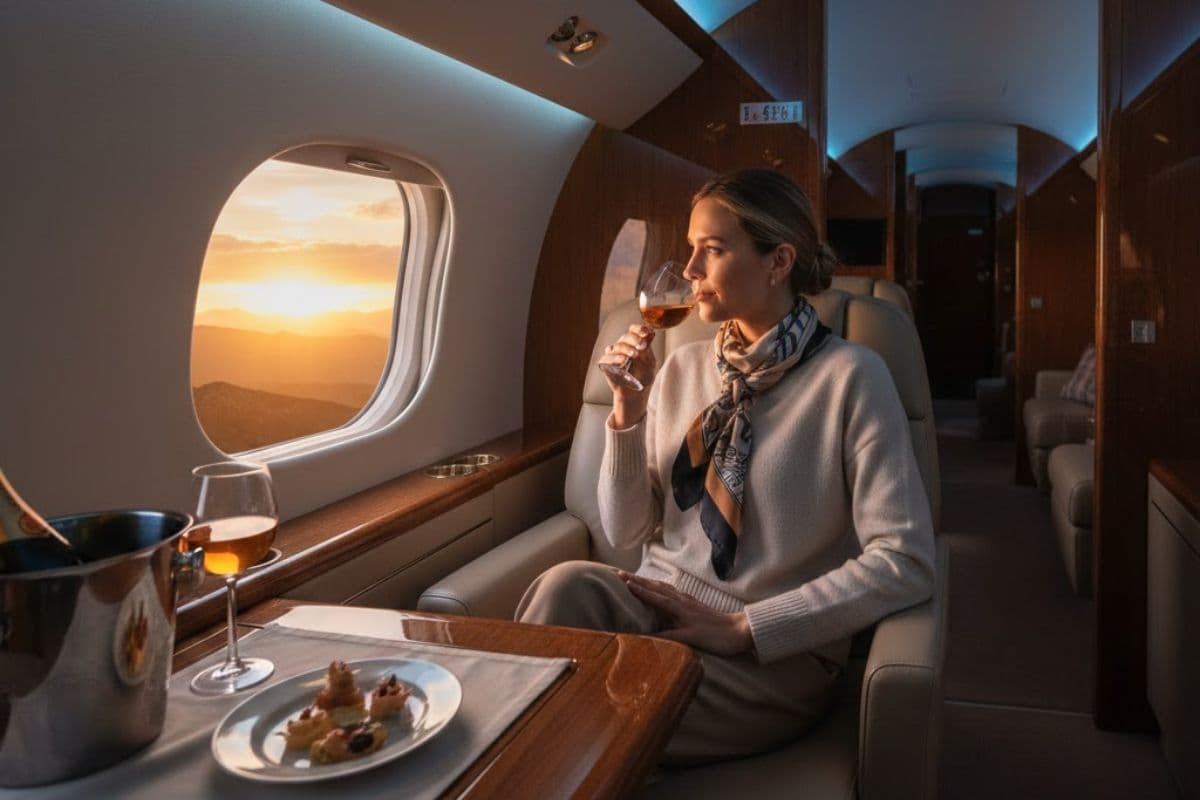
The difference between alcohol in economy vs business class comes down to the kind of experience airlines are trying to create. While the economy focuses on efficiency and accessibility, business class is designed around premium hospitality, personalised service, and comfort.
Alcohol onboard is not treated as a standalone service; it is considered to be a part of the cabin experience alongside food, seating, and overall service standards. That’s why the airline alcohol difference between classes becomes noticeable almost immediately on international flights.
Business class tickets are also significantly more expensive, often costing several times more than economy fares. Airlines use premium food and beverage programs, including curated wines and premium spirits, to justify those higher prices and make the upgrade feel more exclusive.
.webp&w=1920&q=75)
On most airlines, alcohol served in economy flights is designed around standardisation and large-scale service. International routes generally include beer, wine, and a few basic spirits during meal service, while domestic Indian flights usually do not serve alcohol because of Directorate General of Civil Aviation(DGCA) regulations.
Economy passengers are usually offered a limited selection of commonly available alcohol brands that can be served quickly across a large cabin. Beer, house wine, vodka, rum, and whisky tend to make up most airline economy menus. The Cabin crew usually serve drinks during designated meal rounds rather than continuously throughout the flight. On some airlines, there may even be informal drink limits or stricter monitoring of alcohol consumption to maintain cabin safety.
For many travellers, what drinks are served in business class becomes part of the attraction of flying premium cabins in the first place. Business class treats alcohol as part of the luxury travel experience rather than just a beverage option. Premium whiskies, curated wine lists, cocktails, craft gins, etc., dominate the drinks menu. Even the presentation changes, from plastic disposable cups to proper glassware
The business class alcohol vs economy class difference becomes even more noticeable on long-haul flights. Business class passengers are often given dedicated beverage menus with multiple wines, aperitifs, and after-dinner drinks that are unavailable in economy.
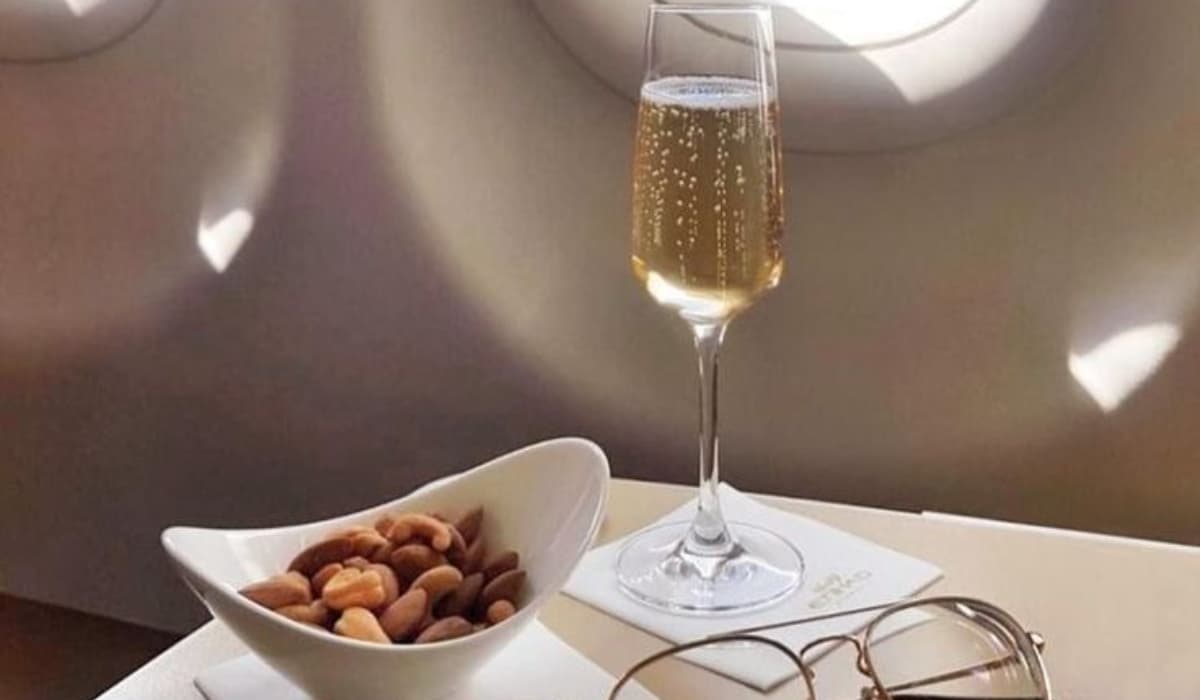
One of the most common questions passengers ask is whether alcohol is free in business class. On most international airlines, the answer is yes. Premium cabin passengers generally receive complimentary alcohol throughout the flight as part of the ticket price.
Many airlines also allow unlimited alcohol in business class within reasonable consumption limits. Since premium cabins have fewer passengers and higher crew-to-passenger ratios, cabin crew are able to provide more personalised and flexible drink service during the journey.
This differs sharply from economy cabins, where alcohol service tends to remain more controlled and limited to meal periods. Some passengers also wonder, “Do you get free alcohol in economy class?” The answer depends entirely on the airline and route. Certain international airlines include complimentary drinks in economy, while low-cost carriers and domestic Indian routes usually do not.
Domestic Indian flights generally do not serve alcohol because of DGCA restrictions, which means most passengers only experience premium airline beverage programs while flying internationally.
Airlines like Air India typically reserve their better spirits, wine selections, and champagne service for business-class and first-class passengers on long-haul routes. Economy passengers usually receive a far smaller selection of standard beer, wine, and spirits served during meal service.
Indian travellers are also becoming more aware of premium in-flight experiences as international travel continues to grow. For many passengers flying long-haul to Europe, North America, or the Middle East, business class alcohol service has increasingly become part of the overall luxury travel experience rather than simply an onboard add-on.
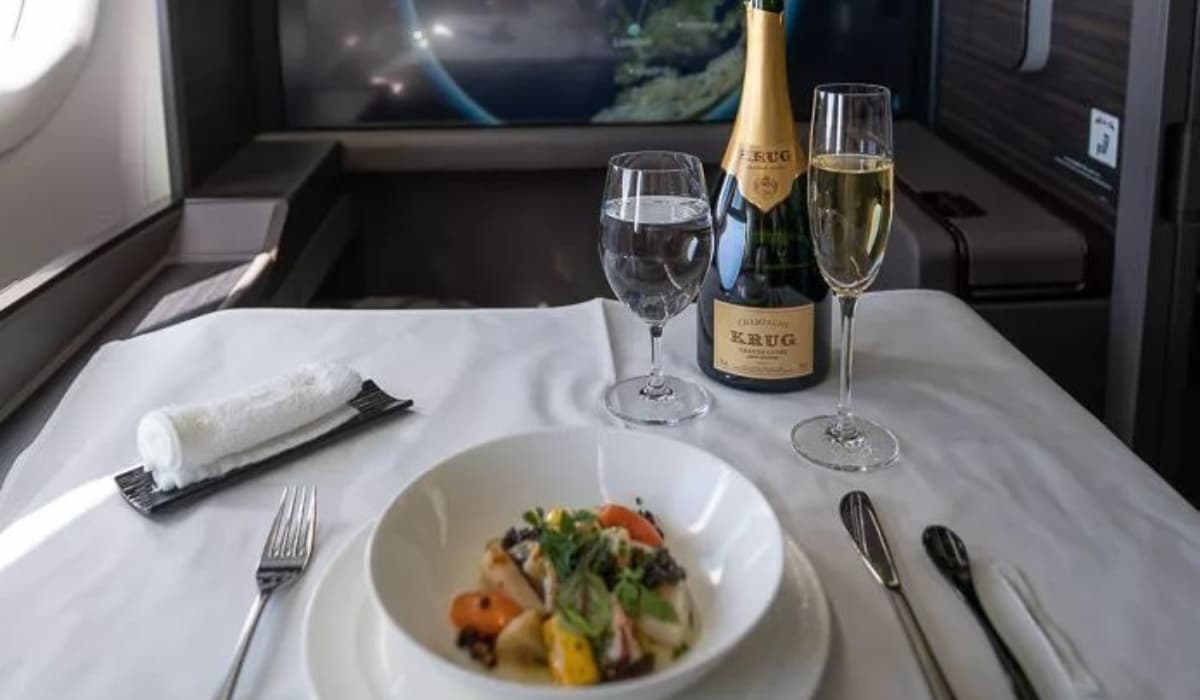
For airlines, these details also influence customer loyalty. Frequent business travellers and premium passengers often compare airlines based on hospitality, food quality, wine lists, and overall in-flight experience. That is why many international carriers continue investing heavily in premium beverage programs despite already high operational costs.
This is particularly relevant for Indian and Middle Eastern airlines competing aggressively on long-haul international routes, where luxury and hospitality have become major selling points.
The difference between alcohol service in economy and business class ultimately reflects how airlines position each cabin experience. In the economy, drinks are designed around accessibility, efficiency, and standardisation. In business class, alcohol becomes part of a larger premium hospitality experience.
Better spirits, curated wines, complimentary champagne, and more personalised service all contribute to making premium cabins feel noticeably different. As airlines continue competing more heavily around customer experience, alcohol service has quietly become one of the clearest indicators of how differently passengers are treated once they step beyond economy.
.jpg&w=3840&q=100)
.jpg&w=3840&q=100)