
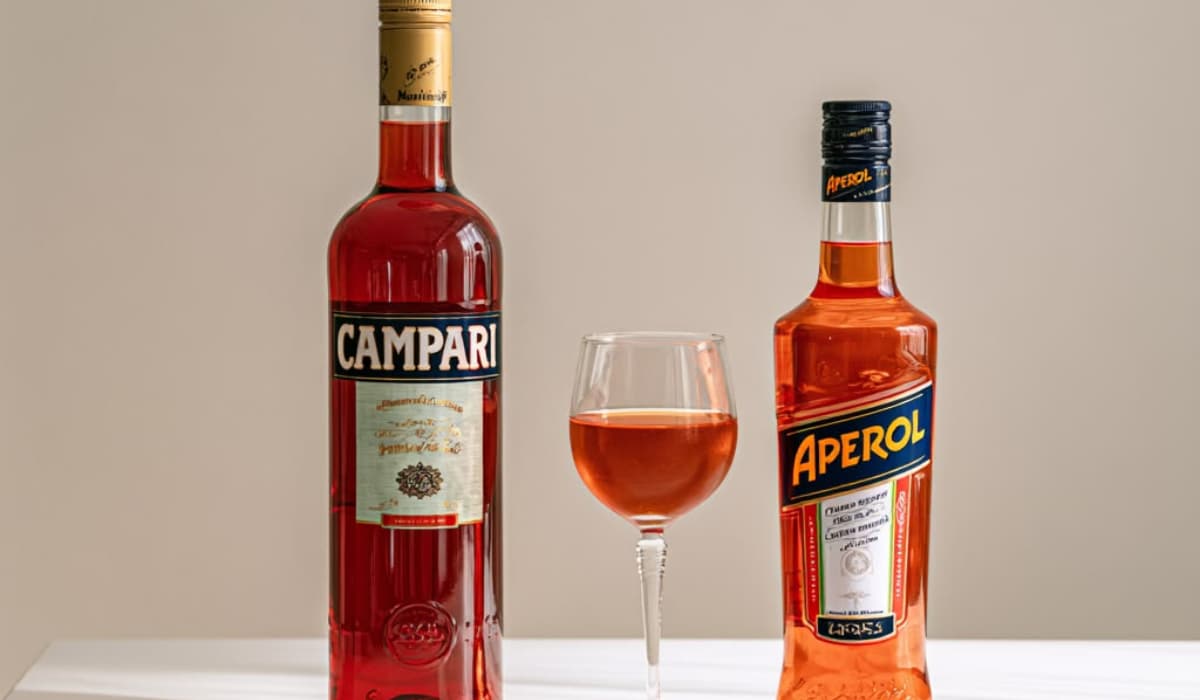
Walk into pretty much any cocktail bar and you'll see two rather vividly colored Italian aperitifs on the counter, Campari and Aperol. One is a deep red, the other a bright orange and both are absolutely fundamental to a number of the world's most famous cocktails. They're very similar in nature but the experience of drinking them is very different.
The Campari v Aperol argument is all about bitterness, alcohol along with versatility in the cocktail. Campari is very bitter, Aperol is much sweeter with a citrus character. That's the key thing to bear in mind when you're trying to work out which of the two you should go for.
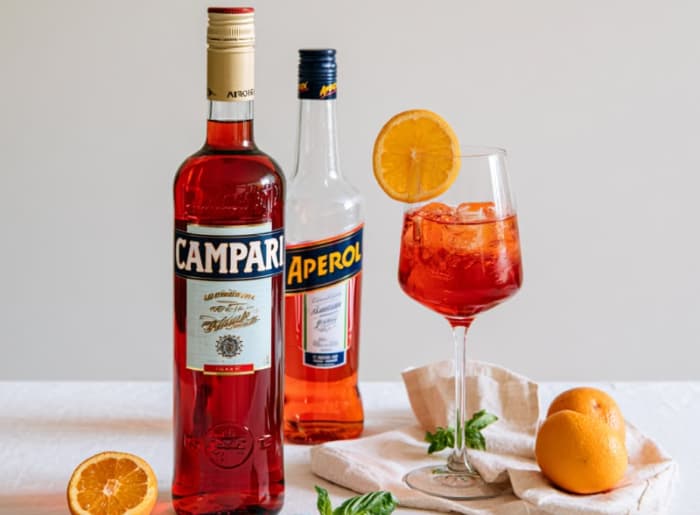
Campari and Aperol are Italian aperitifs, drinks to be had before a meal. They're both bittersweet liqueurs and are very much part of the Italian aperitivo culture where you'll often have a drink with a little something to eat before dinner.
Campari was invented in 1860 by Gaspare Campari in Novara, Italy. It's a red-colored, very complex botanical tipple and was the basis of a number of classic Italian cocktails. Aperol came along a bit later, in 1919, when the Barbieri brothers (Luigi and Silvio) introduced it in Padua. Both brands are now part of the Campari Group, of course, but the recipes and the character of the drinks are very different.
The most noticeable difference between Campari and Aperol is bitterness. Campari has a pronounced bitterness, accompanied by herbal, citrus, and earthy notes. Bitter orange and botanical notes contribute to its elaborate profile, while its lingering finish gives cocktails a distinctive sharpness.
Campari's bitterness is very much in evidence when it's served over ice or with soda. It's a bitterness that really stands out and is perfect for cutting through the sweetness of vermouth or the depth of bourbon. Rather than just being a background note it tends to be one of the key flavors in the cocktail.
Aperol is a considerably lighter, more approachable tipple. Orange zest is the dominant note, with some herbalness, a touch of vanilla and a mild sweetness. It does have a bitter finish but this is far less pronounced than that of Campari. It's a cocktail ingredient that really shines in cool cocktails where citrus and sparkle are the main features.
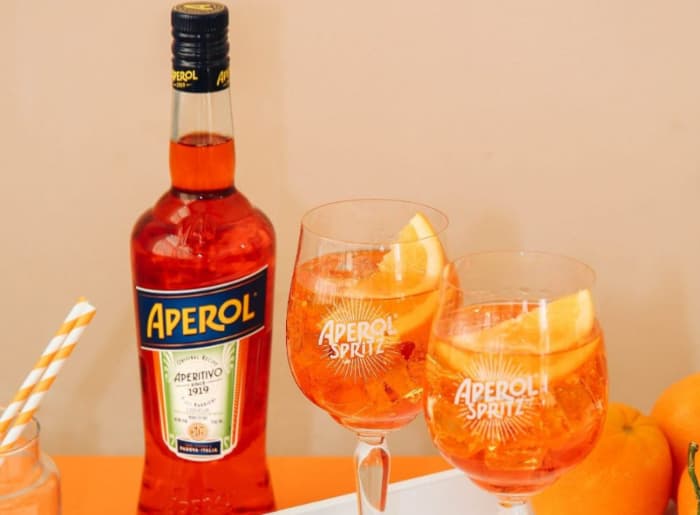
Another big difference between the two aperitifs is their alcohol strength. Aperol is typically 11% ABV (alcohol by volume) which makes it a fairly low strength spirit. Its low alcohol content is one of the reasons it's so popular in the sparkling aperitivo cocktails.
Campari has a much higher alcohol content, the exact strength varies from market to market. It's typically bottled at around 25% ABV with some markets selling it at 24% or 28.5%. So Campari will have more than double Aperol's alcohol content on a per-measure basis.
As to which is the stronger of the two the answer is unequivocally Campari. The final alcohol content of a cocktail is of course also dependent on the other ingredients, their relative proportions and the degree of dilution. A Negroni made up of gin and vermouth will typically be a lot stronger than an Aperol Spritz.
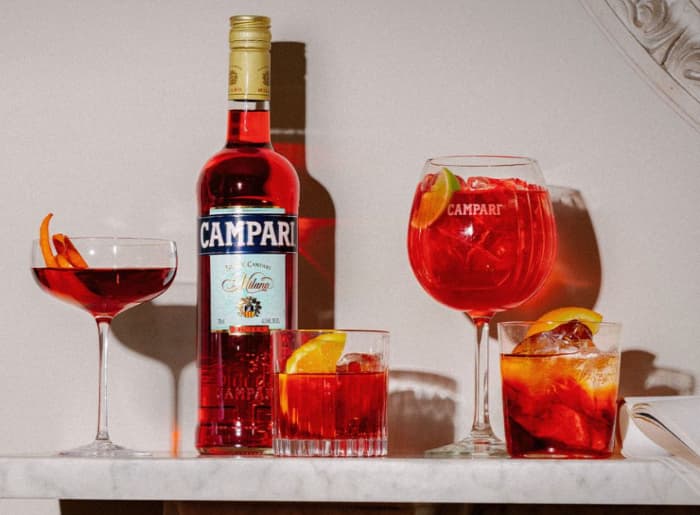
Campari's sharp bitterness makes it ideal for spirit based cocktails. It brings its own botanical character to the fore, cuts through sweet vermouth, works well with gin and provides a good counterpoint to the richness of whiskey. There are a number of classic Campari cocktails that illustrate its versatility with all sorts of ingredients.
The Negroni is probably the most well known of the lot, equal parts gin, Campari and sweet vermouth. The Americano is the same but with soda water in place of the gin. The Boulevardier is the same again but with bourbon or rye whiskey in lieu of the gin, resulting in a much fuller, more robust cocktail with a bitter finish.
Campari is also used in a Campari Spritz where the Prosecco and soda water mellow its intensity without taking away its characteristic bitterness. It's a great ingredient for those who like a bold, herbal cocktail.
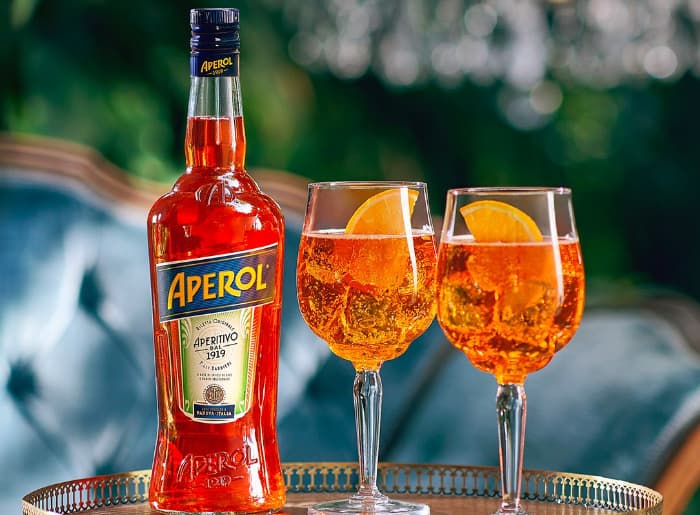
Aperols are all about refreshment, citrus and the sparkling element. The bitterness is quite mild so it's much easier to mix with other ingredients that would find Campari's more assertive botanicals a bit much.
The Aperol Spritz is the brand's signature cocktail, three parts Prosecco, two parts Aperol, one part soda water and is served over ice with an orange slice. It's a very classic cocktail, a very balanced cocktail with the sweetness, the citrus and the slight bitterness all in perfect harmony. It's the cocktail that's really come to represent the Italian aperitivo.
Aperol can be used in an Aperol Sour (Aperol with lemon juice and a sweetener, possibly with a dash of gin or egg white). Aperol and tonic is another simple option, the tonic adding some extra bitterness while still retaining the citrus character of the Aperol. These are the sorts of drinks that Aperol is really good in.
Curious about Espolón Tequila's debut in India? Find out where Campari Group's popular tequila is available and what makes it stand out.
Campari and Aperol can be used in each other's place in certain drinks, but the result is different. A Negroni with Aperol instead of Campari will be considerably sweeter and less bitter, whereas a Negroni with Campari in place of Aperol will be a much more bitter drink.
Alcohol strength will also vary if you swap the two in equal quantities. Campari's higher alcohol content will make the cocktail stronger whereas Aperol will generally produce a lighter result. You can of course tweak the amount of sweet vermouth, citrus and/or soda to achieve the right balance for the particular recipe.
Heard about Campari Group's new ready-to-drink Aperol Spritz? Discover what makes this convenient take on the classic Italian cocktail worth exploring.
This is all drawn from official sources: Campari Group, Campari and Aperol. The details relate to the brands' origins, ownership, flavor profiles, levels of bitterness and alcohol content, and their use in classic cocktails (the Negroni, the Campari Spritz, and the Aperol Spritz).
The Campari vs Aperol is ultimately a matter of personal preference and the type of cocktail you're after. Campari is a much bitter spirit with a higher alcohol content and a more complex herbal character. It's the spirit of choice for the Negroni, the Americano and the Boulevardier.
Aperol, on the other hand, is much sweeter, with far less bitterness and a lower alcohol content. It's a very refreshing spirit, absolutely ideal for spritzes and citrus cocktails. Both have their uses, and knowing the difference makes deciding which to use much easier.