

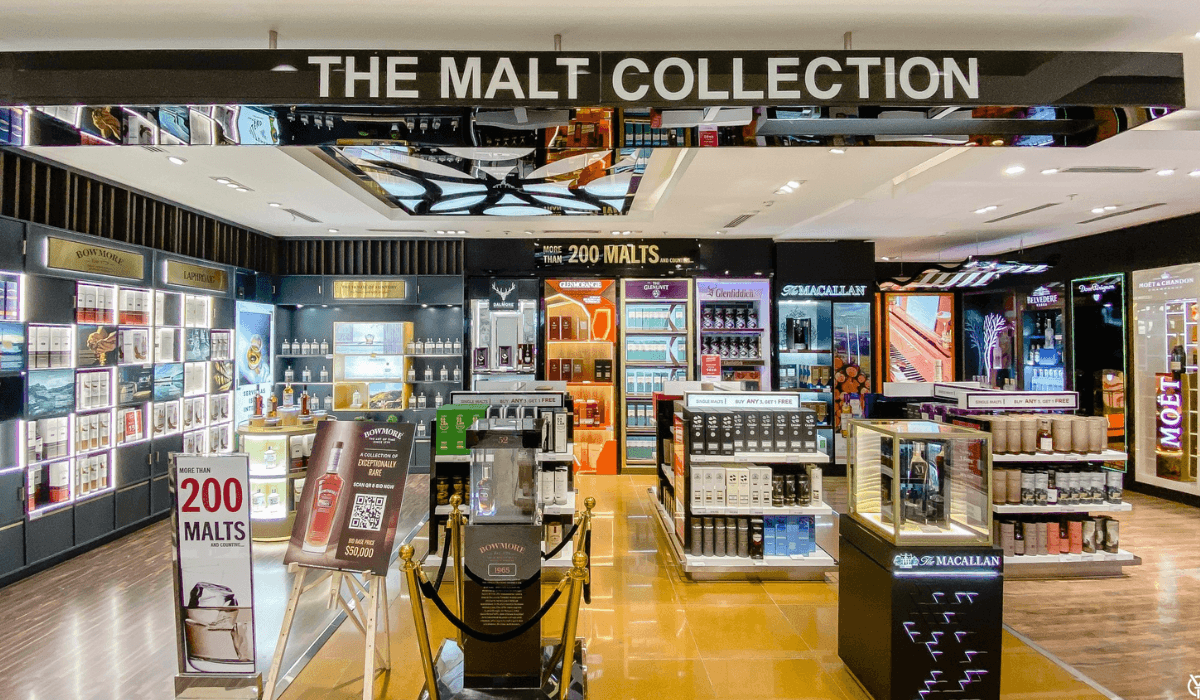
Buying a bottle of whisky, gin or rum at duty-free is usually the easy part. The confusing bit starts when your journey has a connection. You have paid for the bottle, it is sitting safely in the duty-free bag and you are already thinking about getting it home, only to realise that your next airport may have another security check.
So, can you actually carry duty-free alcohol on a connecting flight? Sometimes yes, but it depends on where you are connecting, whether you have to go through security again and how the bottle has been packed. There is no blanket rule that guarantees a duty-free bottle will be accepted at every transit airport.
Normally, liquids in cabin baggage are restricted to containers of 100 ml or less at airports applying the standard security rule. Alcohol is a liquid, so a normal 700 ml or 1 litre bottle cannot simply be taken through security in your hand baggage as though it were a small bottle of water.
Duty-free alcohol gets a specific security exemption in many airports. The important part is that the bottle must generally be bought from an approved airport duty-free retailer or on board an aircraft and kept inside a Security Tamper-Evident Bag, or STEB, with the proof of purchase visible. The bag is designed specifically for passengers carrying liquids through a transfer airport.
Also Read: Hibiki 12 Returns After 11 Years As Laphroaig 12 Lands At Indian Duty Free
If your bottle is sealed inside the security bag, leave it there. Do not open it because you want to check the bottle, move it into your backpack or pack it differently during the connection.
The European Commission says the item and receipt should remain sealed inside the security bag until the final destination. UK government guidance similarly says passengers should not open the security bag until they reach their final destination, although security officers can open it if they need to inspect the liquid.
If security needs to inspect the bottle at a connecting airport, the bag may be opened and, under systems that provide for it, resealed in another security bag. EU guidance specifically tells passengers with a connecting flight to inform security officers so the liquid can be resealed.
This is where the airport you are connecting through matters most. Imagine you fly from Mumbai to London with a connection in Doha. You buy a bottle of whisky after security in Mumbai. If the bottle is sealed properly in a security bag and you remain in the secure transit area, it may be accepted at the next security screening. But that is not something you should assume automatically.
If your connection requires you to leave the secure transit area, collect your baggage, change terminals in a way that requires another security process, or clear immigration and customs before checking in again, you can be subject to the connecting airport's liquid rules. The UK government specifically warns passengers transferring at UK airports that duty-free liquids bought outside the UK may not be permitted through the security search point on transfer.
Also Read: Mumbai Airport Duty-Free Alcohol Guide: Is It Worth Buying?
India has its own cabin-security restrictions as well. The Airports Authority of India and the Bureau of Civil Aviation Security list liquids, aerosols and gels under their security restrictions, with liquids generally limited to small quantities in the cabin unless an applicable exemption applies.
Importantly, Indian airport security guidance also says that liquids purchased at airport retail outlets or on board an aircraft in larger volumes are not permitted through security checkpoints unless they are carried in a Security Tamper-Evident Bag.
That means buying a 1 litre bottle at duty-free does not mean you can remove it from its sealed security packaging and expect to carry it through another security checkpoint.
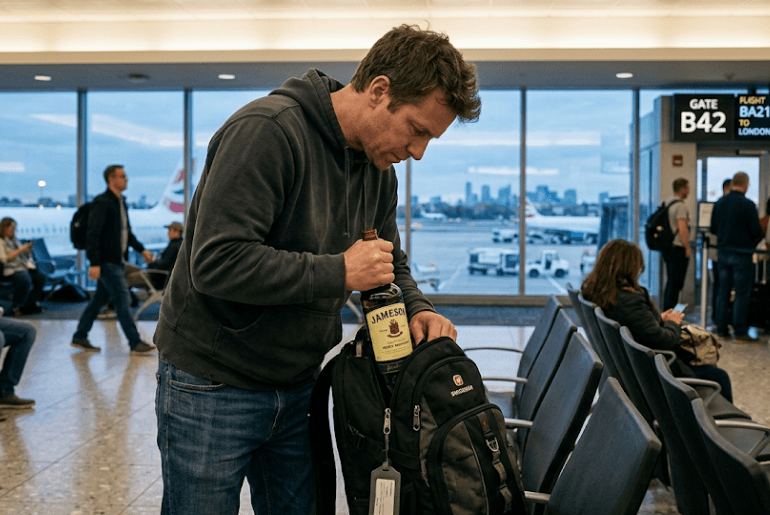
Security and customs are two completely different things, which is where many travellers get caught out. For passengers arriving in India, the Central Board of Indirect Taxes and Customs currently allows up to 2 litres of alcoholic liquor or wine or beer within the applicable duty-free baggage allowance. Alcohol above the permitted allowance can attract customs duty. The allowance is about bringing the alcohol into India, not about whether airport security will let a bottle through a transfer checkpoint.
Also Read: Alcohol Brands That Are Cheaper At Mopa Airport Than Your Home Town
Your destination country can have a completely different allowance. The UK, for example, has its own alcohol allowances, and its government advises passengers transferring through a UK airport to check the security rules for duty-free liquids purchased outside the UK.
If you know you have a connecting flight, keep the bottle in the original duty-free security bag, keep the receipt inside it, and do not open the bag until you reach your final destination.
Before flying, check the liquid rules of both the transit airport and your final destination, especially if you have to change terminals, collect and recheck baggage, or pass through security again. This is exactly the kind of situation where checking the airport's current rules before leaving home can save you from losing an expensive bottle at security. The UK government and European authorities both advise travellers to check the rules of the airports involved in the journey.
Also Read: 7 Best Airports In The World For Cheap Duty-Free Spirits
I think duty-free alcohol is one of those travel purchases that sounds much simpler than it actually is. I would rather spend five minutes checking the transit airport's liquid rules before buying a bottle than reach the connection and discover that a perfectly sealed bottle is still not going to make it through security. The receipt and sealed bag are worth treating almost like your boarding pass.
You can often carry duty-free alcohol on a connecting flight, but the bottle needs to remain sealed in its security tamper-evident bag with the receipt. A second security check can change the situation, and destination customs limits are separate from airport security rules, so check every airport on your route before travelling.
.jpg&w=3840&q=100)
.jpg&w=3840&q=100)
.jpg&w=3840&q=100)