
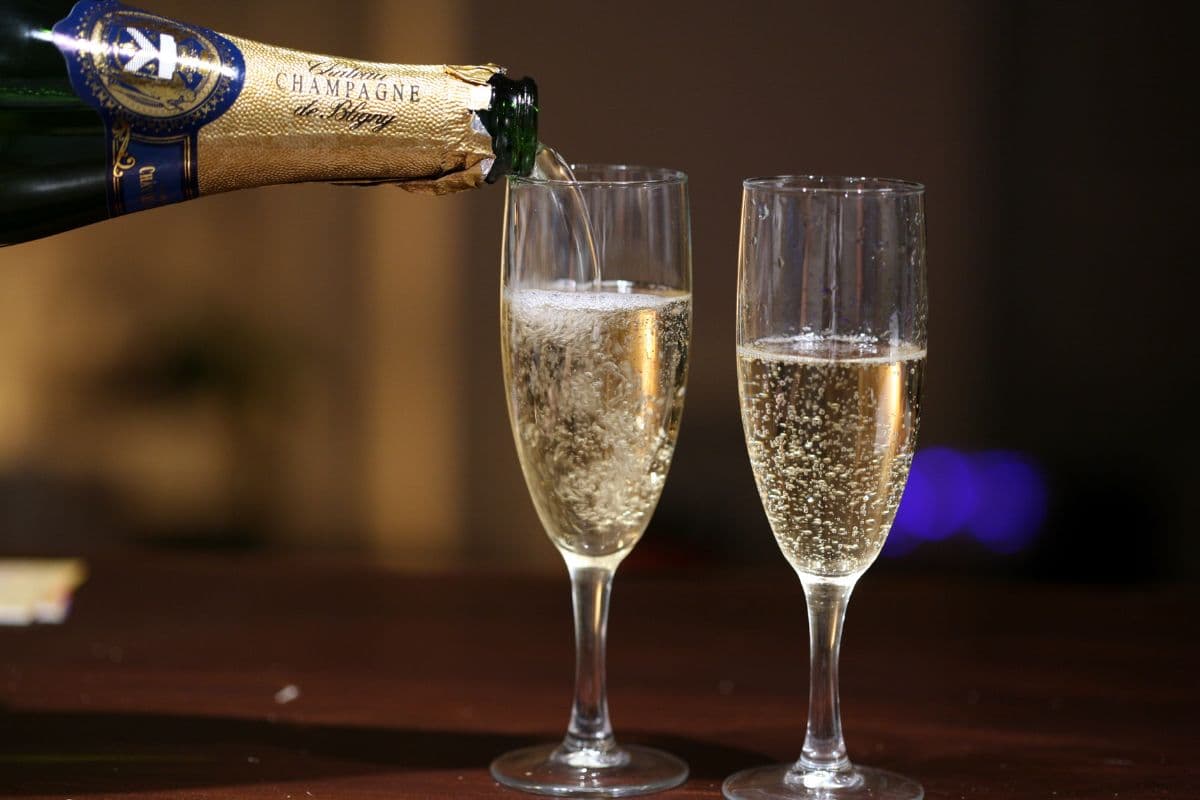
Wondering if Champagne is alcoholic? Well, yes, it is definitely alcoholic in nature. Authentic Champagne contains alcohol produced through natural yeast fermentation as a regulated French sparkling wine. Because it is light, crisp, and served at happy occasions like birthday parties, anniversaries, and other celebrations in elegant glasses, it is often misjudged as not being alcoholic, or its alcohol potency is compared to other alcoholic beverages like beer. Understanding what goes into a Champagne bottle can help you choose better and also drink responsibly. So let's know it all!
The percentage of pure alcohol present in a liquid is measured by Alcohol By Volume (ABV). For a bottle of Champagne, the standard ABV typically ranges between 12% and 12.5%. You must note that Champagne sits right in the standard range for still table wines, but at the same time it is noticeably stronger than most ciders and beers.
While 12% ABV in Champagne might seem standard, many drinkers have mentioned witnessing intoxicating effects faster than with still wine. This phenomenon is not at all illusory; it is related directly to the chemistry of its bubbles.
.jpg&w=1920&q=75)
Also Read: Sparkling Wine Vs Champagne: What's The Difference?
The carbonation in Champagne not only offers a texture and aroma. It actually accelerates the speed at which alcohol enters your bloodstream.
Champagne undergoes a secondary fermentation process inside a sealed bottle. The added sugar is consumed by yeast, which produces both carbon dioxide gas (CO2) and ethanol. Now, because the gas cannot escape a sealed glass bottle, it tends to dissolve under immense pressure. This pressure is 2 or 3 times the pressure in a standard car tire.
So when you pop the cork, the pressure simply drops, and the dissolved CO2 forms millions of tiny rising bubbles. Here’s what happens when you consume it:
Carbonation accelerates gastric emptying by irritating your stomach lining. This signals the valve that separates your stomach from the small intestine to open.
Now, as alcohol enters the small intestine faster, the alcohol enters the bloodstream even quicker.
Studies that compare flat alcoholic drinks and carbonated drinks show that carbonation leads to an initial spike in blood alcohol levels within the very first 20 minutes of consumption.
When Champagne is consumed on an empty stomach during raising a toast or some celebration, these bubbles can actually make a single glass of champagne feel stronger than a glass of wine which has teh same ABV.
By Sweetness:
Brut Nature: This is the purest expression of Champagne, as there is no sugar added, which leaves only a negligible amount of residual sugar. 0-3 grams of sugar per liter.
Extra Brut: This expression of wine is dry, taut, and energetic, retaining a firm acidic taste with minimal sweetness. 0-6 grams of sugar per liter.
Brut: Brut is known as the global benchmark, with 0-12 grams of sugar per liter. It offers a subtle, off-dry softness on the mid-palate, pairing perfectly with Asian cuisine.
Extra Sec: Unlike its name, it is extra dry and has 12-17 grams of sugar per liter. This wine expression is perfect for people who find Brut a bit too sharp.
Sec: Sec is noticeably pff-dry with orchard fruit characteristics. It has 17 to 32 grams of sugar per liter. It provides enough sweetness and body to accompany richer savory dishes.
Demi Sec: Demi-Sec translates to half-dry and is an openly sweet expression. It has 32 to 50 grams of sugar per liter.
.jpg&w=1920&q=75)
Also Read: What Is Prosecco And How Is It Different From Champagne?
By Grapes:
Standard Blend: The standard blend style of champagne has Pinot Meunier, Pinot Noir, and Chardonnay grapes. It is paired best with hard cheeses, fried chicken, and seafood platters.
Blanc De Blancs: Blanc De Blancs is best paired with oysters, caviar, and goat cheese, using 100 percent white or Chardonnay grapes.
Blanc De Noirs: Blanc De Noirs is made using 100% red grapes and is best served with charcuterie and mushroom risotto.
Rosé Champagne: Rosé Champagne is created by blending a small amount os red wine and white base wine.
We have listed everything from ABV to types about Champagne to help you understand this drink better. With this guide, you will also learn how to select the right champagne bottle. So make sure you share this with your friends!
.jpg&w=3840&q=100)