

No celebration, party, or even brunch feels complete without a sparkling glass of champagne. But little did you know that not every effervescent wine is champagne. Some might also be Prosecco. While both of these bring a nice sparkle to your glass, they have some important distinctions. This includes their origin countries, distinct fermentation methods, different grape varieties, and unique flavor profiles. Let’s know the difference between Prosecco and Champagne.
Prosecco is an Italian sparkling wine that is produced predominantly in the Veneto and Friuli-Venezia Giulia regions of Italy. It is primarily made using 85% Glera grapes and is loved for its crisp, light, and fruity taste.
By law, Prosecco must be made using at least 85% Glera grapes. These are aromatic, thin-skinned white grapes that are cultivated in Italy’s regions. The remaining 15% can include local and international varieties like Pinot Bianco, Pinot Nero, Chardonnay, or Pinot Grigio. Prosecco gets its crisp acidity, light body, and floral plus orchard fruit aromas from Glera.
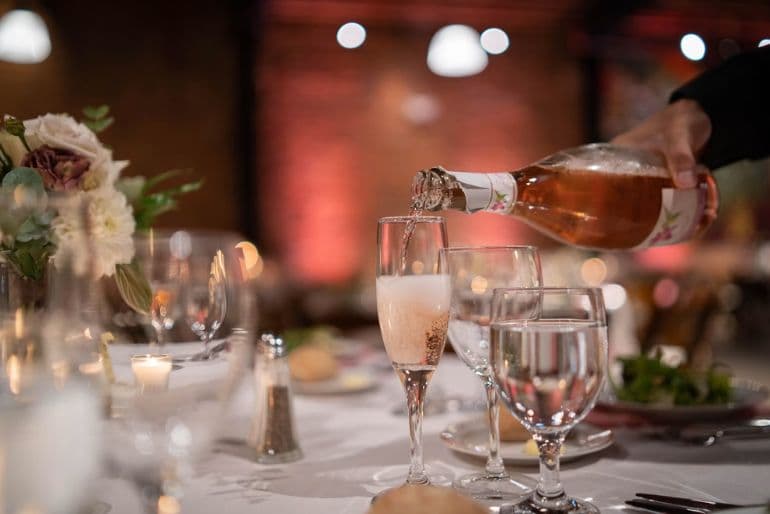
The defining characteristic of Prosecco is its production method, which is known as the Charmat Method.
Also Read: A Complete Guide On How To Serve And Drink Champagne
Prosecco avoids prolonged lees contact; it offers youthful, fruit and floral aromas. It features
Prosecco is simply perfect for casual gatherings, aperitivo hours, and spicy fare. This is because it has a light body, an aromatic lift, and subtle fruit sweetness. It can be ideally paired with:
Champagne is a protected sparkling wine exclusively produced in the Champagne region of northeastern France. It is located just 90 miles away from northeast of Paris. Champagne is almost always crafted from a blend of three primary grape varieties, namely Chardonnay, Pinot Meunier, and Pinot Noir.
Everything from permitted vineyard sites and grape yields to pruning practices and minimum aging requirements is governed by the regulations of the Strict Appellation d’Origine Contrôlée (AOC).

Also Read: Why Champagne Pops: The Physics Of Pressure In A Bottle
With yeast lees, Champagne gets savory, complex, and rich secondary aromas. It includes tart green apple, notes of Meyer Lemon, and chalky minerality. Hence, the dominant sensory experience often features:
The bubbles create a creamy texture on the palate as they are fine, persistent, and sharp.
Champagne is a versatile pairing partner for various umami-dense and rich flavors. It can be ideally paired with:
.jpg&w=1920&q=75)
Sometimes when you are at parties, you do not understand which wine is being served to you. What I do is I follow a trick. Look at your drink in the glass. Champagne has long-lasting, fine, and soft bubbles, while Prosecco has larger, frothy, and quickly fading bubbles. That is how I get to know what is poured in my glass.
Neither of the wines is better than the other. The reason behind this is that they are actually designed for different occasions. Champagne represents heritage, patience, and a bit of punch, which makes it perfect for rich dinners and milestone toasts. Prosecco, on the other hand, is very fresh with floral aromatics, which makes it perfect for casual parties and weekend brunches.
.jpg&w=3840&q=100)
.jpg&w=3840&q=100)
.jpg&w=3840&q=100)