


While the good folks over at unstumbled will tell you about the beautiful mist-covered hills, the living root bridges and the incredible cultural diversity in the region. However, beyond just the gorgeous landscapes, Meghalaya also has a rich history of brewing rice beer. This beverage is closely connected to community life with brewing knowledge passed down through generations.
The Khasi, Garo and Jaintia people have their own names, ingredients and brewing techniques with the shared connection being the rice fermentation process, the cultural significance and brewing techniques reveal interesting distinctions.
Rice beer is an alcoholic beverage made from fermented cooked rice. While traditional beer brewing uses malted grains and hops, rice based alcoholic beverages depend on microorganisms introduced in the fermentation process.
The brewing process differs from one community to the next, while some use sticky rice, others implement locally cultivated red or non-glutinous varieties. The end result is a beverage that can differ in sweetness, acidity, appearance and alcohol strength. When you understand these variations and techniques you prefer to appreciate the Khasi, Garo and Jaintia culture.
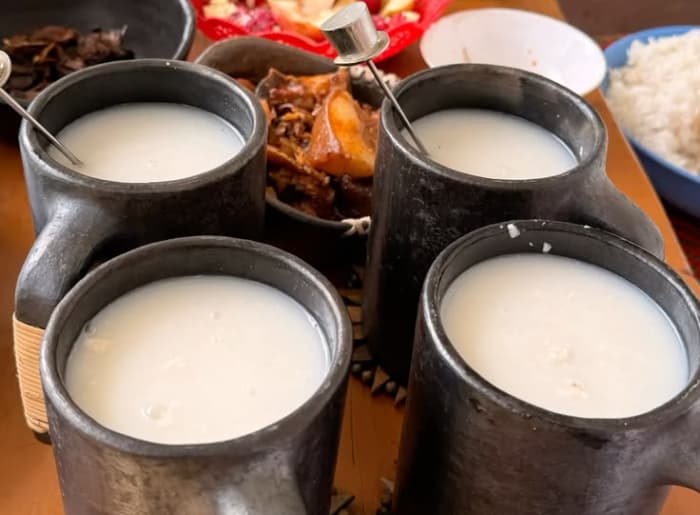
The earliest record for Khasi rice based alcoholic drinks are called Ka'iad Hiar and Ka'iad Um. Drinks such as U-Phandieng have also formed a connection to the Khasi community. The traditional brewing process involves rice fermentation. Rather than sticking to one fixed process, the Khasi community has shaped the process, choosing different ingredients based on household knowledge passed down generations.

Also known as Bitchi, Garo Chubitchi is amongst the most well documented fermented rice beverages. Obviously, rice is an important variable, however local varieties of rice including stick rice are used in the preparation. The Garo fermentation starter is also known as Wanti, a selection of plants and rice that help the brewing process.
While traditional practices involve cooked, cooled rice and a powder version of Wanti in a vessel called Dikka. A strainer called Janti, made from bamboo helios gather the fermented liquid. Chubitchi holds a strong cultural significance as the beverage is served during weddings, community gatherings and other such celebrations.
Explore how women shaped ancient brewing traditions over 7,000 years ago and influenced the beer we know today.

The Pnar community, which resides in Meghalaya’s Jaintia Hills, has a rice-based alcoholic beverage called Sadhiar and Kiad. While they both are drinks made from fermented rice, they are not the same. Sadhiar is a proper fermented rice beverage whilst Jaintia Kiad is made from a distillation process.
Kho-so is where the preparation begins, a locally sourced red rice variant and spring water. After it is cooked and cooled, the rice is mixed in a fermentation starter called Thiat. Once the liquid is extracted, the fermentation produces Sadhiar, while the distillation gives you Kiad, which technically is a distilled alcoholic beverage.
Did you know 7 United is India's first canned carbonated rice beer? Find out how it pays tribute to the Northeast.

The most obvious difference will be the local names, the fermentation starter or/and the production techniques. Garo Chubitchi is connected to Wanti and traditional equipment used such as mud vessels and bamboo. The Pnar use Thiat which is used for both Sadhiar and distilled Kiad while the khasi stick to their own beverage documented through multiple recipes.
Chubtichi is associated with celebrations and Garo hospitality, while rice based alcoholic production techniques feature for the Khasi and Jainita community. The differences showcase the distinct cultures and cultural practices that coexist within the state of Meghalaya.
Ever heard of Zutho, Nagaland's traditional fermented rice drink? Discover its unique preparation and cultural significance.
The information presented in this article has been sourced from research published in the Journal of Ethnic Foods, Indian Journal of Traditional Knowledge, and Current Research in Nutrition and Food Science Journal, with additional references from The Khasis by P. R. T. Gurdon. These sources provide details on Meghalaya's traditional rice beer, indigenous brewing methods, fermentation practices, and the cultural significance of Chubitchi and Kiad among the Garo, Khasi, and Jaintia communities.
Meghalaya's culture of rice-based alcoholic beverages is a reflection of the diversity that exists within its local communities and practices. From local agriculture to fermentation processes and ingredients used, there is much knowledge to be shared by just spending time with these communities and learning about them.