

Scotch whisky has long been surrounded by prestige, tradition, and plenty of opinions. Walk into any whisky tasting or scroll through social media, and you'll hear passionate debates about single malts, blends, adding water, ice, age statements, and the ‘correct’ way to enjoy it.
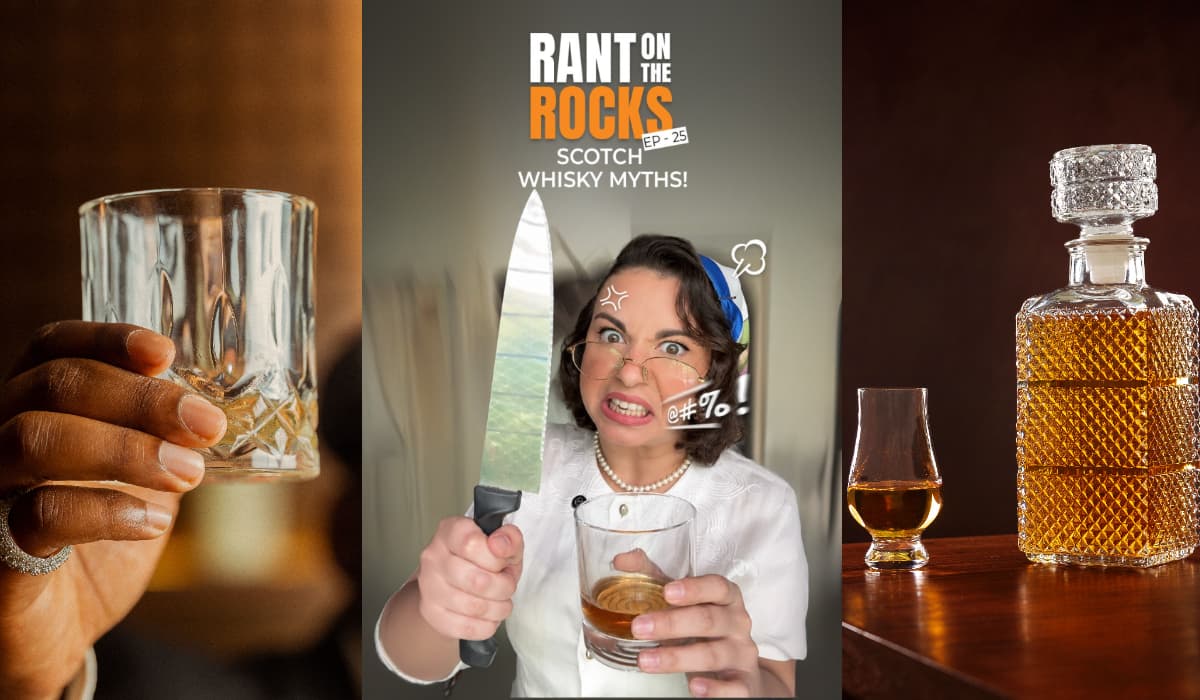
The reality is that many of these ideas have been passed down for decades, often without much evidence. Whether it's a smoky Islay malt, a delicate Speyside whisky, or a well-crafted blend, there's no one-size-fits-all approach. In our social media IP, “Rant on the Rocks”, unsobered expert Tanaz Daruwalla tells you some of the Scotch myths that need to be tossed out of the window. Let’s get started!
This is probably the biggest misconception in the whisky world.
Many people assume that because a bottle says “Single Malt,” it is automatically superior to a blended Scotch. In reality, these terms simply describe how the whisky is made, not how good it tastes.
A single malt Scotch comes from one distillery and is made entirely from malted barley.
A blended Scotch, on the other hand, combines whiskies from multiple distilleries. These blends may include both malt and grain whiskies, carefully selected to create a consistent flavor profile.
Creating a great blend is a skill that requires years of experience. Master blenders work with dozens, even hundreds, of different casks to achieve balance, complexity, and consistency.
Some of the world's most celebrated Scotch whiskies are blends, proving that “blended” should never be mistaken for "inferior."
Age statements often influence buying decisions, but older doesn't automatically mean better. A 25-year-old Scotch might not be necessarily be better than a 15-year-old one. Age simply tells you how long the youngest whisky in the bottle matured inside oak casks.
A 12-year-old Scotch isn't necessarily worse than an 18-year-old, and a 25-year-old whisky isn't guaranteed to be your favorite.
Age simply tells you how long the youngest whisky in the bottle matured inside oak casks.
During maturation, whisky extracts flavors from the wood. Initially, this adds vanilla, caramel, spice, dried fruit, and complexity. However, after many years, excessive wood influence can sometimes overpower the distillery's original character.
Some whiskies shine at 10 or 12 years, while others reach their peak much later.
Ultimately, balance matters more than age.
Few whisky debates are as passionate as this one. Some whisky purists insist that adding even a drop of water is a “sin”. In reality, many distillers and whisky experts regularly add water during tastings.
https://www.instagram.com/reel/DbS-ECeBtxc/?utm_source=ig_web_copy_link&igsh=NTc4MTIwNjQ2YQ==
A few drops of water can reduce alcohol intensity, making it easier to detect hidden aromas like fruit, honey, spices, flowers, or smoke. This is especially true for cask-strength whiskies bottled at higher alcohol levels.
The key lies in moderation – add just enough water so that it does not dilute the whisky but helps open up masked layers. There's a reason tasting rooms around Scotland almost always provide water alongside the whisky!
Also Read: Luxury Scotch Whisky Bottles You Can Buy In India
Another classic myth that we think must be shown the door.
Ice does change the drinking experience, but that doesn't automatically make it wrong.
Cooling whisky suppresses certain aromas while making it feel smoother on the palate. Some people enjoy this effect, especially if they're new to Scotch or drinking during warm weather.
If adding a cube of ice makes your Scotch more enjoyable, then drink it that way. After all, the bottle belongs to you!
Price and quality are never connected. Premium bottles often command higher prices due to older age statements, limited production, use of rare casks, brand name, and packaging. But none of these guarantee that you'll enjoy the whisky more.
Many excellent Scotch whiskies under INR 3000 consistently outperform far more expensive bottles. The goal isn't to drink the most expensive whisky – it's to discover the one that suits your palate.
While specialized whisky glasses can enhance aromas, they aren't essential. In fact, you can enjoy your whisky just fine in normal glassware.

A tulip-shaped tasting glass helps concentrate aromas better than a wide tumbler, but the difference isn't large enough to stop you from enjoying good whisky. The most important part of the experience remains the whisky itself. If you're relaxing at home with friends, a clean glass is perfectly adequate.
Perhaps the biggest myth of all is that Scotch is only for connoisseurs. And let us tell you that it is not true!
The whisky world can sometimes feel intimidating with discussions about tasting notes, cask finishes, fermentation times, and regional differences. But appreciation doesn't require expertise.
You don't have to identify hints of “heather honey,” “wet slate,” or “candied orange peel” to enjoy a dram. If you think a whisky tastes smooth, fruity, spicy, smoky, or simply delicious, that's enough.
Every whisky enthusiast started as a beginner. The best education comes from tasting different styles and discovering your own preferences.
Instead of worrying about outdated rules, keep a few simple principles in mind:
Scotch whisky has earned its legendary reputation through centuries of craftsmanship, but it has also accumulated its fair share of myths along the way. Believing that single malts are always superior, older Scotch is automatically better, or adding water ruins whisky can limit your enjoyment and discourage exploration.
So the next time someone tells you there's only one right way to drink Scotch, remember that the greatest whisky tradition of all is enjoying it on your own terms!
.jpg&w=3840&q=100)
.jpg&w=3840&q=100)
.jpg&w=3840&q=100)