
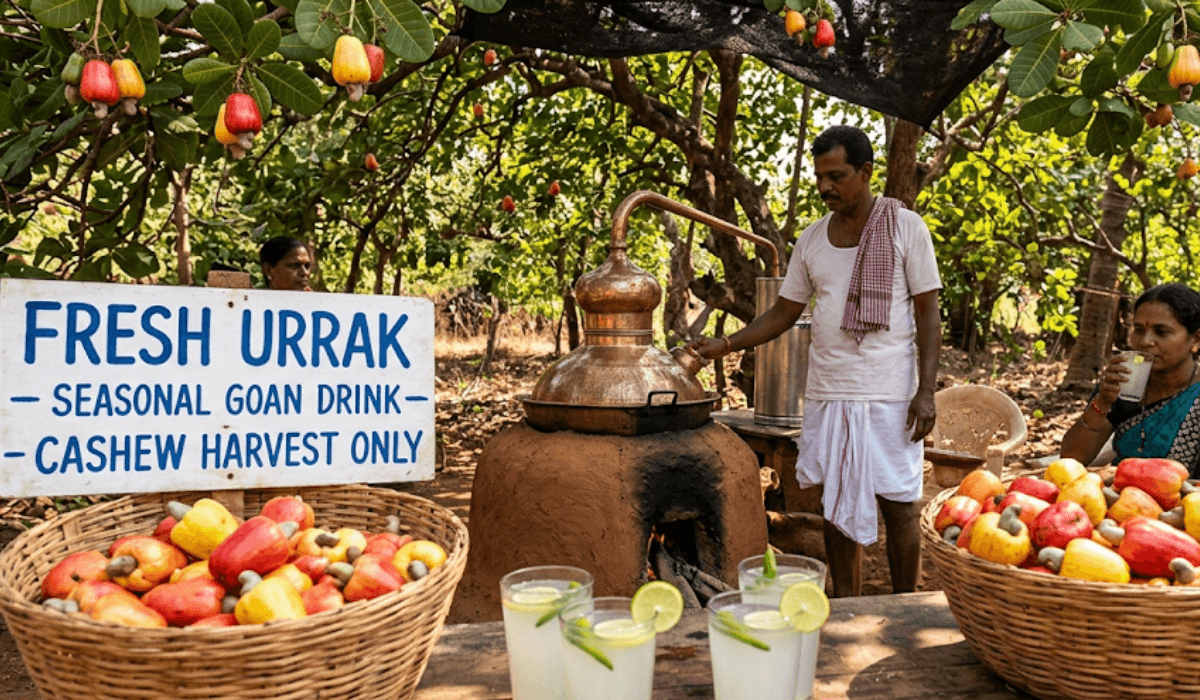
If you ask someone in Goa about urrak at the right time of year, you will probably get a very different reaction than you would in the middle of winter. It is not one of those drinks that simply sits on a bar shelf all year waiting for someone to order it. Urrak belongs to a particular part of the Goan calendar, and once the cashew season arrives, the drink starts showing up everywhere, from local homes and small bars to summer cocktail menus.
The reason it is seasonal is actually quite simple. Urrak is made from fresh cashew apple juice, and cashew apples are available only for a limited period of the year. Goa's cashew season generally begins around February or March, depending on the area and the year's crop, and the main harvesting period runs into April and May. In 2026, for example, early cashew fruit had already started appearing in parts of Pernem by February, although farmers said the quantities were not yet large enough for full-scale juice extraction and feni production. So when the fruit is gone, the fresh urrak season also starts winding down.
This is something many people get wrong because when we hear "cashew", most of us immediately think about the kidney-shaped nut. For urrak, the important part is actually the fleshy fruit attached to the nut.
Once the ripe cashew apples are collected, their juice is extracted and allowed to ferment naturally. The fermented juice is then distilled, and the first distillate is what is commonly called urrak or urrac. Goa's 2025 Feni Policy officially defines urrac as the distillate obtained during the first phase of cashew feni distillation.
Also Read: Why Goan Feni Has A GI Tag But Is Losing The Battle To Craft Gin
The Goa Excise Department also explains the traditional relationship between urrak and feni. According to the department, fermented cashew juice is distilled to produce urrack, a lower-alcohol drink, while further distillation with additional juice produces feni.
This is why you will sometimes hear people describe urrak as the lighter, fresher cousin of feni. They come from the same cashew-fruit tradition, but they are not quite the same drink.
Fresh cashew apple juice is highly perishable and the traditional production process depends on freshly harvested fruit. Unlike whisky, rum or bottled vodka, where a producer can maintain stocks of distilled spirit for much longer periods, urrak is closely connected to the short window when Goa's cashew trees are actually producing fruit.
There is also a difference in how urrak is normally consumed. Its lower alcohol strength and fresh, fruity character mean it does not have the same keeping qualities as stronger spirits. Recent reporting on Goa's drink culture notes that fresh urrak generally needs refrigeration and is consumed relatively soon after production.
That is why you will often hear locals talking about the "urrak season" rather than simply saying they are going to drink urrak.
Also Read: Can You Carry Alcohol From Goa To Mumbai, Delhi Or Bengaluru? Rules Explained
There is also a very obvious reason why urrak feels like a summer drink. Goa gets hot well before the monsoon arrives, with May among the state's hottest months, and the cashew harvest happens during roughly this same stretch of the year.
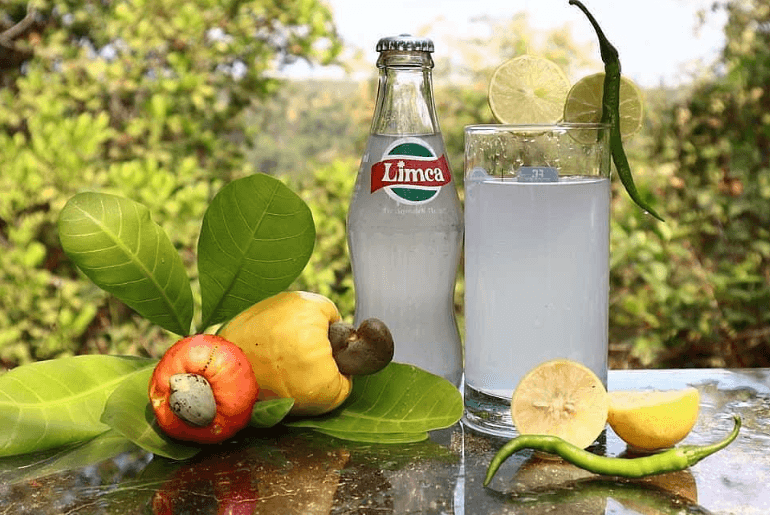
Fresh urrak is usually served chilled and is often mixed with soda, lime, salt or other ingredients. One of the classic combinations is urrak with Limca, ice and sometimes a green chilli, although modern Goan bars have become much more experimental with it.
Bartenders have been using kokum, peppers and other local flavours in urrak cocktails, and its relatively lighter alcohol level makes it an interesting base for summer drinks.
There is something quite nice about that connection between the drink and the season. You don't necessarily go looking for urrak in December because it isn't really about having a particular spirit available whenever you feel like it. You wait for the fruit, the fruit arrives, the drink appears and then, eventually, the rains change the mood.
Traditionally, the appearance of the monsoon is almost like the closing chapter of urrak season. Older descriptions of the drink place its main drinking period from March to May, with consumption tapering off once the first rains arrive in June.
The timing makes sense when you look at the whole cycle. Cashew fruit ripens, the apples are harvested and pressed, the juice is fermented, urrak is distilled and people start drinking it through the hotter months. By the time the monsoon settles in, that year's fresh production has largely come to an end.
Also Read: Is Alcohol Cheaper In Daman Than Goa? Here’s What You Must Know
Of course, bottles and commercial products can change how long you might find urrak on sale, and not every part of Goa follows exactly the same calendar. Early fruit can appear in February in some areas, while the wider harvest and production period can stretch into May. The Goa Excise Department itself refers to the manufacture of cashew liquor during the cashew season, which is really the key to understanding why urrak cannot be treated like a regular year-round spirit.
There is a tendency to make seasonal drinks sound fashionable, but with urrak, the seasonality is not a marketing trick. It comes directly from agriculture and an old production method.
You can find plenty of bottled spirits in Goa whenever you visit, but if you want the fresh, traditional experience of urrak, timing actually matters. Go during the cashew season and you have a much better chance of finding the fresh drink, particularly at local bars and places that work closely with traditional producers.
For me, that is probably the nicest thing about urrak. It feels connected to Goa in a way that a generic cocktail made with an imported spirit never really can. You are drinking something that exists because the cashew trees have produced fruit at that particular time of year.
Also Read: Beer Brands You Can Only Find In Goa
I would definitely put urrak on the list if I were planning a Goa trip around March, April or May. Not because it is some rare fancy spirit that you need to hunt down, but because the timing makes the experience better. Have it cold, preferably somewhere relaxed, and let the drink be what it is. You don't really need to dress it up too much.
Urrak is seasonal because it depends on Goa's short cashew harvest, usually running from late winter into spring and early summer. Fresh cashew apples are pressed, fermented and distilled into urrak, making the drink closely tied to the fruit, weather and traditional production cycle of Goa rather than something available throughout the year.
.jpg&w=3840&q=100)
.jpg&w=3840&q=100)
.jpg&w=3840&q=100)