

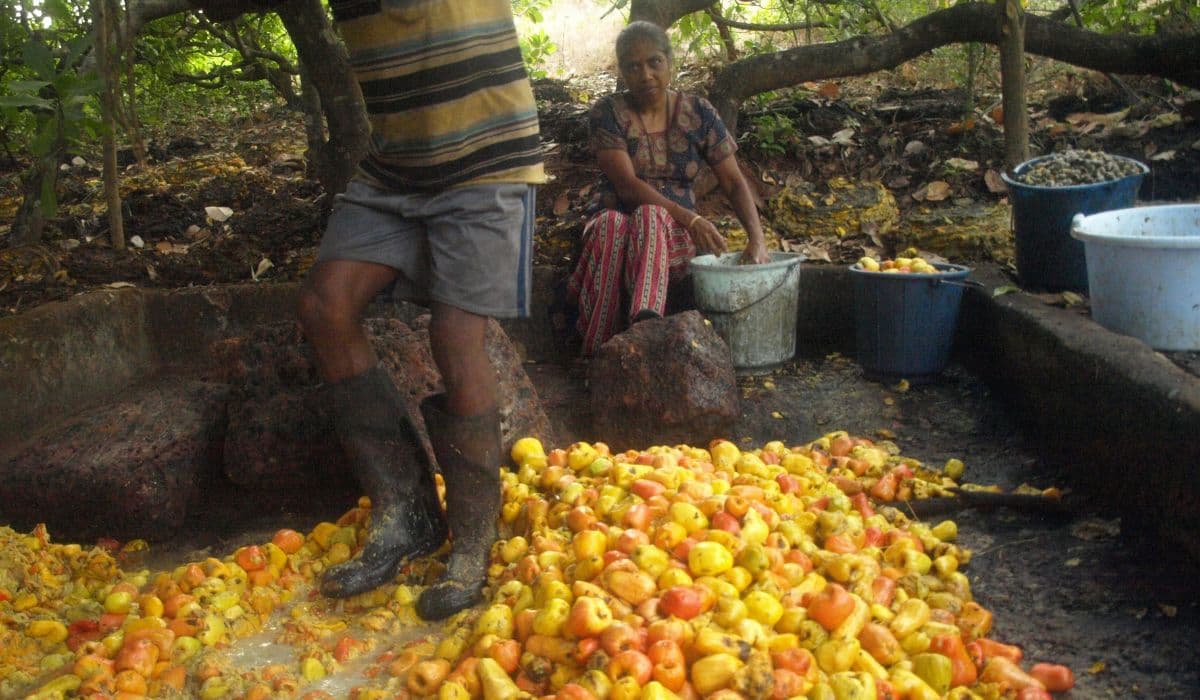
The pot sits half-buried in the earth, as it has for generations. Fallen cashew apples gathered and crushed underfoot; the juice ferments in a clay pot, then passes through a wood-fired copper ‘bhann’ until it becomes clear, potent, and unexpectedly gentle: tropical-fruit warmth, a nutty finish, and a mild burn that you can expect from spirits around 45% ABV. Most people know feni as Goa’s GI-tagged spirit. Coconut feni came first, but it is cashew feni that became well known and the one that eventually received the Geographical Indication (GI) tag: in 2009, cashew feni became the first Indian alcoholic product to receive the tag, a legal marker meant to protect products tied to a specific place and method, much like Champagne or Tequila. Sixteen years later, it is still fighting to be taken seriously at home, while a spirit with almost no history – gin - has become the drink many Indians now reach for instead.
Before feni became a category, it was a medicine – a home remedy for colds and sore joints and a drink that a grandfather had as his drink before bed, unbranded and locally distilled.
.jpg&w=1920&q=75)
As foreign liquor brands arrived with built-in prestige, feni was left with the opposite reputation: “country liquor,” a poor man’s drink, something consumed at home but not ordered proudly in public. A GI tag was supposed to reverse the ‘branding’ of feni from a country bumpkin’s drink and bring it international recognition. That, however, did not make a dent. Other spirits of geographical protection worldwide leveraged their GI tag to drive commercial success: Scotch, Champagne, and Tequila did not just win legal safeguards, but also built export economies and cultural mythologies around them.
Feni got the certificate and little else. It still sits in Indian excise law as “country liquor” rather than Indian-made foreign liquor, or IMFL, the category that carries market status, easier distribution, and access to premium retail and export channels. The GI tag changed the paperwork. It did not change the reputation. Distillers have spent years asking for the support given to Scotch, sake, or vodka - duty-free visibility, tourism promotion, export pathways - and have mostly received sympathy instead of policy.
Also Read: What Is Feni? History, Types, Alcohol Percentage, Price & How To Drink It
While the tag sat unused, the labour and raw material behind feni were eroding. Cashew farming was treated less as craft than as cheap seasonal work. Weak prices led to neglect; neglect lowered quality; lower quality made it harder to demand a fair price. For a younger generation with other livelihood options, the old cycle offered little incentive to stay. The land was shrinking too. After Covid, as more people began looking at Goa as a place to settle, cashew orchards increasingly gave way to villas and homes. A spirit can survive a reputation problem. It has a harder time surviving the disappearance of the fruit it is made from.
Here is the part that stings if you have been a feni loyalist. While it failed to capitalise on GI status, Goa produced a very different spirits success story. Craft gin arrived in India around 2017, made in the same state, aided by friendly excise policies and good botanicals. Brands like Greater Than, Hapusa, and Stranger & Sons built prestige almost from nothing - no GI tag, no centuries-old process, no inherited mythology - and did in less than a decade what feni had not done in five hundred years: get taken seriously, travel beyond Goa, and attract serious money. In 2025, the company behind Greater Than and Hapusa was acquired by Diageo India for more than a hundred crore rupees. Feni, first in every historical sense, watched the newcomer receive the validation it was still waiting for.
The rise of gin to fame and the sidelining of Goa’s spirit didn’t quite go unnoticed. Hansel Vaz left work overseas to revive his family’s feni business and build Cazulo while watching gin and mezcal take over bar menus and refusing to accept that feni could not do the same. He built a modern distillery, developed smoother cocktails, and invited visitors to see the traditional process before tasting it, treating feni less like a relic and more like a story worth telling well. Other distillers have taken on the same task: stripping away the embarrassment around a local spirit and presenting it as craft rather than compromise. These are small acts individually. Together, they suggest that feni’s problem was never really the liquid; it was how it was collectively positioned.
.jpg&w=1920&q=75)
The newest development mirrors feni’s whole history - an attempt to solve one problem by creating another. GI-process certification audited production, standardised quality, and labeled bottles that say who made them and how, could finally turn feni from “GI on paper” into GI a buyer can trust.
But the same small distillers who preserved feni now fear being buried under compliance. A traditional feni distiller selling a few hundred litres a season may not have the money or time to chase certification, even as certified bottles begin to look more attractive to bars and retailers. The concern is not only paperwork, but scale: that commercial revival could favour larger players while leaving the people who kept the craft alive struggling to keep up. Feni’s old dilemma presents itself now in a new form: professionalise enough to gain prestige, but not so much that the culture behind the drink disappears.
Also Read: Rhea Distilleries Launches India’s First Paper Bottle For Cashew Feni
Walk into a craft gin bar in Panjim tonight, and it may be full of tourists, young Goans, and drinkers happy to pay a premium for something with barely a decade of history. Somewhere nearby, a traditional feni maker is doing what his father and grandfather did: crushing cashew apples, burying a clay pot, and waiting for respite and recognition for an age-old ritual. The tag exists. The heritage is real, older and more textured than anything on the gin shelf. What is still missing is the one thing no certificate can manufacture - a shared belief that feni is worth reaching for first. It is now up to the bartenders and storytellers to decide. Whether feni goes beyond the shores of Goa, gets it long-pending due, or it continues to be relegated to history that we apologetically speak about, when we say that it is something our grandfathers drank to become ‘full tight’.