
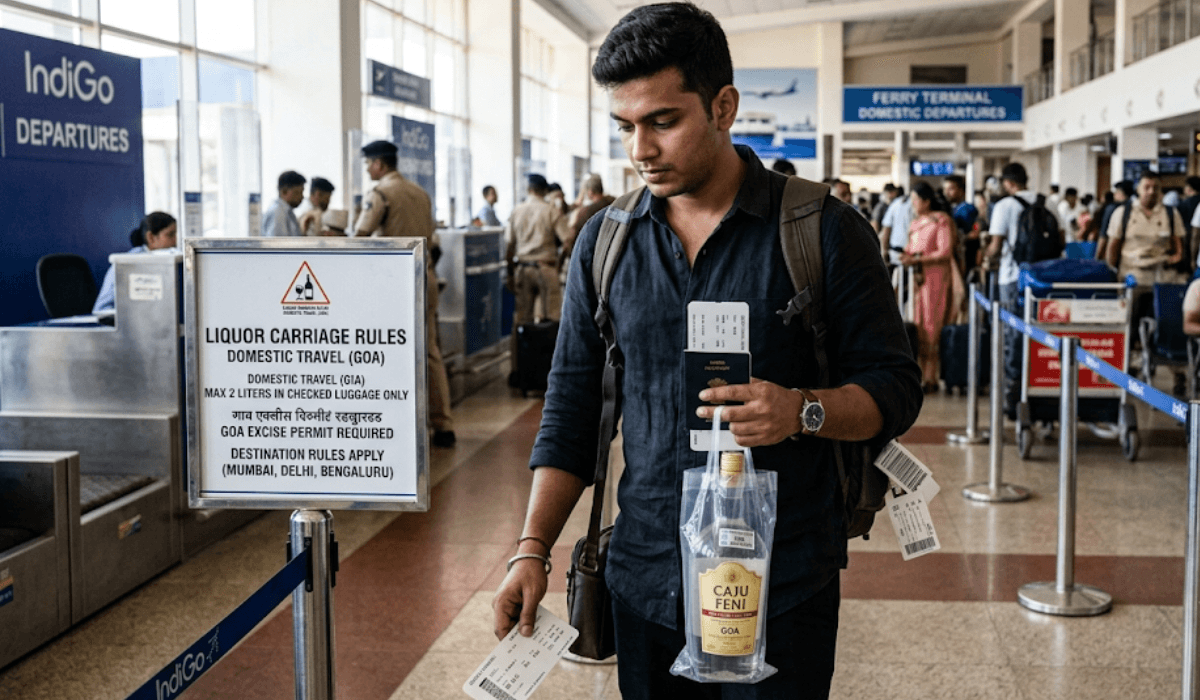
Goa and alcohol go together, which is probably why so many people end up buying a few bottles before heading back home. A bottle of feni, a favourite whisky that costs less than it does in Mumbai, or just a couple of beers for the weekend can seem like an obvious thing to put in the car or suitcase before leaving.
But there is a slightly annoying part that often gets missed: buying alcohol legally in Goa does not automatically mean you can carry any quantity of it into another state. Alcohol is regulated by individual state excise laws in India, so the rules can change once you cross the Goa border. The way you travel also matters practically, although the excise permission is the bigger issue.
The Goa Excise Department says a person carrying liquor bottles for personal consumption while leaving Goa can obtain a transport permit in Form E7A from an authorised liquor dealer, Taluka Excise Station, the Commissioner of Excise's office or an excise checkpost.
The department's current information also gives destination-specific quantities for a number of states. For example, its published list allows one 750 ml bottle of IMFL for Delhi, two 750 ml bottles for Punjab and two bottles for Daman and Diu, subject to the applicable conditions and permit. So, if you are buying alcohol in Goa and heading to another state, don't assume that the Goa shop bill alone is all you need.
Also Read: Beer Brands You Can Only Find In Goa
Maharashtra has its own excise permit system. The Maharashtra State Excise Department lists FL-X-C, a permit covering possession, consumption, use and transport of foreign liquor and country liquor. It also provides a one-day FL-F permit for the purchase, possession, transport, use and consumption of foreign liquor in Maharashtra.
That does not mean that a tourist can simply take several bottles from Goa into Maharashtra because the bottles were purchased from a licensed Goa shop. The relevant Maharashtra rules still apply once the liquor enters the state.
So for a Goa-to-Mumbai road trip, the sensible approach is to check the current Goa transport-permit requirement and the Maharashtra excise requirements rather than relying on the often-repeated “two bottles per person” rule.
Delhi is one destination for which the Goa Excise Department actually publishes a specific quantity: one 750 ml bottle of IMFL or one 750 ml bottle of cashew liquor for an individual leaving Goa, under its E7A transport-permit information.
Delhi Excise also separately states that an individual entering Delhi from another state can possess 1 litre of Indian or foreign liquor, while its larger residential possession limits are different.
That distinction is important. A Goa transport permission and Delhi's possession rules are not the same thing, and both sides of the journey matter.
Also Read: How Much Alcohol Can You Carry From Goa By Flight? Airline And Baggage Rules Explained
Karnataka is another case where you should not rely on a generic Goa liquor allowance. The Karnataka Excise Act says intoxicants cannot be imported into Karnataka except under a permit, and it also provides that quantities above prescribed limits cannot be transported without a permit. The law gives the state authority to issue transport permits specifying the person, period, quantity and type of intoxicant.
So if you are driving from Goa to Bengaluru with bottles in the boot, the fact that you bought them legally in Goa does not by itself answer whether the quantity can legally enter Karnataka.
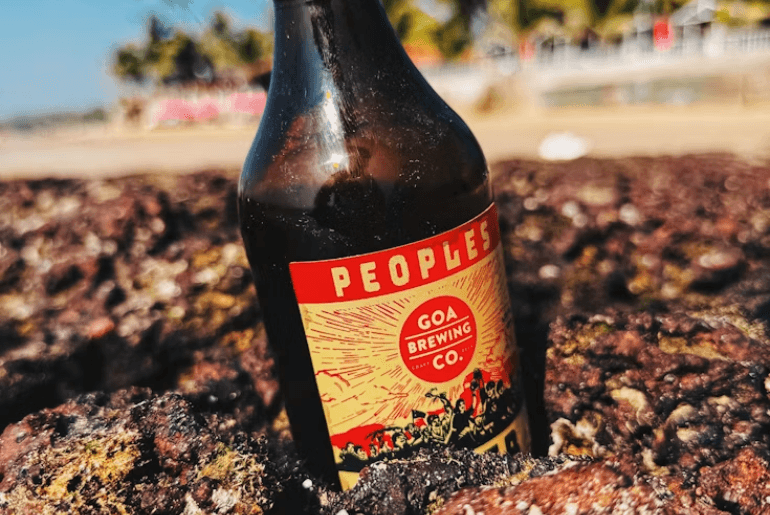
For a private car, the alcohol is still being transported from one state to another. Putting bottles in the boot instead of carrying them in the passenger area does not remove the excise requirement.
If you have the relevant permit, keep it with the purchase bill and keep the bottles sealed. It is also sensible to keep the original retail packaging intact rather than transferring the liquor into another container.
And obviously, the person driving should not drink. That sounds painfully obvious, but Goa road trips and alcohol purchases are a combination where it is worth saying anyway.
A bus does not create a special exemption from state excise rules. Whether you are travelling on a private Volvo, an interstate bus or another passenger service, carrying liquor across the state border can still be governed by the destination state's excise law.
There can also be restrictions imposed by the bus operator, particularly around luggage containing liquids or alcohol, so checking with the operator before travelling is sensible.
Indian Railways' luggage rules cover what can be carried as passenger luggage, but the railway system does not override state excise law. Railway commercial guidance states that intoxicating drugs are not accepted for rail conveyance unless covered by the required excise pass or permit.
So a train ticket is certainly not a liquor permit. If you are carrying alcohol from Goa towards Mumbai or Bengaluru, you still need to consider the relevant excise rules and any applicable railway conditions.
Also Read: Can You Carry Alcohol On Trains In India? Indian Railways Rules, Limits & Fines Explained
Flying is slightly easier to understand because the airline has its own baggage rules as well as the state excise issue. For example, Air India's current restricted-baggage guidance says alcohol can be carried in checked baggage, with a total net quantity of up to 5 litres where the alcohol content is between 24% and 70% ABV, provided the bottle is in original retail packaging and the individual receptacle does not exceed 5 litres.
That is an airline carriage rule, not permission to import unlimited liquor into Maharashtra, Karnataka or Delhi. So even if the airline accepts the bottles, you still need to comply with the destination state's excise rules.
Also Read: Can You Carry Your Own Alcohol On Flights? Rules In India Explained
I would honestly avoid treating Goa's cheap alcohol prices as a reason to fill the entire boot before driving home. The rules become state-specific very quickly, and the amount you can legally buy in Goa is not necessarily the amount you can legally transport into another state. If I was travelling back, I'd keep the quantity modest, retain every bill and get the proper permit where required.
Carrying alcohol from Goa to another state is not simply a question of how many bottles you buy. Goa provides E7A transport permits for personal consumption, while Delhi, Maharashtra and Karnataka have their own excise rules. Car, bus, train and air travel do not override those laws, so check both Goa and destination-state requirements.
.jpg&w=3840&q=100)
.jpg&w=3840&q=100)
.jpg&w=3840&q=100)