
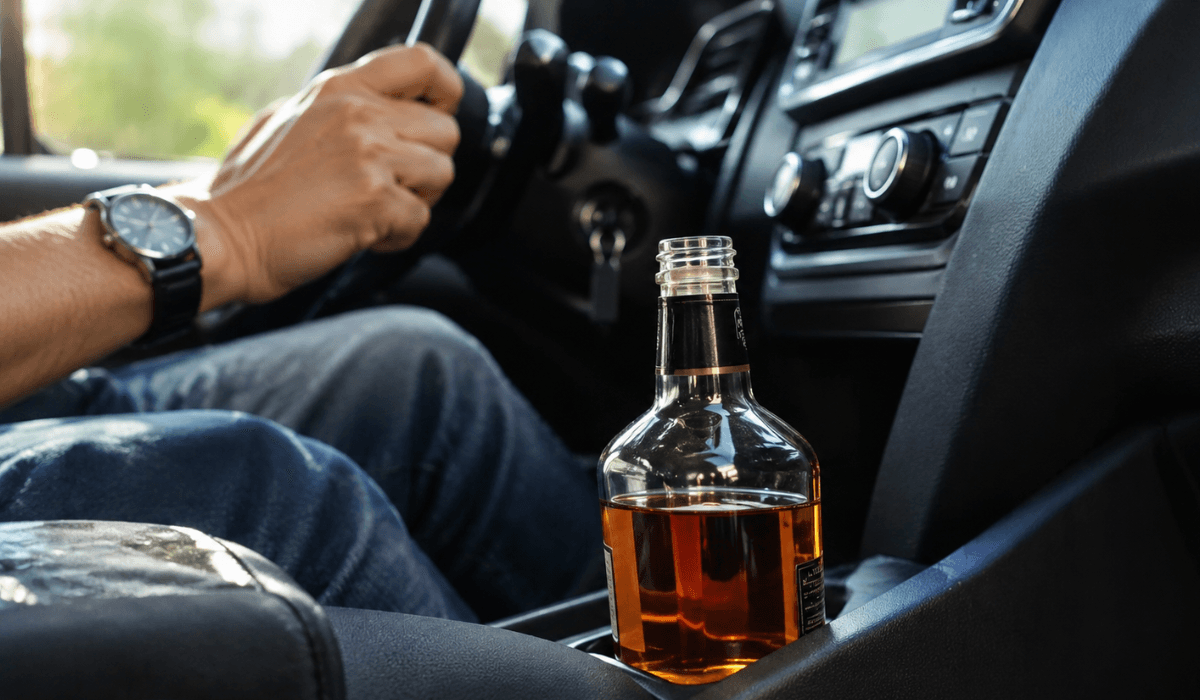
Buying a bottle of whisky or wine and keeping it in the car for later is something many people do, especially when they are travelling back from a liquor store or returning home after a dinner outing. But what happens if the bottle has already been opened? Can you keep it in your car, or can the traffic police fine you for carrying an open bottle of alcohol?
The answer is not as straightforward as a simple yes or no. India does not have one universal rule that makes every open liquor bottle inside a private car an offence across the country. There are two separate things to consider: traffic laws dealing with drunk driving and state excise laws that regulate the purchase, possession and transportation of alcohol.
This distinction matters because carrying a bottle in your vehicle and drinking alcohol while driving are two very different situations. However, an opened bottle can raise questions about possession and consumption, particularly when state-specific rules are involved.
There is no blanket provision under the Motor Vehicles Act, 1988, that specifically makes carrying an opened alcohol bottle in a private car illegal throughout India. Section 185 of the Act deals with driving under the influence of alcohol or drugs, rather than the mere presence of a liquor bottle inside a vehicle.
That does not mean you can carry any quantity of alcohol wherever you go. The purchase, possession, and transportation of liquor are regulated by individual state excise laws, and the rules can differ depending on where you are travelling.
Also Read: Delhi Liquor Booking App Explained: Collection Rules, Delivery And The Controversy
For instance, some states set individual possession limits, while others require a valid permit to purchase, possess, or transport liquor. States with prohibition laws have additional restrictions. Therefore, an opened bottle that is legally possessed in one state may create a different legal situation in another.
The key is to check the excise rules that apply in your state instead of assuming the same conditions apply everywhere.
Section 185 of the Motor Vehicles Act, 1988, deals with drunken driving. Under this provision, a person can be prosecuted if they are driving or attempting to drive with a blood alcohol concentration exceeding 30 mg per 100 ml of blood, detected through a breath analyser or another prescribed test.
The penalties are also significant:
First offence: Imprisonment of up to six months, a fine of INR 10,000, or both.
Second or subsequent offence: Imprisonment of up to two years, a fine of INR 15,000, or both.
So, even if you have not consumed alcohol from the bottle inside your car, you must ensure that the person driving has not been drinking. Having a bottle in the vehicle does not give anyone permission to consume alcohol while driving or get behind the wheel after drinking.
The Delhi Traffic Police also advises motorists against drunk driving and highlights the legal blood alcohol limit.
Also Read: What Are The Rules For Carrying Alcohol From Goa To Maharashtra?
Yes, and this is where things can get slightly complicated. State excise departments regulate how much liquor an individual can purchase, possess and transport. Here are two examples of how the rules work.
Delhi: The Delhi Excise Department prescribes individual possession limits. A person can possess up to 9 litres of Indian or foreign liquor, including whisky, rum, gin and vodka, excluding certain other beverage categories. The limit for wine, beer, liqueur, cider and alcopop is 18 litres.
There are also separate restrictions for bringing alcohol into Delhi from outside the state. The department specifies a limit of one litre of Indian or foreign liquor when entering Delhi from another state and two litres of foreign liquor when entering from another country. These restrictions should not be confused with the regular possession limits.
Also Read: Can You Carry Alcohol From Goa To Mumbai, Delhi Or Bengaluru? Rules Explained
Maharashtra: The Maharashtra Prohibition Act, 1949, regulates the possession, purchase and transportation of liquor. The state has a permit system for these activities.
According to the Maharashtra State Excise Department, a one-day FL-F permit is available for the purchase, possession, transport, use and consumption of foreign liquor. The state also provides an FL-XC permit for the possession, consumption, use and transportation of foreign and country liquor.
This is particularly relevant for motorists in Maharashtra, as simply having purchased a bottle from a licensed shop should not be treated as a substitute for checking the applicable permit requirements.
This is one situation where motorists should be especially careful. Liquor laws do not automatically remain the same when you cross a state border. A quantity that is permitted in the state where you purchased the bottle may exceed the allowance in the state you are entering.
For example, Delhi allows only one litre of Indian or foreign liquor when entering from another state, according to its Excise Department's published rules. Carrying a larger quantity could create an excise-related issue even if the liquor was purchased legally elsewhere.
It is also important to check whether the destination state requires a permit for possession or transportation. Keeping the purchase bill and any applicable permit with you is a sensible precaution, particularly during longer road journeys.
Also Read: Can You Carry Duty-Free Alcohol On A Connecting Flight? Here Are The Rules
If you have already opened a bottle and need to transport it, the safest approach is to avoid making it look like the alcohol is being carried for immediate consumption inside the vehicle.
A few precautions are worth following:
Keep the bottle securely stored in the boot rather than in the driver's area or cup holder.
Make sure the cap is tightly closed to prevent leakage.
Do not allow passengers to drink alcohol inside the moving vehicle.
Carry the purchase bill and any required state excise permit.
Check the possession limits before travelling across state borders.
Never allow someone who has consumed alcohol to drive.
These are practical precautions, not a separate nationwide legal checklist for carrying opened bottles. The applicable state laws still take priority.
A personal note for motorists: If you are unsure about the rules, keeping the bottle unopened, securely stored in the boot and carrying your purchase bill is a sensible approach. However, remember that these precautions do not replace any permit or possession requirements imposed by your state.
Carrying an open alcohol bottle in your car is not automatically illegal everywhere in India, but state excise laws regulate possession and transportation. Section 185 of the Motor Vehicles Act penalises drunk driving. Check local possession limits, carry required permits and never consume alcohol while driving or allow an intoxicated person to drive.