

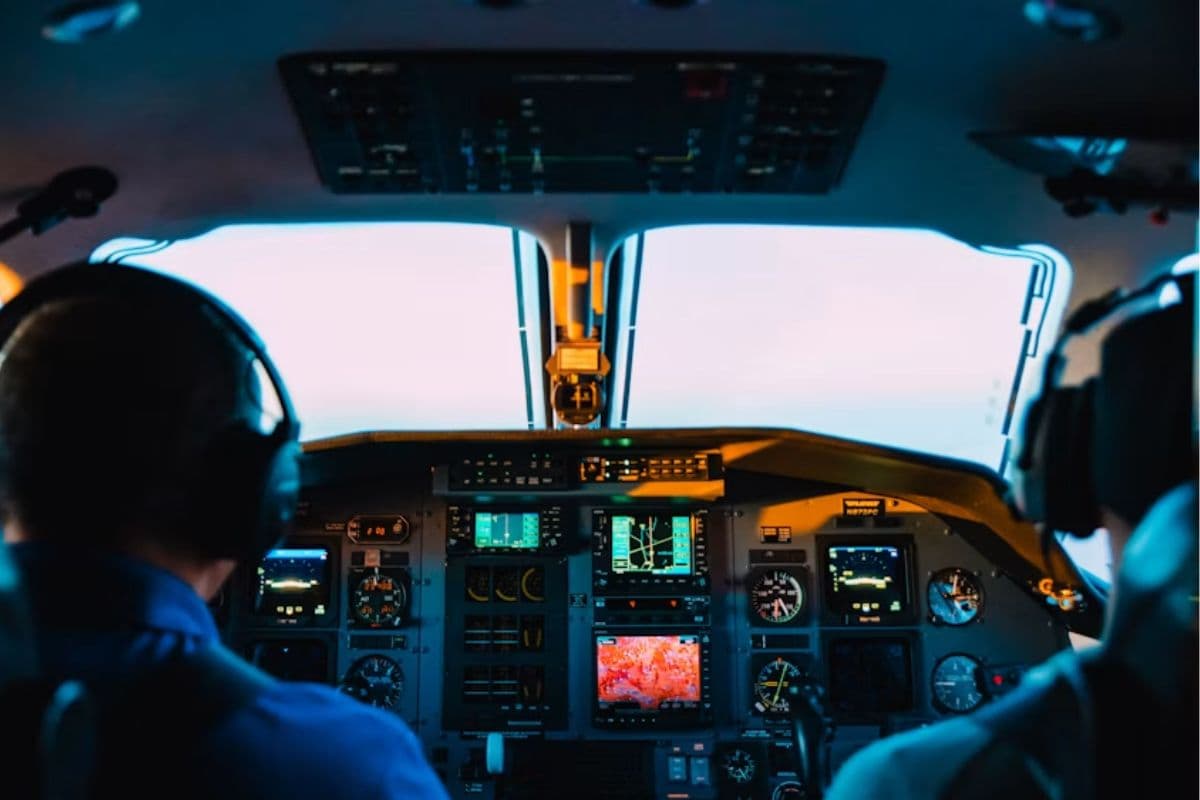
Recently, an Air India flight from Phuket to Delhi made headlines for unfortunate reasons. The aircraft experienced a sudden altitude change of about 300 feet, resulting in a tragic incident. Videos captured by passengers during the event went viral online. Although the aircraft passed all safety checks and was deemed safe to fly, the pilot-in-command tested positive for marijuana in a drug test. This incident has highlighted the importance of drug testing for pilots, a crucial aspect of aviation safety. To provide more clarity on this topic, unsobered thought of helping you know how pilots in India are tested. Check it out!
The Directorate General of Civil Aviation (DGCA) in India has made it mandatory for airlines to conduct random testing for psychoactive substances among their flight crew every year.
These tests are conducted only to make sure that the pilot is not under the influence of substances that might put their or other’s life to risk. In India, pilots are tested before every flight for alcohol consumption.
.jpg&w=1920&q=75)
Pre-Flight Test: All flight crew operating flights from India, or those departing domestically from India, must complete a mandatory Breath Analyzer (BA) examination before their duty shift.
Post-Flight Test: After a flight, the airline will summon the pilot to the office for testing, and the pilot is not allowed to refuse this request.
Post-Incident Testing: The airline may also require a pilot to undergo testing following any incident or diversion. Additionally, testing may occur if there is reasonable suspicion.
Also Read: 10 Airlines That Don’t Serve Alcohol On Flights You Should Know About
The pilot is randomly selected for a drug test. The testing process begins with the collection of urine samples, which is conducted under strict Chain of Custody (CoC) procedures to prevent any tampering.
The collection takes place in the pilot's presence. Once the urine sample is obtained, officials from an external company open a sealed testing kit and add the testing reagent to the sample. The results are concluded using a color-coded system. This system can detect the presence of any prohibited substance.
.jpg&w=1920&q=75)
If the screening results in a “non-negative” result (which means that it is not a confirmed positive), the sample is sent to an accredited laboratory. This is for a confirmatory analysis which uses techniques like Liquid Chromatography-Mass Spectrometry (LC-MS) or Gas Chromatography-Mass Spectrometry (GC-MS). If the test shows positive, the pilot is immediately off-rostered and grounded.
Also Read: Why Airlines Limit Alcohol In Economy Class
Let's take a look at the penalties that are imposed if found guilty:
India enforces a zero-tolerance policy with a mandatory 0.000% BAC (Blood Alcohol Concentration) limit. Hence, the test protocols are followed very strictly and seriously here. Ensuring that the pilots are medically fit is one of the most important safeguards in modern aviation.