
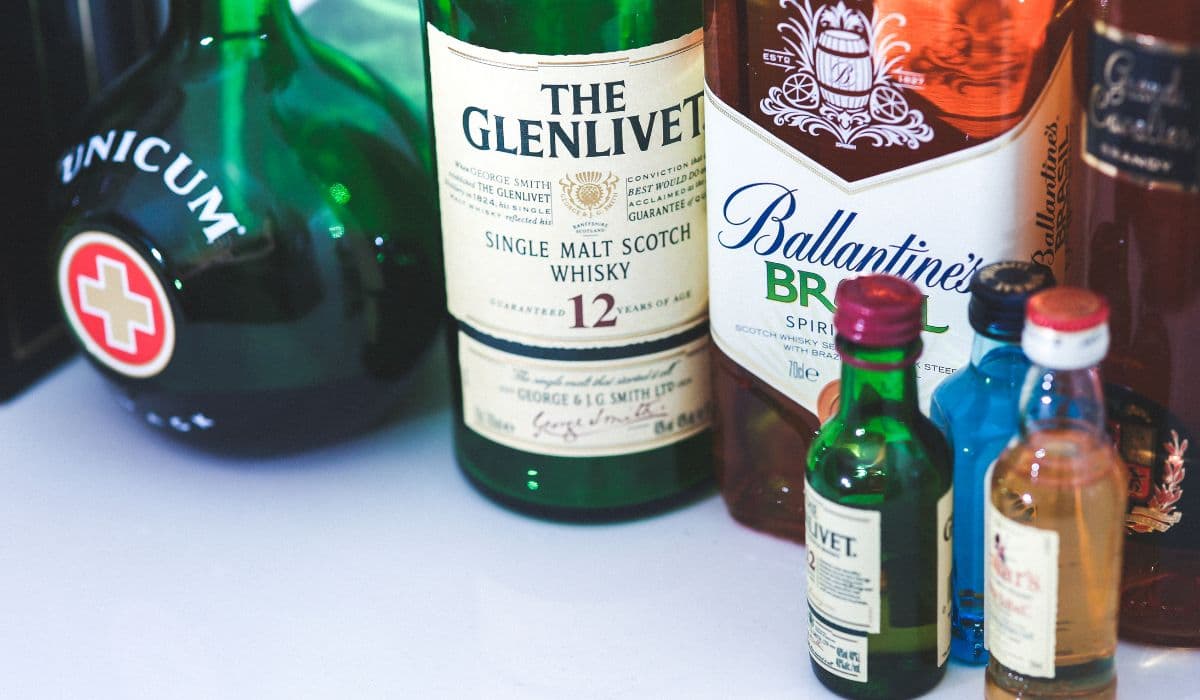
For those unfamiliar with the metric system of India, reading alcohol bottles might prove to be a bit perplexing. The symbol ‘ml’ appears on all the bottles, and if you do not know what it means, that can be a bit perplexing. On the other hand, if you’re born and brought up in India, this question might seem redundant and even inane. Well, on Indian alcohol bottles, "ML" stands for Milliliters (ml). It is the standard metric unit of measurement that is used to indicate the net volume of liquid contained inside the bottle. However, under India's tightly regulated spirits landscape, "ML" is far more than a simple metric mark. This unsobered guide provides a comprehensive explanation of the term and what it means.
Under the Standards of Weights and Measures Act, India legally adopted the International System of Units (SI metric system). As such, all commercial liquids must state volume in milliliters (ml) or liters (L). This includes Indian-Made Foreign Liquor (IMFL), imported spirits, country liquor, and beer.
Milliliters provide exact precision. It prevents short-measure fraud and ensures uniform taxation across state excise departments. To give you a refresher of your school math class, one liter contains 1,000 milliliters. So, a standard 750 ml bottle represents three-fourths (0.75) of a full liter.
While the label on all the bottles may say ‘ml’, Indian masses have their own colloquial terms to navigate sizes of alcohol bottles. Take a look:
60 ML to 90 ML or the "Nip" or "Miniature": This is a less commonly consumed beverage size in India. It is a single-serve or pocket-sized bottle that is more frequently stocked in hotel minibars, travel retail, or quick-purchase retail vends.
180 ML or the Quarter or Pauaa or Khamba's Fourth: The term pauaa has made it into the current zeitgeist via pop culture. However, historically, it represented a quarter of a traditional 750 ml bottle. This then rapidly became the most widely consumed single-buyer size across India.
375 ML or the "Half" or Adha or Half Bottle: This unit contains exactly half the volume of a standard bottle. Today, the 375 ml bottle is more popular for small gatherings or weekend home consumption.
750 ML or the "Full" Khamba or Standard Bottle: This is the global and Indian benchmark size for spirits such as whisky, rum, gin, and vodka. In the Northern part of India, the 750-ml bottle is colloquially and endearingly referred to as a "Khamba."
Also Read: What Is A Peg In India? 30ml vs 60ml vs 90ml Explained
.jpg&w=1920&q=75)
A number of state excise departments mandate that the net volume in ML be printed prominently alongside the maximum retail price (MRP) as well as the state-specific security hologram. The excise departments of Delhi, Maharashtra, Karnataka, and Uttar Pradesh have this rule.
Indian state excise acts also define maximum permissible personal possession limits. In many regions, the limit is defined not by bottle count, but by total cumulative volume in liters/milliliters. For instance, Delhi excise rules specify exact ML caps for stocking IMFL as well as beer at home. In Delhi, adults over 25 and older can legally store up to nine liters of IMFL. For beer, wine, and alcopops, adults can store up to 18 liters.
Pegs are another Indian colloquial term for small amounts of liquor that are either taken as shots or mixed in water or soft drinks. Small pegs are 30 ml, large pegs are 60 ml, and the infamous Patiala Peg, which is an informal, generous pour usually measuring 90 ml to 120 ml. So, a standard 750 ml "Full" bottle yields exactly 25 Small Pegs (30 ml) or 12.5 Large Pegs (60 ml).
Also Read: How To Store Whisky Correctly? Here’s What We Know
ML can be a confusing term for some, and when it comes to ml on alcohol bottles, the symbol means more than just a unit of measurement. This guide explains the metric volume system on Indian alcohol packaging, the traditional Indian names for bottle sizes such as Nip, Quarter, Pint, and Full, excise regulations, and how to calculate standard drink counts. Happy drinking!