

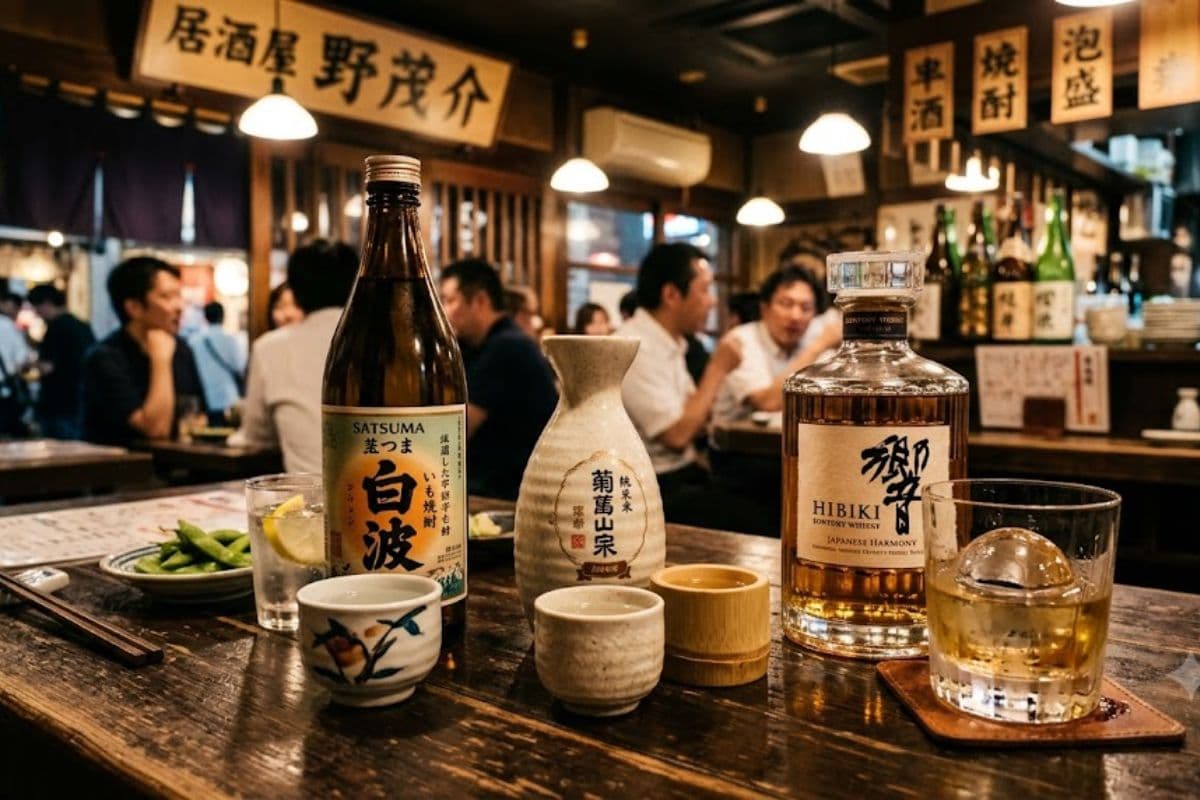
Japan’s drinking culture is precise, rich, and varied, just like its world-renowned culinary landscape. From noisy izakayas to mood-lit bars, the drinks served across the Land Of The Rising Sun reflect a deep reverence for regional terroir, craftsmanship, and tradition. If you are planning a trip to Japan, navigating a Japanese drink menu might get a bit overwhelming with names like Sake, Shochu, mizunara, and others. But not when unsobered has your back! You can explore Japan’s spirits like a local as we break down Japan’s three important signature drinks for you!
Quick Note: Sake in Japanese is a generic word used for all alcoholic beverages. The beverage that Westerners refer to as “sake” is known as Nihonshu.
What Is It: Unlike what people think, sake is not a wine or a spirit. It is a brewed beverage that is made from water, rice, yeast, and a special ingredient called the koji mold. The fermentation process for this beverage is very similar to that of beer brewing. The ABV for this drink usually sits between 14% and 16% Alcohol by volume (ABV).
The quality of sake is highly determined by the rice polishing ratio. Raw rice grains contain proteins and fats on the outside that can cause off-flavors. When the grains are milled down, it leaves behind only the sweet, pure starch core.
How To Drink: Delicate Ginjo and Daiginjo sakes are generally consumed chilled to preserve their floral aromatics. Junmai sakes, which are lower polish and earthy, must be consumed warm. Heating this brings out rich, savory umami notes, which makes it the perfect choice during winter.
Also Read: This Japanese Company Pays You to Drink and Gives You a Hangover Day Off
Quick Note: While international travelers talk about sake and whisky, Shochu is actually the most consumed domestic spirit in Japan. Its versatility is its superpower for sure!
What is It: Shochu is a distilled spirit unlike brewed sake. It is stronger than sake but milder than Western spirits like gin and vodka, with an ABV of 25% to 35%. It has an astonishing variety of flavor profiles, as it can be distilled from more than 50 different base ingredients.
How To Drink: Shochu offers different profiles based on its drinking style.
Also Read: 6 Yuzu Cocktails That Prove Japanese Citrus Is the Future of Mixology
Quick Note: Japanese Whisky was originally modelled after Scottish Scotch whisky. Japanese distillers modified this process to prioritize pristine water sources, elegance, and balance.
What is it: Japanese whiskies are less peaty compared to Scotch. It leans into layered profiles of fruit, floral notes, spice, and delicate oak.
One of Japanese whisky’s key defining traits is aging in Mizunara or Japanese oak casks. This imparts rare flavor notes of incense, sandalwood, coconut, and subtle spice.
How to Drink: Here’s how you should drink Japanese whisky
.jpg&w=1920&q=75)
On my visit to Japan, I learnt some key phrases that helped me a lot. I would recommend that you also learn and use them.
Drinking the local spirits in Japan is more than just an unwinding activity; it gives you a sneak peek into its culture, agriculture, and history! When you are having a sushi or sashimi dinner, try Sake or order Shochu for a casual night at an izakaya. Kampai! (cheers)
.jpg&w=3840&q=100)
.jpg&w=3840&q=100)
.jpg&w=3840&q=100)