

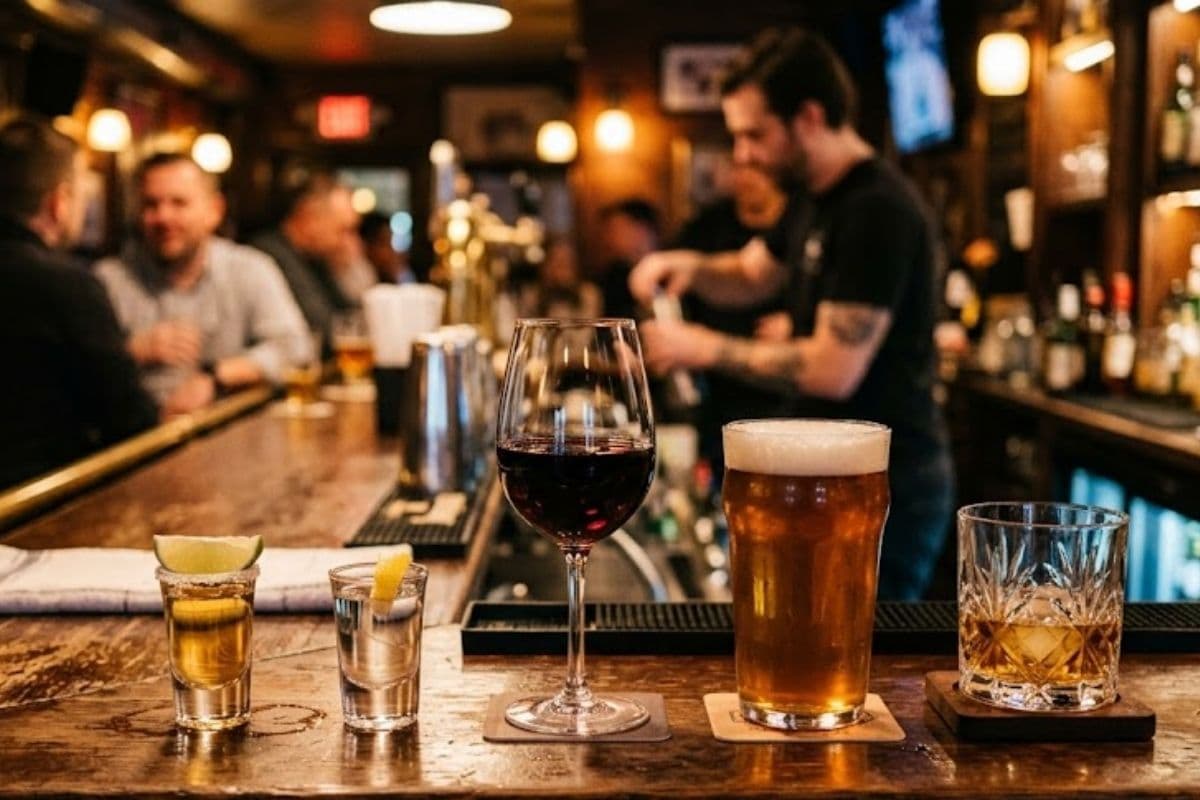
While pursuing your fitness goals or managing calorie intake, alcoholic beverages are often the easiest way that surplus calories can slip into your body. Unlike packaged groceries and other food items, which have to mandatorily display nutrition fact panels, alcohol bottles rarely list the macronutrient or calorie count. You need to understand the load by understanding the chemistry of distillation, fermentation, and more. But at unsobered, we will help you understand that in a much easier manner. Here’s an in-depth breakdown of which alcohol has the lowest calories.
Below is the definitive ranking of Tequila, Beer, Vodka, Whisky, and Wine on a scale of 1 to 5, with 1 being the lowest-calorie holder and 5 having the highest calorie count per standard serving.
Vodka is the lowest-calorie option among all five categories. This is because of its industrial distillation and multi-stage filtration process. The standard commercial vodka is made by fermenting cereal grains like wheat, rye, and corn; potatoes; or molasses. This is followed by continuous column distillation until the distillate reaches 95% to 96% pure ethanol. It is later diluted with pure water to reach the standard bottling strength, which is 40% Alcohol By Volume (ABV).
Now this process helps in eliminating all non-alcohol organic matter and offers:
Please note that this baseline applies only to the unflavored vodkas. When a vodka is flavored, it has been sweetened with syrups added to it post-distillation, which increases the calories.
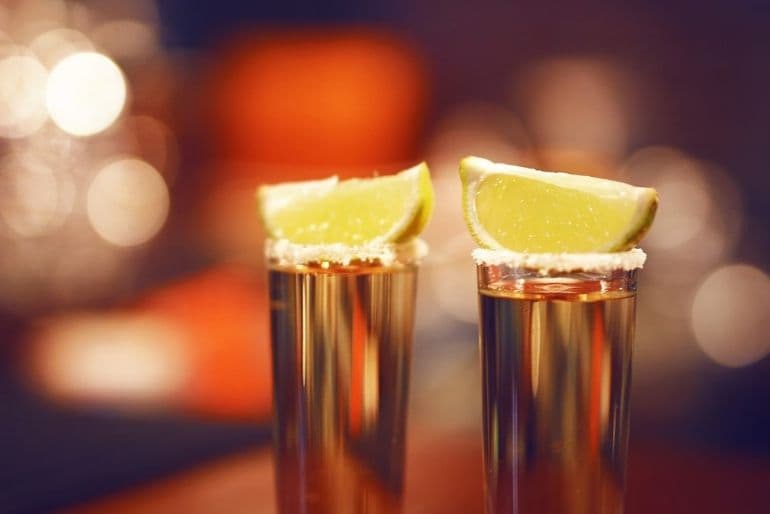
Tequila is crafted from the fermented sugars of the blue agave plant. A 100% agave tequila is tied with vodka at 80 proof. The agave fructans, or complex natural sugars, are converted into ethanol during the distillation process in column stills or copper pots. After distillation, what you get is a finished spirit with zero grams of carbohydrates.
Blanco tequila is bottled immediately after distillation or aged for under 60 days in stainless steel tanks. This is why it retains a pure ethanol profile of 97 to 97 calories per 1.5 oz pour. While Blanco is known as standard vodka, the aged expressions like Anejo and Reposado with wood extractions have some extra calories.
Please note that for minimal caloric impact, you must opt for 100% De Agave.
Also Read: What Is A London Dry Gin And Does It Have To Come From London?
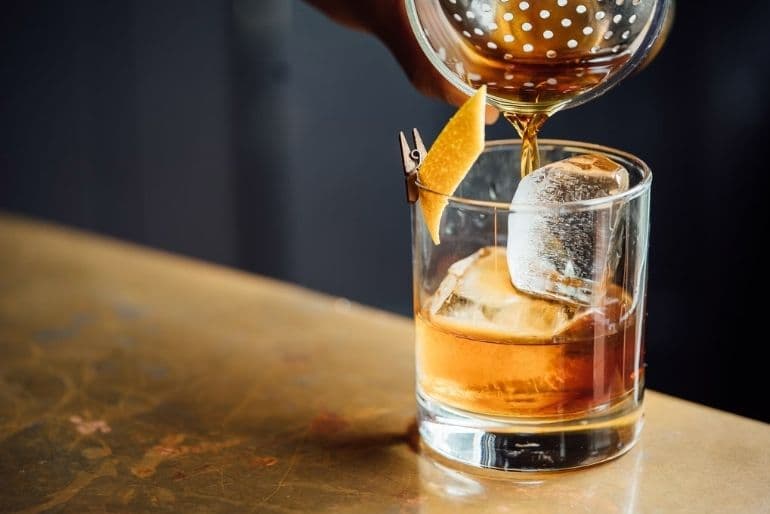
Whisky is made from fermented grain mash like barley, corn, rye, or wheat, which is distilled first and then added to charred oak barrels for years to mature. Straight whisky at standard 80 proof or 40% ABV contains roughly 97 calories per 1.5 oz pour, which is similar to that of vodka and tequila. The reason behind it being placed on Rank 3 is the standard bottling strength.
Premium malts, small-batch ryes, and bourbons are generally bottled at higher alcohol strengths: 43% ABV, 45 to 57% ABV, and 55 to 60% ABV, with 105 kcal, 110-116 kcal, and 135 to 150 kcal per 1.5 oz pour, respectively.
The extended oak barrel maturation infuses whisky with wood tannins, lactones, and complex congeners. They don’t add any carbs but offer a more complex and heavier spirit profile.
The two main reasons why wine has more calories than the other mentioned spirits are:
Wine is not distilled, unlike spirits. It is produced by fermenting grape must with yeast. Yeast converts the bulk of glucose and fructose into alcohol; there are residual carbohydrates and unfermentable sugars left behind in this process.
A standard glass of dry wine is 145 ml or 5 fluid ounces. It includes 12 to 13.5% ABV with 100-110 kcal and 14 to 16g of ethanol. The amount of residual carbohydrates is 3 to 4 grams, which has 12 to 16 kcal.
In all, a dry white wine like Pinot Grigio and Sauvignon Blanc, as well as dry red wines like Pinot Noir and Cabernet Sauvignon, have 120 to 125 calories.
Also Read: Does Drinking Water Prevent A Hangover? What The Science Says
Among all five categories, regular beer carries the highest caloric density per standard serving. Hence, it is also known as “liquid bread.” Beer is brewed by fermenting malted grains like barley, oats, or wheat with hops, water, and brewer’s yeast.
The standard yeast strains cannot break down complex long-chain carbohydrates that are present in a beer. Additionally, a regular beer carries a significant amount of residual carbohydrates along with ethanol.
A standard 355 ml or 12 fluid ounce bottle or can of beer with 5% ABV offers:
This means a total of 145 to 155 calories per container.
https://www.instagram.com/p/DcqiJe8h4JS/
If you are aiming to minimize your calorie load as well as disruption in metabolism, I have a tip for you! Consume distilled spirits like vodka, tequila, or 80-proof whisky either neat or on the rocks. You can also pair it with zero-calorie club soda. This can help you consume fewer calories.
The lowest calorie content is found in vodka, while the highest is found in beer. All said, no alcohol is healthy for you! The type of alcohol matters far less than how much you drink. So make sure you drink in moderation, avoid sugary mixers, and understand the contents better.
.jpg&w=3840&q=100)
.jpg&w=3840&q=100)
.jpg&w=3840&q=100)