
Whiskey is often viewed as the "immortal" spirit. Unlike wine, which evolves (and eventually declines) in the bottle, whiskey is a finished product the moment it leaves the cask. However, while it won't turn into vinegar overnight, it isn't completely invincible.
Whether you drink whiskey occasionally or collect rare bottles, proper storage is the only way to make sure your last glass tastes as good as the first.
The short answer is: No, whiskey does not "go bad" in the way milk or bread does. Because of its high alcohol content (usually 40% ABV or higher), it is an inhospitable environment for bacteria.
The lifespan of an open bottle depends almost entirely on the headspace (the amount of air in the bottle).
Fill Level | Estimated Shelf Life | Flavor Impact |
75% to Full | 1–2 Years | Negligible; might actually "open up" pleasantly. |
Half Full | 6–12 Months | Subtle loss of aromatic complexity. |
25% or Less | 3–4 Months | Rapid oxidation; flavors become "flat" or metallic. |
"Why does my whiskey taste flat after 6 months?" If your bottle is near the bottom, the ratio of oxygen to liquid is high. This accelerates the evaporation of volatile compounds – the stuff that gives whiskey its floral, fruity, or smoky notes – leaving behind a dull, one-dimensional liquid.
To keep your collection in peak condition, you need to defend it against its three main enemies: Light, Temperature, and Oxygen.
UV rays are the enemy of chemical bonds. Direct sunlight will bleach the color out of your whiskey and destroy the delicate esters. Always store bottles in a dark cupboard or their original cardboard tubes/boxes.
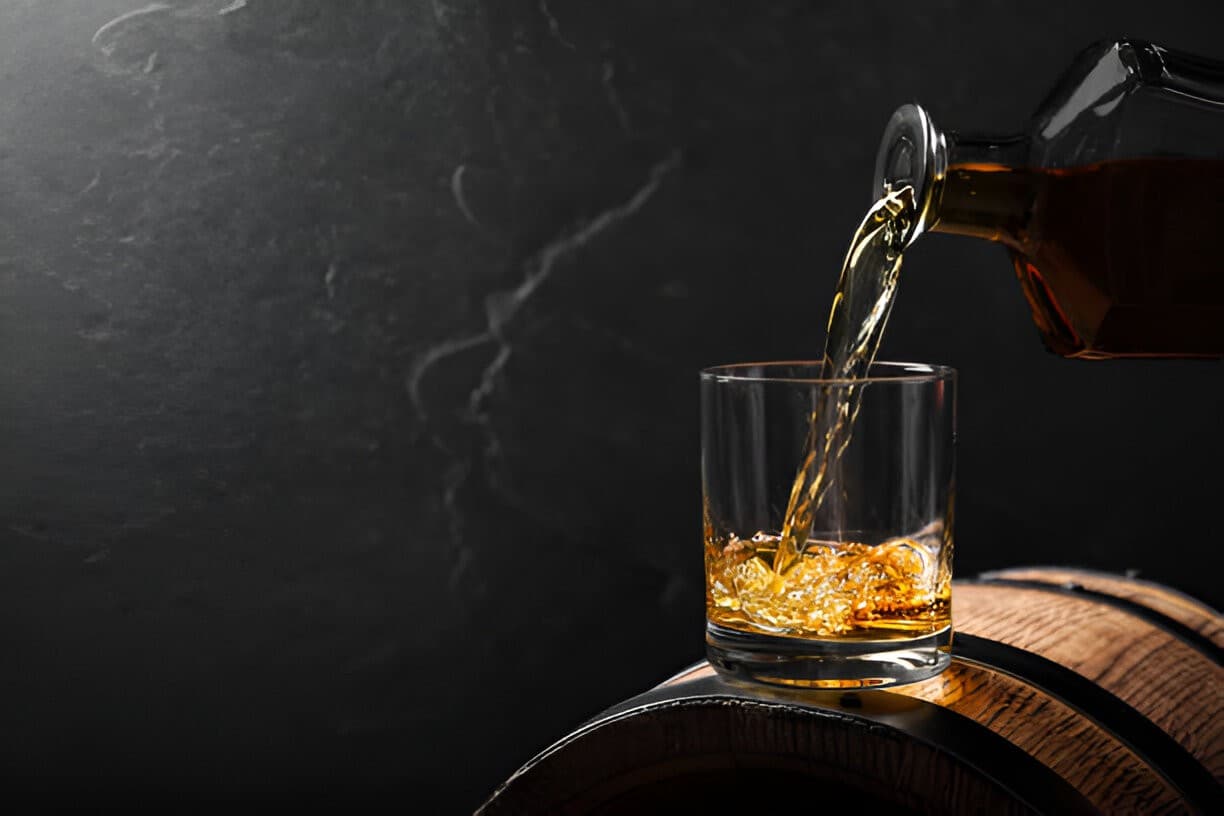
In warmer climates like India, temperature stability is your biggest challenge. While a cellar temperature of 15°C to 18°C is ideal, the most important factor is consistency. Fluctuating temperatures cause the liquid to expand and contract, which can compromise the cork. Avoid storing whiskey near windows, refrigerators, or in kitchens where heat spikes are common.
Why should you never store whiskey on its side? Unlike wine, which requires a wet cork to maintain a seal, whiskey’s high alcohol content will actually eat away at the cork if left in constant contact. This leads to "cork taint" and a disintegrated stopper that can ruin the entire bottle.
There is a lot of anxiety around old bottles found in attics or back cabinets. Let's clear the air:
Does whiskey age in the bottle? No. Once it's out of the wood, the aging process stops. However, you can prevent the "de-aging" that occurs via oxidation.
How to preserve bottom-of-the-bottle whiskey:
Whiskey is remarkably resilient, but it isn't immortal. To ensure your 20-year-old Scotch actually tastes like a 20-year-old Scotch, keep it upright, in the dark, and at a stable temperature. Once you hit the final third of the bottle, invite some friends over and finish it off – the best way to "preserve" whiskey is to enjoy it as the distiller intended.