In 2026, the battle against counterfeit spirits has moved from manual inspection to digital transparency. Whether you are purchasing a premium Scotch in Mumbai or a bulk order from a Gurgaon L-1 shop, knowing how to identify duplicate whisky in India 2026 requires an updated toolkit.
The following guide outlines the most recent security protocols, digital apps, and physical checks available today.
1. The Digital Shield: 2026 Verification Apps
The most reliable way to perform a whisky authenticity check online in India is through state-specific excise apps. These apps verify the supply chain from distillery to your hands.
State-Wise Verification Tools
- Delhi (ESCIMS System): The Delhi Excise Department now operates through the integrated ESCIMS (Excise Supply Chain Information Management System). When you scan a liquor QR code for authenticity, it pulls data directly from the Bonded Warehouse logs. In 2026, look for the "Delhi Excise" citizen app, which also tracks real-time stock and MRP.
- Karnataka (Check My Liquor): Updated in early 2026, the "Check My Liquor" app is mandatory for scanning the encrypted 2D barcodes on HEAL (High Security Excise Adhesive Labels). It provides instant manufacturer details and a training module to spot fake labels.
- Andhra Pradesh (Excise Suraksha): Launched in late 2025, the Excise Suraksha app uses geo-tagging to ensure the bottle you are holding was meant for that specific retail outlet.
- Punjab & Haryana: Use the Excise QR Label Citizen App to verify 2D barcodes.
2. Brand-Specific Tech: Johnnie Walker & Chivas
Global giants have introduced proprietary tech to prevent refilling.
- NFC "Smart Labels": High-end bottles like Johnnie Walker Blue Label now often feature NFC (Near Field Communication) tags. Tapping your smartphone against the label can detect if the factory seal has been electronically broken.
- Tracking Batch Numbers: Always cross-reference the laser-etched batch number on the glass (usually near the base) with the number printed on the outer carton. A mismatch is a definitive sign of a duplicate.
- Bubble Tags On Chivas: Chivas Regal utilizes 3D "Bubble Tags"—a unique, non-replicable pattern of air bubbles in the seal that can be verified against the brand's global database.
3. Physical Red Flags: How To Spot A Refill
Counterfeiters often use "original" bottles, but they struggle with the re-sealing process.
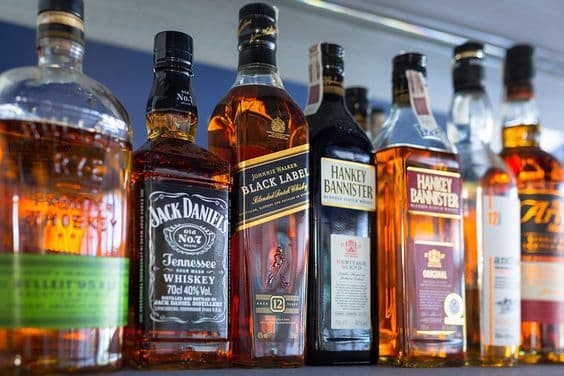
- The "Spin" Test: Check why the cap on your whisky bottle is loose. A genuine cap is machine-sealed. If the cap spins or the "pilfer-proof" ring at the bottom doesn't break cleanly upon opening, the bottle has been tampered with.
- Glue Residue & Alignment: Look for glue residue on whisky labels. Industrial labeling is adhesive-free on the edges; sticky residue or "bubble" gaps suggest a label was hand-applied.
- Difference in Liquid Color: Hold the bottle against a light (the "torch test"). Authentic Scotch has consistent clarity. If you see sediment or a slight difference in liquid color between fake and real whisky, do not consume it.
- The Gurgaon L-1 Factor: While people ask, "Is alcohol from Gurgaon L-1 shops genuine?", the shops themselves are licensed. However, because of the high turnover, "leakage" of fakes can occur. Always demand a scan via the Haryana Excise app at the point of purchase.
4. The "Beading" and "Viscosity" Test
The liquid itself can reveal its origin through simple physics.
- The Shake Test: Shake the bottle and observe the bubbles (beading). For a 40% ABV whisky, bubbles should disappear in seconds. If the bubbles persist for 20-30 seconds, it might be a higher-proof "local" spirit disguised as Scotch.
- The Torch Test: Use your phone’s flashlight to look for a difference in liquid color between fake and real whisky. Authentic whisky should be crystal clear. If you see "cloudiness," sediment, or floating particles, it indicates tap water dilution or poor filtration in a fake.
5. Risks And Reporting
Drinking fake whisky side effects are severe, ranging from immediate nausea and "wood alcohol" poisoning (methanol) to permanent organ damage.
How to Report Suspected Fakes
If you encounter a suspicious bottle or seller, use these 2026 channels:
- Mumbai/Maharashtra: Call the toll-free helpline at 1800-833-3333 or use the Maharashtra State Excise WhatsApp at 8422001133.
- Delhi/NCR: Report via the m-Liquor/ESCIMS app grievance section or the National Consumer Helpline (NCH) at 1915.
- General: Use the National Consumer Helpline portal to report fraudulent sellers in any state.
Summing Up
In 2026, authenticity is in your pocket. How to use m-Liquor or Check My Liquor apps for verification should be your first step before the seal is even broken. If the price is too good to be true, the cap is loose, or the digital scan fails – walk away.

.jpg&w=3840&q=100)
.jpg&w=3840&q=100)
.jpg&w=3840&q=100)