
.jpg&w=3840&q=75)
Walk into a liquor store in Goa, and you might be pleasantly surprised by the price of your favorite whisky. Buy the same bottle in Mumbai or Bengaluru, however, and you could end up paying hundreds or even thousands of rupees more. This isn't because the brand has changed or because retailers are charging different margins. It comes down to how alcohol is regulated and taxed in India.
Unlike most consumer goods, liquor doesn't follow a uniform pricing system across the country. Every state has the authority to decide how alcohol is taxed, distributed, and sold within its borders. Add import duties, licensing fees, transportation costs, and retailer margins into the mix, and it's easy to see why prices vary so dramatically.
.jpg&w=1920&q=75)
One of the biggest reasons liquor prices vary across India is because alcohol is a state subject under the Constitution. This means each state government has the power to create its own alcohol policies, including how much tax to charge, how products are distributed, and who can sell them.
As a result, there is no single national pricing system. States like Goa keep alcohol taxes relatively low to support tourism, while others such as Maharashtra impose significantly higher duties to generate revenue.
Some states even operate government-controlled retail systems, while others allow private retailers to sell alcohol. These differences directly influence what consumers pay for the same bottle in different parts of the country.
Also Read: Karnataka Raises Liquor Permit Fees For House Parties, Cuts Beer And Scotch Prices
Most products in India fall under the Goods and Services Tax (GST), but alcohol meant for human consumption is one of the biggest exceptions. Instead of being taxed under a single nationwide system, liquor remains outside the GST framework, allowing states to retain complete control over alcohol taxation.
For state governments, alcohol is one of the largest sources of revenue, contributing an estimated INR 90,000 crore annually. Bringing liquor under GST would require significant policy changes and reduce the flexibility states currently have to decide their own tax rates.
While industry players have often argued that including alcohol under GST could simplify taxation and lower compliance costs, most states are reluctant to give up such an important source of income.
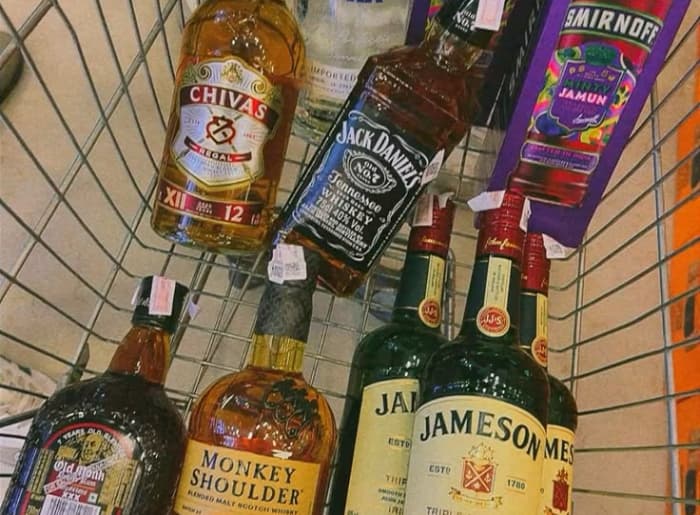
Before it reaches a retail shelf, several costs and taxes have already been added, each contributing to the final amount consumers pay. The largest component is state excise duty, a tax imposed by state governments on the manufacture and sale of alcohol. Since every state decides its own excise rates, this alone can create substantial price differences between regions.
In addition to excise duty, many states also levy Value Added Tax (VAT), further increasing the retail price. Maharashtra, for example, applies different VAT rates depending on the type of liquor, while other states follow their own taxation structures.
Beyond these taxes, every bottle also carries the cost of production, packaging, transportation, warehousing, distributor margins, retailer commissions, and licensing fees. Even though liquor itself is exempt from GST, many of these supporting services, including bottles, labels, caps, transportation, and promotional activities, still attract GST, increasing overall costs for manufacturers before the product even reaches consumers.
Taxation is only on e part of the equation. Every state follows its own pricing and distribution model, which directly influences retail prices. While states like Tamil Nadu sell alcohol through government-run retail outlets, others such as Delhi rely on licensed private retailers that compete with one another. The level of competition, licensing costs, and distribution margins all play a role in determining the final price consumers pay.
States also use alcohol taxation to meet different policy objectives. Tourist destinations like Goa generally keep liquor prices lower to encourage tourism and spending, while larger states often impose higher duties to maximize revenue or regulate consumption. This is why the same bottle can cost significantly less in Goa than it does in cities like Mumbai, Bengaluru, or Pune.
.jpg&w=1920&q=75)
If you've ever compared the price of an imported whisky or gin with an Indian-made alternative, you've probably noticed a significant difference. While premium branding plays a role, taxation is one of the biggest reasons imported liquor commands such high prices in India.
Before an imported bottle reaches a retail shelf, it is subject to customs duties and import-related charges. Once it enters a state, the same bottle is taxed again under that state's excise system and, where applicable, VAT. Transportation, warehousing, distributor margins, and retailer markups further increase the final retail price. This layered taxation explains why imported spirits often cost considerably more in India than they do in their country of origin.
Also Read: Local Vs Imported Vodkas In India: What To Choose and Why
Although every state follows its own pricing model, a few examples highlight just how different alcohol prices can be across India. Goa is known for some of the country's lowest liquor prices, thanks to relatively lower excise duties and a tourism-driven economy. As a result, many travelers choose to purchase premium spirits while visiting the state. Maharashtra sits at the other end of the spectrum, with higher excise duties and VAT contributing to some of the highest liquor prices in the country, particularly in cities like Mumbai.
Delhi generally offers more competitive pricing due to its private retail model and strong competition among licensed stores, while Karnataka falls somewhere in the middle despite being home to several major distilleries. Tamil Nadu follows a completely different approach, with alcohol sold primarily through the state-run TASMAC retail network. Unlike private markets, prices there are determined through a government-controlled distribution system.
.jpg&w=1920&q=75)
State governments periodically revise excise duties, licensing fees, and retail policies, which can lead to noticeable changes in liquor prices. Annual budgets and new excise policies often influence how much consumers pay, with prices increasing or, in some cases, seeing temporary reductions.
Inflation also plays an important role. Rising costs for glass bottles, packaging materials, labels, transportation, and fuel increase manufacturing and distribution expenses, which are eventually reflected in retail prices.
Since many of these inputs attract GST even though alcohol itself does not, producers continue to face higher operating costs. At the same time, growing demand for premium whisky, tequila, gin, and imported wines has encouraged companies to expand their premium portfolios, while retailers adjust prices based on demand and product availability.
The debate around bringing alcohol under GST has continued ever since the tax system was introduced. Many industry stakeholders believe a unified tax structure would simplify compliance, improve transparency, and reduce the complexity of operating across multiple states. Some have even suggested that lower-alcohol beverages such as beer should be considered first before extending GST to other categories.
However, such a move appears unlikely in the near future. Alcohol remains one of the largest sources of revenue for state governments, and giving up independent control over taxation would require significant policy changes. For now, India's state-led taxation system continues to define how liquor is priced across the country.
Liquor pricing in India is far more complex than simply adding taxes to a bottle. Every purchase reflects a combination of state excise duties, VAT, import charges, distribution costs, licensing fees, transportation expenses, and retailer margins. Since each state follows its own policies, the same bottle can carry a very different price tag depending on where it's purchased.
For consumers, understanding this system makes it easier to see why prices fluctuate across states and why imported spirits often cost significantly more than Indian labels. While discussions around GST and tax reforms continue, India's unique state-driven pricing model remains one of the defining features of the country's alcohol industry.