

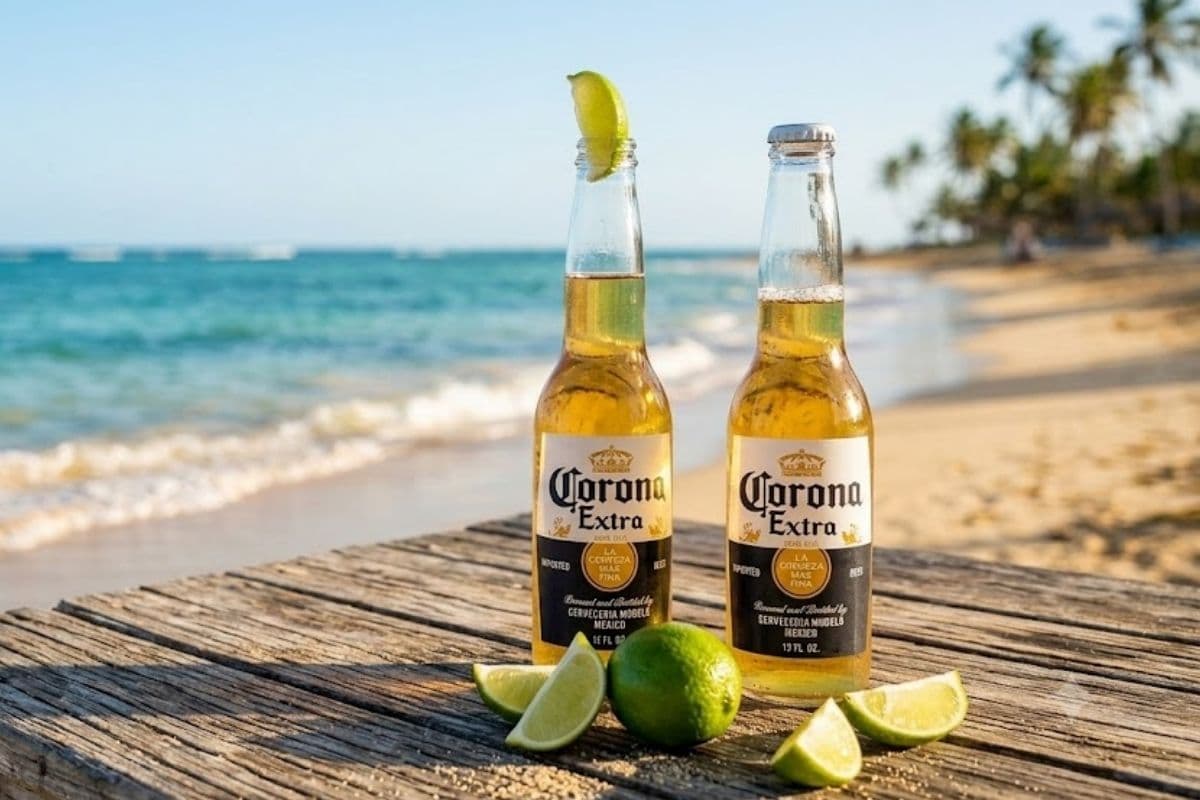
You must have seen your bartender offering you your ordered bottle of Corona Extra with a slice of fresh lime placed into the bottle’s neck. Whether you order it in a rooftop bar in London or a beachside shack in India, the serving ritual is the same. But why is that so? No, the lime in a Cotona bottle’s neck was not a part of the brewmaster’s technical specification originally. So how did this unscripted touch become the most famous ritual in commercial brewing? The answer to this is a blend of a barroom story, utility, a marketing narrative, and food chemistry. Let's check it out!
There are various stories that explain how and where this custom of serving Corona with lime was born.
A story from Coastal Mexico states that bottles that were stored near humid coastal waters would have rust rings around the lip because of the cheap metal caps. These open beer bottles in warm tropical climates attracted fruit flies and insects. Hence, the local cantina vendors and patrons would take a wedge of lemon and rub it around the rim to remove any rust. It was placed firmly in the neck opening as a cork to keep any insects or flies away.
.jpg&w=1920&q=75)
In 1981, Corona Extra had just started becoming popular among the people in the US, especially among California surfers. A bartender working at a busy venue like San Diego or Orange County bet another colleague that he could start a random trend. He said that he would simply drop a slice of lime into every bottle of Corona he served without explaining why and begin a trend. This actually worked, and customers assumed this to be the authentic Mexican way to drink it. The habit slowly spread along the West Coast and reached North America.
Also Read: Corona Beer Can: Price, Availability & Buying Tips
The pairing of an adjunct light lager like Corona Extra with fresh lime juice is not only visually appealing but also addresses the chemical and physical profile of the beer itself.
Corona Extra is made using light barley and maize adjuncts with a low International Bitterness Units (IBU) of approximately 10 to 18. It is known for its crisp, sweet malt tail and dry finish. What a lemon wedge does is that it adds high-citric acidity to it and replaces hop bite with tartness. The residual sweetness of the grain is cut by the lemon, and a sharp contrast is created. The mild lightstruck notes are masked by lemon, and it also helps in sharpening and cleansing the palate.
Rather than traditional amber or brown glass, Corona Extra is famously packaged in transparent flint glass. While the clear glass showcases the brilliant, pale, golden hue of the beer, it offers zero protection from the ultraviolet rays.
When hops are boiled during brewing, they release isohumulones. When these compounds are exposed to light, they break down and react to form 3-methyl-2-butene-1-thiol (MBT). It is the same as found in a skunk spray. The pungent essential oils in the lime peel and sharp citric acid in the juice dominate the senses and mask any skunky notes.
Also Read: Corona Beer Price in India – 330ml, 650ml & 1L Bottles
By the late 80s and 90s, Grupo Modelo and its distributors realized the lime ritual was the biggest marketing advantage. While the other big beer brands spent millions promoting their brewing techniques. Corona had a simple ritual that customers actually performed.
The brand did not invent this practice; they actually codified it. Advertising campaigns took the viewers on a coastal escape with empty white beaches, wooden tables, gentle waves, and two bottles with a crescent piece of lime.
This one lime wedge transformed Corona from a standard imported pale lager into an immersive experience. It made the consumer participate in preparing their own drink. The drink creates a visual cue with golden liquid and green citrus, which makes it recognizable in a crowded room. This garnish takes beer away from the concept of being the standard industrial lager imagery.
The established bar technique for the ritual follows a simple sequence:
.jpg&w=1920&q=75)
Also Read: AB InBev Rolls Out Corona Cero Zero-Alcohol Beer Across India
I always thought Extra Corona served with a lime wedge was actually an age-old ritual. So later, when I understood the whole story, I wanted to share the same with you.
What began as a utility practice or bar banter has become one of the most resilient traditions in beverage culture. The lime wedge was no longer just a tradition; it became the identity of the brand, Extra Corona. The brand showed everyone that the way a drink feels and looks in the hand is just as important as what is inside the bottle.
.jpg&w=3840&q=100)
.jpg&w=3840&q=100)
.jpg&w=3840&q=100)